
The Party Where Everyone Already Knew Each Other
Margie Jiang had done everything right. She finished her degree at UC Berkeley in 2021, spent a year dancing professionally, and then made the sensible move into corporate life that her business background pointed toward. On paper, San Francisco was working for her.
Then the ground shifted underneath her twice in the same season. She left the dance team that had given her a tight-knit crew and a place to belong. And nearly all of her school friends, freed by a reopening world, packed up for New York and Los Angeles at once.
What was left was a strange kind of quiet. She was in one of the most social cities in the country, gainfully employed, surrounded by people — and she had no idea how to reach any of them.
“I was kind of at a loss for where to meet new people and make new connections that weren’t just in my kind of forced environments,” she says.
That sentence describes a problem almost everyone who has tried to make friends in a new city knows in their body. The friends you had were assigned to you by circumstance — a dorm floor, a dance team, a first job. Then the circumstance ends, and no one tells you where the next set of people is supposed to come from. You are surrounded by strangers and somehow expected to already know the way in. Learning how to make friends in a new city turns out to be a skill nobody teaches, right at the moment you need it most.
Margie’s answer was not to wait for it to fix itself. She started a social club.
A city full of clubs, and still nowhere to belong
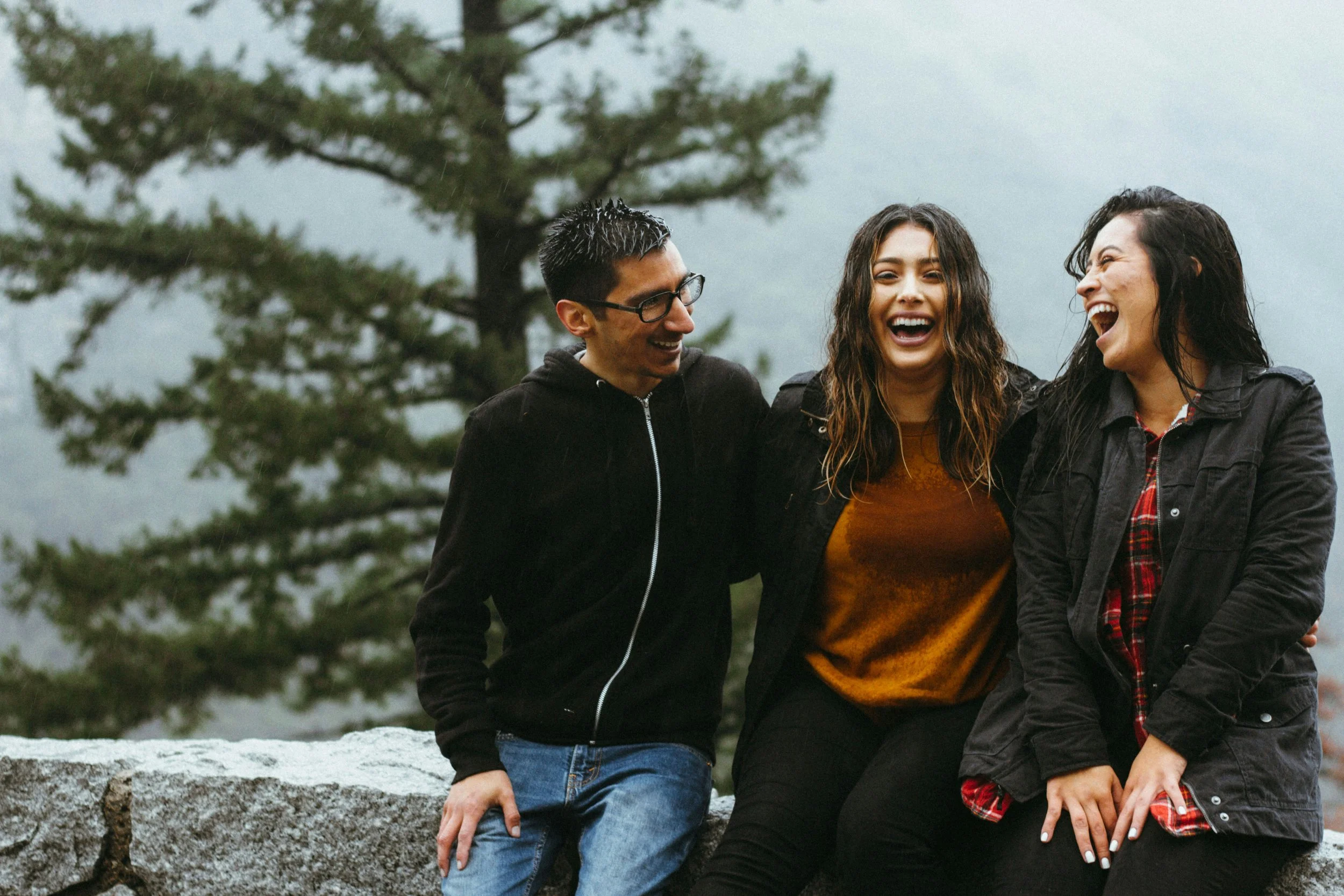
Photo: Omar Lopez / Unsplash
When she looked around San Francisco, she found no shortage of ways in — if you were willing to be sorted. There were run clubs and pickleball leagues, women’s empowerment circles, groups organized tightly around art or coffee or music. Each one asked you to walk in already defined by a single interest.
“I am interested in probably all of those things,” she remembers thinking. “So does that mean I have to join 80 different clubs to find different people that match all of my unique interests?”
So she built something deliberately broader: a general-membership social club, free to join, organized less around a hobby than around the simple premise that showing up regularly is how strangers become familiar. What began as one event a month, with her housemate hauling the signage, grew into a community of more than 400 active members and a volunteer team running four to eight gatherings a month.
Margie’s story is not unusual. Across the country, people who moved somewhere new and hit the same wall are quietly building the thing they couldn’t find. Not because they set out to be community leaders, but because they needed somewhere to go on a Tuesday and no such place existed yet.
For most of human life, that place existed by default. School, work, and family threw the same faces at us again and again, and friendships formed almost without our noticing. That is why it never occurred to most of us that we might one day have to make friends in a new city on purpose. That default has weakened. People move more often, work has gone remote and transactional, and fewer shared activities anchor our weeks. Connection used to be ambient. Now it takes intention.
How to make friends in a new city, according to the data

Photo: Vitaly Gariev / Unsplash
If moving somewhere new leaves you feeling adrift, the numbers say you are firmly in the majority — and that the fix is more ordinary than it looks.
Start with the scale of it. In our 2026 State of Connection report, we found that 52% of U.S. adults fall into the at-risk or vulnerable range for social connection. This is not a fringe experience. It is closer to the baseline of American life, and it lands hardest on the person who just unpacked their boxes in an unfamiliar zip code.
The reflex is to assume these people don’t want connection, or don’t know how. Our data says otherwise. The barriers that show up most are not logistical — they are emotional. Being uncomfortable going to a social event alone. Feeling scared to put yourself out there. Not knowing where to start. When people struggle to make friends in a new city, it is rarely because the city is short on events. It is the quiet dread of walking into a room where you assume everyone already knows each other. That dread, not a lack of options, is the real thing standing between most newcomers and a full social life.
Margie designed around exactly that fear. Her club runs new-member meetups every other month, low-stakes by design, because she knows what the first night feels like.
“It can sometimes be daunting to go to a happy hour where you’re like, oh, maybe everyone already knows each other,” she says.
Now weigh that against what’s on the other side of the discomfort. People who regularly take part in an activity-based community — what we call a Community of Play, one of the Six Points of Connection — are 28 percentage points more likely to report strong social support and 33 points more likely to report high life satisfaction than those who don’t. The gap between having a place to show up and not having one is enormous. And yet only about 30% of people belong to any such community.
The distance between those two facts is the whole problem. The thing that helps most is also the thing most people never quite reach.
The activity is not the point
There’s a reason a shared activity works so well as an on-ramp for a newcomer, and it isn’t the activity itself. It’s that the activity lowers the stakes of showing up. You don’t have to arrive ready to be someone’s friend. You arrive ready to do a thing — a class, a run, a dinner — and connection is allowed to sneak up on you sideways.
James Tan learned this running free yoga in the park in Seattle through his project Yerbana. A thousand people would take the class, and hundreds would walk straight to their cars afterward. The gathering only turned into a community when the same faces came back week after week to the same spot.
“High public location, very consistent,” he says. “Really goes a long way into making it feel more like a community and less like an event.”
Hear James Tan’s full conversation on How We Connected.
The science backs up his instinct with a startlingly specific number. Jeffrey Hall, a communication researcher at the University of Kansas, studied how long it takes to make a friend, and found it takes roughly 50 hours of time together to turn an acquaintance into a casual friend, and more than 200 hours to reach a close one. And hours spent side by side doing something count for far more than hours spent working across a desk. Friendship is not a spark. It is accumulated repetition — the same people, the same place, again and again.
This is exactly what a Community of Play manufactures without anyone forcing it. You don’t have to schedule 200 hours with a stranger. You just have to keep showing up to the same weekly thing, and the hours quietly stack. The activity gets you in the door. What happens after — the lingering, the small talk that stops being small — is where the friendship actually forms. The activity is not the point. It’s the invitation.
Where to start this week
If you’ve just moved, or you’ve lived somewhere a while and still feel like a stranger in it, the research points to a gentler starting line than “put yourself out there.” The most reliable move is not to search harder for the perfect friends. It is to become a regular somewhere.
Here are a few low-stakes ways to begin:
Pick one recurring thing and go twice. A weekly run club, a Sunday farmers-market stall, a drop-in class — the second visit matters more than the first, because that’s when familiarity starts to build. That repetition, not any single great night, is what turns strangers into friends.
Go to the newcomer version if there is one. Many groups run beginner nights or new-member meetups precisely because everyone there is feeling the same nerves you are. You are not the only one who walked in not knowing anyone.
Say the small thing. You don’t owe a stranger your life story. “Is it always this crowded?” is enough to start. Connection often begins one notch below what feels meaningful.
Margie didn’t move to San Francisco planning to run a social club. She was trying to solve something in her own life — not knowing where her next friends would come from. In building a place for other people to show up, she built the one she’d been looking for herself.
That’s the quiet possibility underneath all of this. If you’re new somewhere and the loneliness feels like proof that something is wrong with you, it isn’t. It’s just the absence of a place that hasn’t been built yet. And the first step toward finding your people may not be to look harder for them. It may be to pick one small, repeatable thing, show up, and let familiarity do the rest.
Ready to help build that place where you live? Join a Welcome Committee — neighbors who welcome newcomers, host gatherings, and help rebuild connection one relationship at a time.
Hear Margie Jiang's full conversation on How We Connected.