

Welcoming Newcomers
Your guide to engage new residents and to connect them to people, organizations and community.
Building city-wide programs to support newcomers is the catalyst we need to reverse the decline in connection and trust in America. It aligns everyone in a community around a shared purpose that brings out the best in us and makes social connection a priority.
13 million Americans move each year.
40% of them struggle with social connection.
Who Moves?
Cross-county movers are younger, more likely to be renters, and more often in life transition — making them both more open to change and more vulnerable to disconnection.
MORE LIKELY
Ages 18–34
Renters
Singles & young couples
College-educated professionals
Cost-burdened households
LESS LIKELY
Long-time homeowners
Families with school-aged kids
Seniors (except retirement moves)
WHY THEY MOVE
Housing affordability
Household formation
Family proximity
Employment
WHY IT MATTERS
Greater loss of social capital
Higher integration risk
Fewer built-in support systems
Where do People Move From?
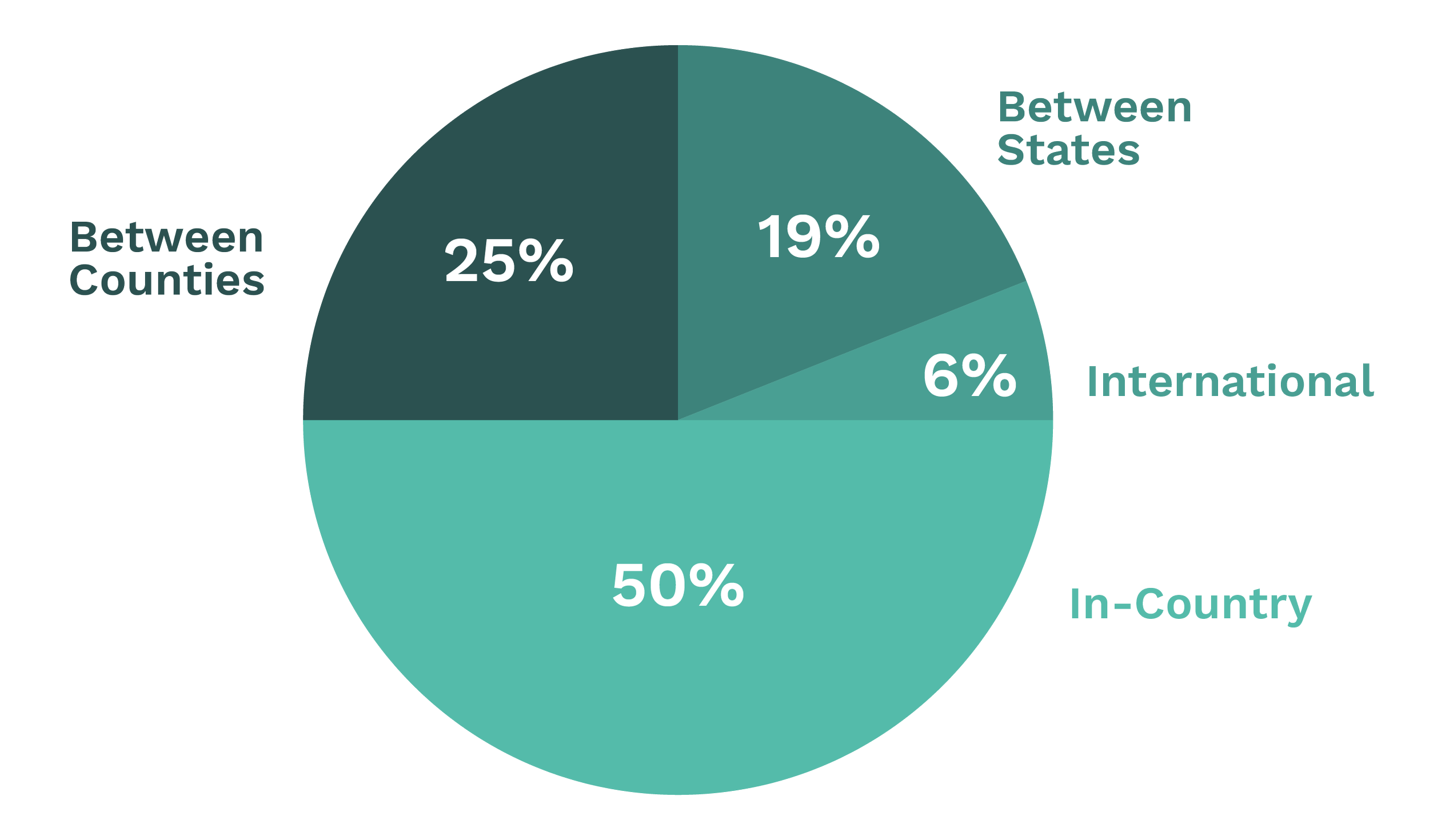
Source: U.S. Census Bureau, American Community Survey (1-year), Geographic Mobility. Percentages rounded.
1 in 2 movers are relocating out of county.
Only 6% of new residents are coming from outside the country.
Welcoming new residents creates a shared purpose to bring communities together and awakens our desire to be good neighbors.
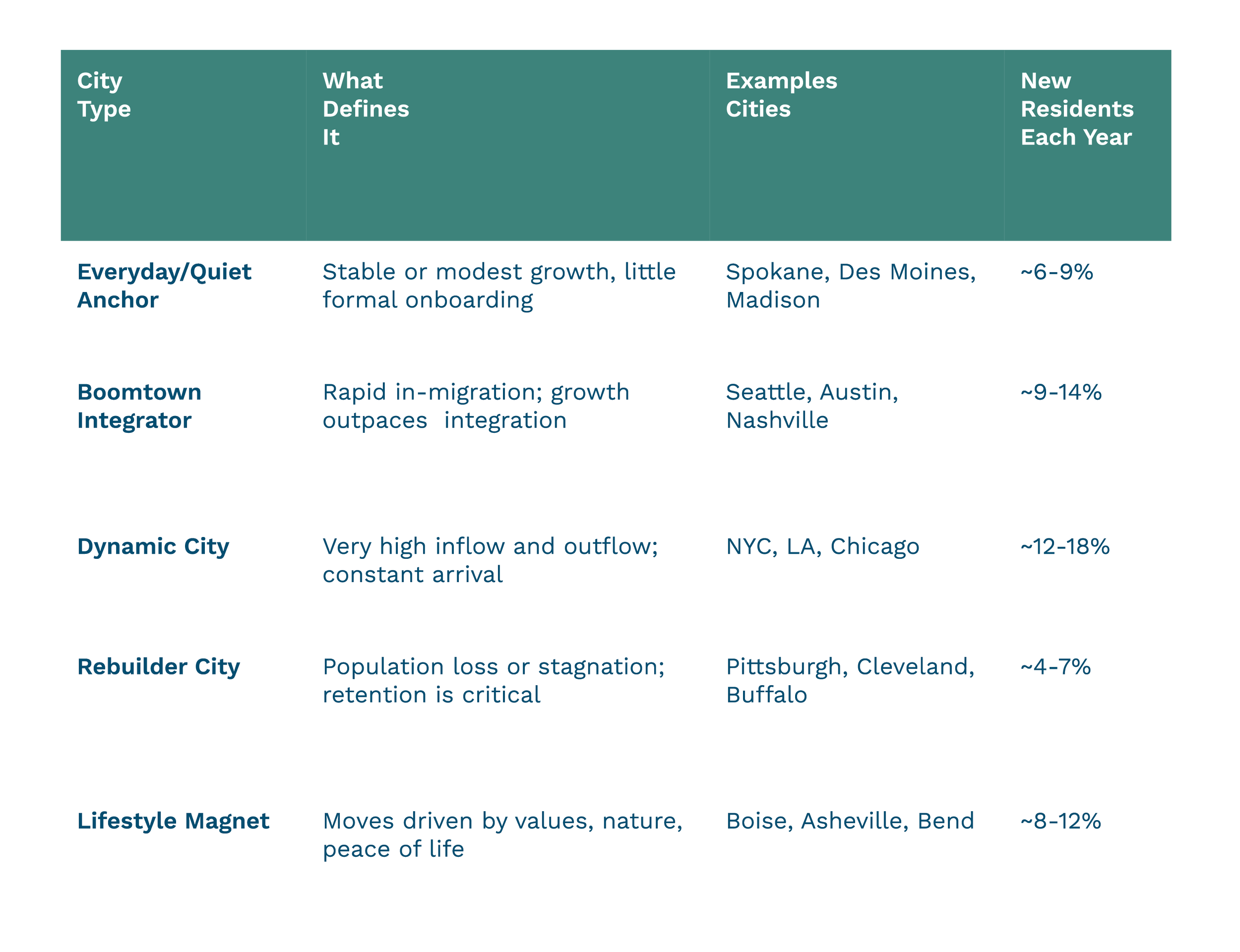
5 Types of Newcomer City Dynamics
Cities should approach their newcomer onboarding based on the character and dynamics of the city.
Cumulative Economic Impact of a New Household
Over a decade, a new household contributions about $695k to the local economy.
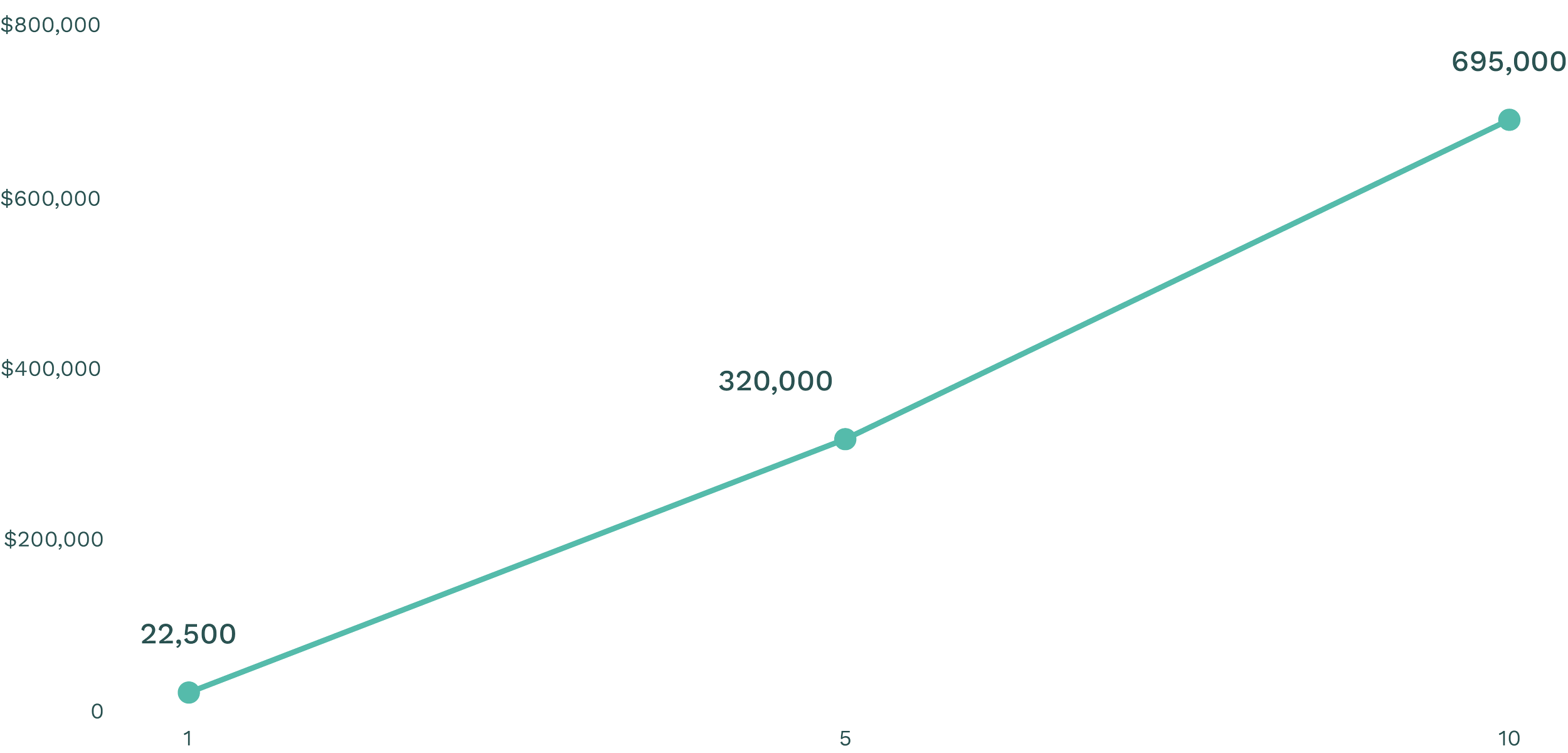
Sources: U.S. Census Bureau; Bureau of Economic Analysis; Bureau of Labor Statistics; IRS; Indiana University Lilly Family School of Philanthropy.
Institutions Anchoring Newcomers in Community Life
Anchor routine, identity, and early exposure.
Employer & Workplace Systems
Government & Public Services
Required for residency, licensing, and civic access.
Where people land; shapes daily life and proximity to others.
Housing & Real Estate
Utilities & Connectivity Providers
Universal, unavoidable touchpoint; purely transactional.
Furniture, hardware, household goods; intense engagement in first 90 days.
Home Setup & Retail
Healthcare Systems
Engaged during vulnerability; socially isolating by design.
One of the first and most repeated neighborhood interactions.
Groceries & Daily Consumption
Distribution of Social Connection Index Scores for Movers
AT RISK
15%
People have very limited durable relationships, low trust, little civic voice, and minimal access to shared or bridging spaces in daily life.
THRIVING
29%
People have strong, diverse connections and broad civic ties, marked by high trust, voice, and resilience.
People have some connections, but inconsistent support, fragile trust, limited influence, and fewer relationships across difference.
VULNERABLE
25%
People have dependable relationships, baseline trust, and access to community that supports everyday life and participation.
HEALTHY
31%
Half or Fewer Adopt Any Point of Connection
Among the Six Points of Connection, newcomers are least likely to find a third place.
Percentage of movers reporting healthy or thriving levels of adoption of each of the Six Points of Connection.
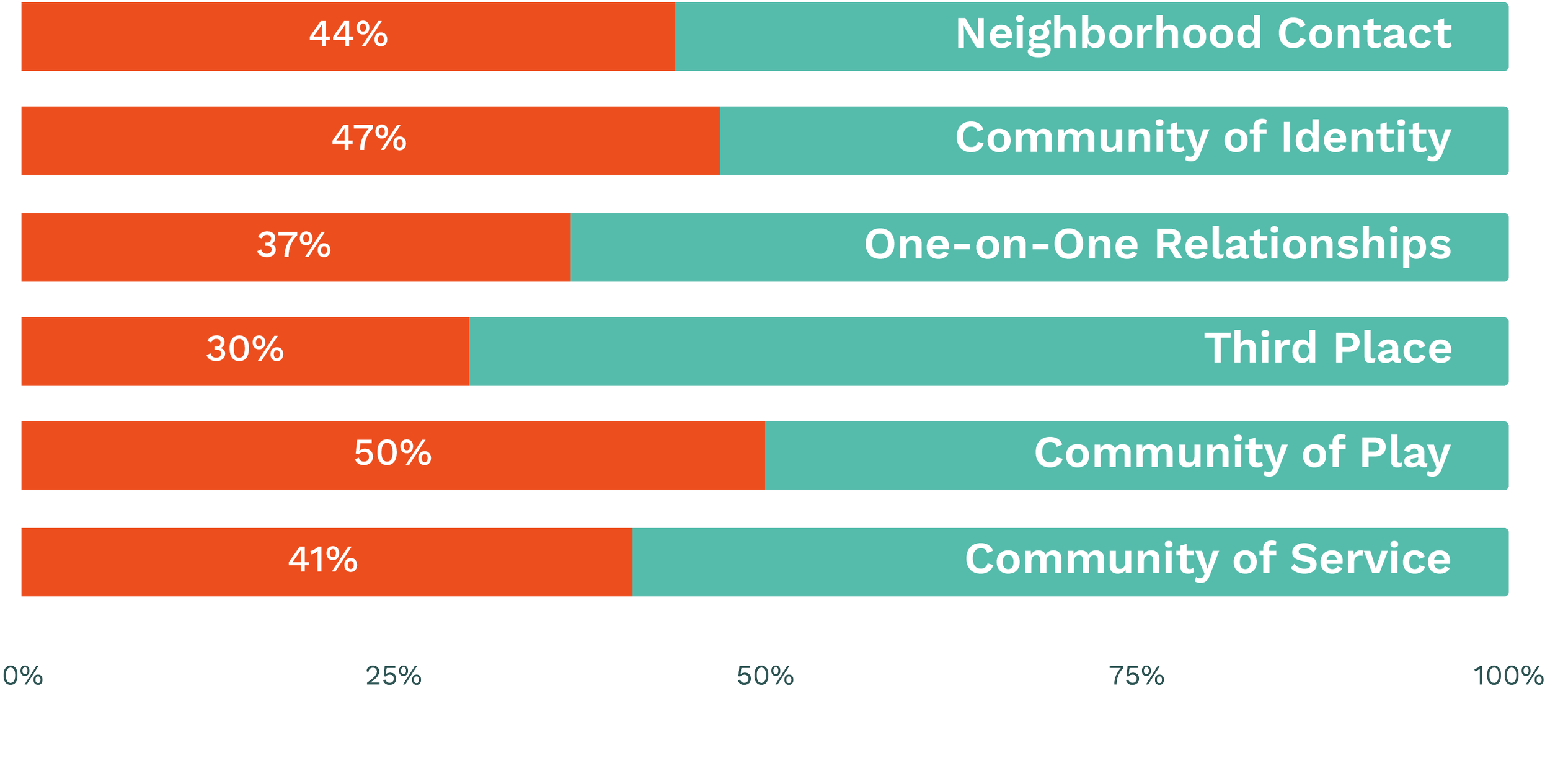
Source: US Chamber of Connection, Six Points of Connection 2026
Increased Barriers for Newcomers
People who move report 35% more barriers to connection.
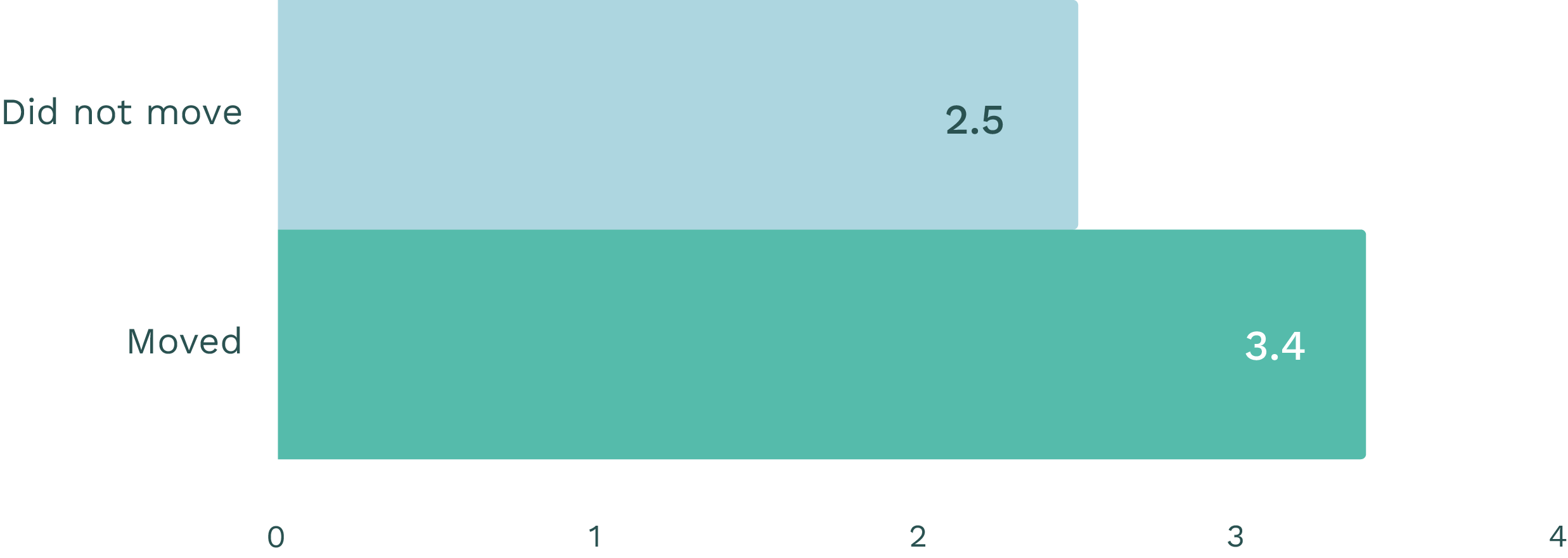
Barriers reported by movers vs non-movers.
Source: US Chamber of Connection, Six Points of Connection 2026
6 Steps to Build a Welcoming City
Coordinating Body
Owns, aligns, and measures welcoming citywide
Defines what it means to be a local—and how locals act
Prosocial Narrative
City Welcoming Rituals
Public moments that turn newcomers into neighbors
Builds welcoming into employers, schools, and institutions
Institutional Engagement
Connecting to Communities
Helps people join real identity - and activity-based groups
Neighborhood volunteers who provide ongoing, local welcome
Welcome Committee – Volunteers
Examples of Welcoming Newcomers
Welcoming works when cities take clear ownership and coordinate across institutions. That ownership shows up when cities define what it means to belong and make it visible through shared moments people can recognize and join. These moments give belonging a public shape and make it easier to participate.
Existing institutions offer the fastest way to reach newcomers at scale because they are already part of daily life. Lasting retention, however, comes from relationships, built through neighborhood-level, human support that makes welcoming personal and sustained.



Let’s Welcome Newcomers
Engaging newcomers is the key to reigniting connection in America, as their active participation can transform communities, strengthen social ties, and foster the vibrant, interconnected society we need to thrive.

Partner With Us
Choose how you want to help rebuild connection in your community.
For Cities & Regions
Bring the Chamber of Connection to Your City
Launch a local Chamber of Connection. Convene a standing commission of cross-sector partners to own the Six Points. Use the Six Points and SCI to guide and track investments.
For Employers
Turn Employee Volunteering into Community Impact
Engage employees as Welcome Committee volunteers. Embed connection into onboarding and transitions. Provide Six Points training to employees.
For Funders & Field Leaders
Invest in shared infrastructure and measurement. Advance learning and scale what works. Help institutions adopt the Six Points as an action framework.
Download the Playbook
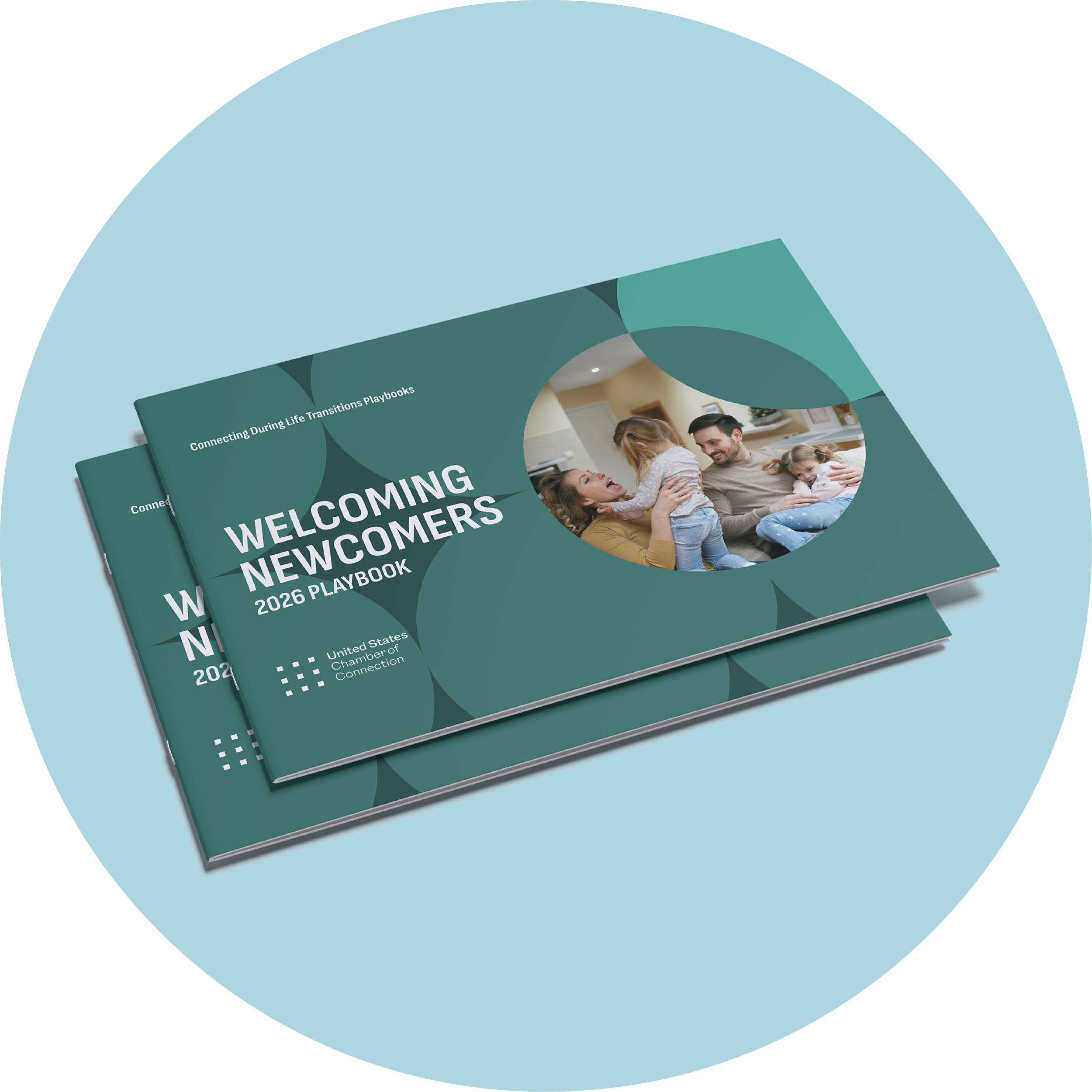
A practical, research-backed guide to help communities support newcomers in their first year.
Inside the Playbook, you’ll find:
Key data on why the first year after a move matters
Practical strategies cities and organizations can apply
Real examples of what welcoming looks like in action
Tools to strengthen connection, trust, and belonging
Stay connected
Subscribe for updates, events, and opportunities to connect.