
Nate Tubbs on becoming a character in your neighborhood’s story
He chose to invest deeply in a 12-block Chicago neighborhood. Ten years later, he's found that much of what a larger society asks of us is learned close to home.
The Island is small: twelve blocks and roughly 1,700 people on Chicago's West Side. It sits at the southwest corner of the much larger Austin community, bordering Oak Park to the west and Cicero to the south, where three very different communities meet. Welcome Committee member Nate Tubbs calls it a microcosm of Chicago.
Nate and his wife have spent the past ten years there, raising their three children, now 16, 13 and 10. In that time, Nate has been living out an idea he's encountered again and again in place-based community work: that a neighborhood should be small enough for you to become a character in its story. That means more than living there. It means having enough of a relationship with the place, and the people in it, that your presence matters.
Underneath that idea is a core belief: "The neighborhood is the unit of change."
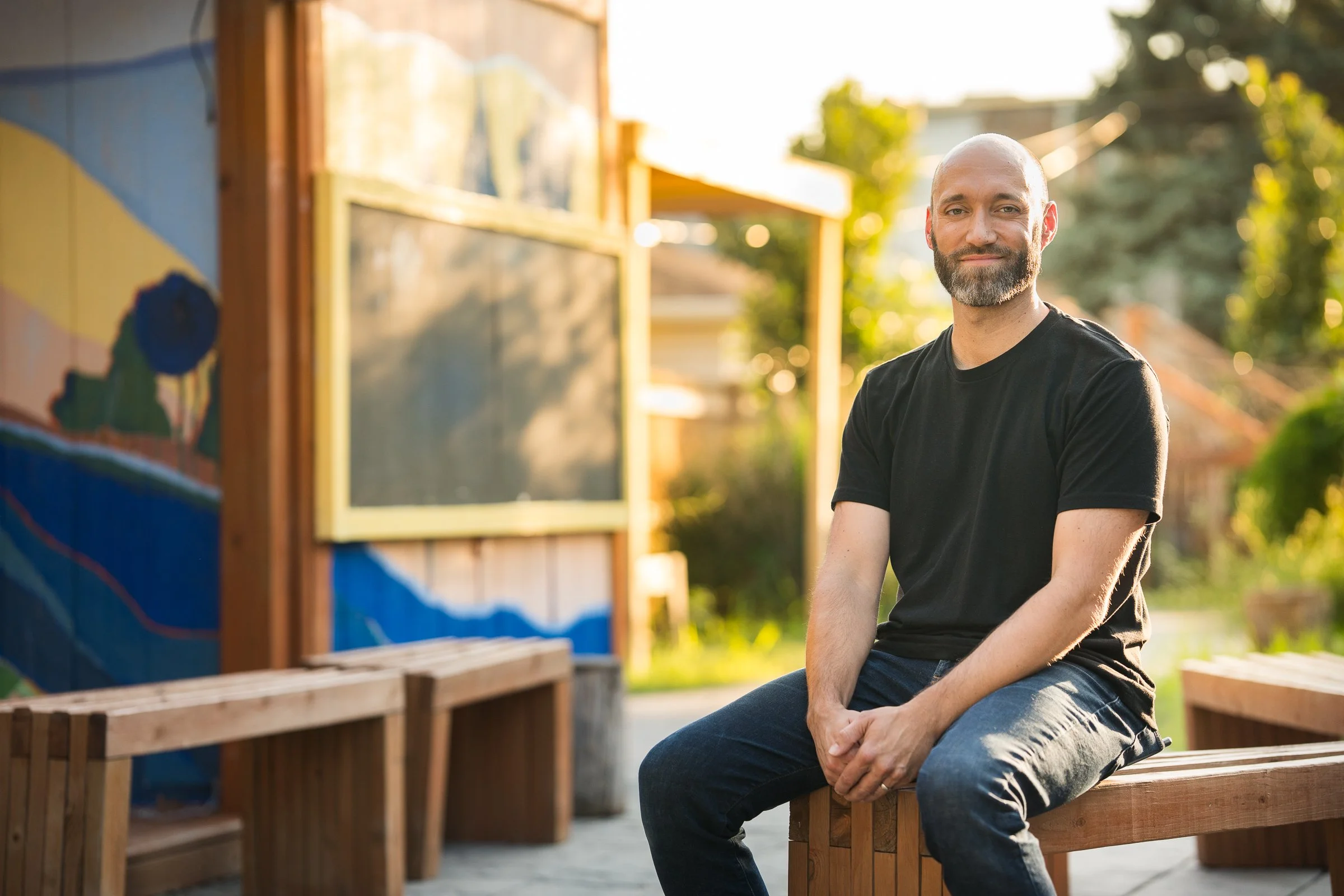
Nate Tubbs in the Island Oasis community garden
Choosing some small part of the world
There’s a Wendell Berry line that’s a favorite of Nate’s:
“No matter how much one may love the world as a whole, one can live fully in it only by living responsibly in some small part of it.”
Long before his family arrived in The Island, Nate was already wrestling with the limits Berry captures in those words. His life was rich with relationships stretched across Chicago, often connecting him to people who shared his beliefs or interests. He knew a remarkable number of people, but felt his relationships were increasingly scattered. Around the same time, he
encountered an older understanding of the concept of the parish: not simply a congreation, but a place to which someone was responsible. Geography once imposed limits that modern life has made much easier to escape. You couldn't maintain relationships everywhere. This was your place.
Nate began to wonder what his life might be like if he returned to some of those ways of thinking.
“I can't be everywhere,” he says. “I don’t have time to be friends with everyone, but I can be deeply invested somewhere.”
So when Nate and his wife chose where to raise their children, they looked intentionally for a neighborhood where their family would encounter difference and where they could devote themselves to community.
The Island – diverse ethnically, socioeconomically and politically – is that place.
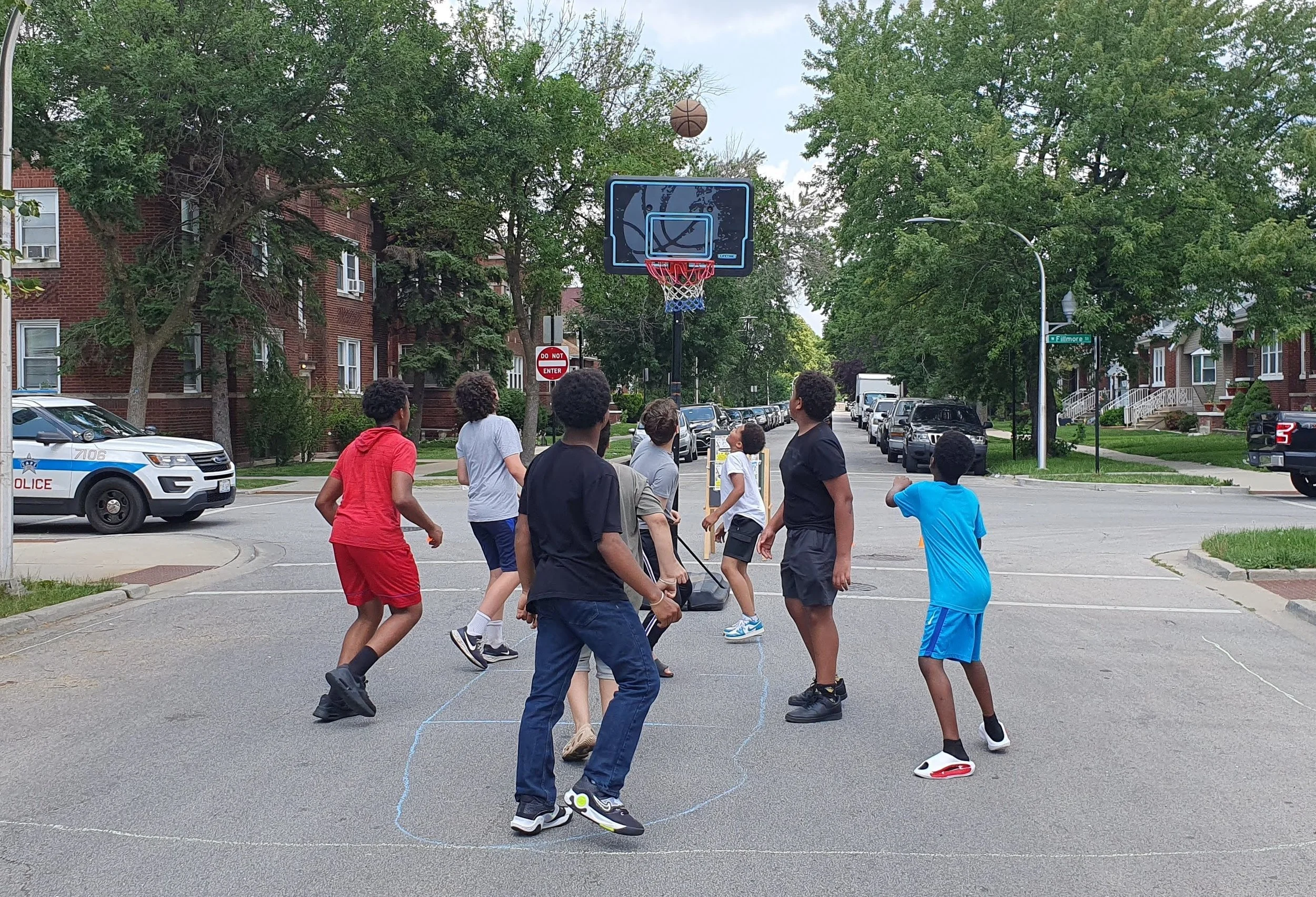
Youth playing basketball at a block party in The Island (PC Nate Tubbs)
Growing up with a role in the neighborhood
Nate's children have grown up in The Island, and his work with young people offers a glimpse of what it can mean to learn early that you have a role in the place where you live.
Several years ago, residents noticed that families were looking for positive things for their kids to do during the summer but realized many of the available options were expensive, inaccessible or just not local. In response, they created the Youth Connector Cohort and found grant funding to pay participants a stipend for community service they did during the program. The money, Nate says, carried a message: “You are valuable, you have gifts to bring.”
Over the years, the program has evolved beyond its early emphasis on work and service, with social connection, leadership, civic engagement and neighborhood support now at its center. Young people still contribute to the neighborhood, but they also spend time in porch hangs, team-building activities and community circles, talking with one another and with neighbors about everything from the place they share to mental health and self-care.
They distribute flyers, stock a community refrigerator, write letters and walk together to mail them, chalk positive messages on neighborhood sidewalks. Along the way, they become more enmeshed in the life of the place itself. On those walks, Nate might run into someone he knows whom the kids don't.
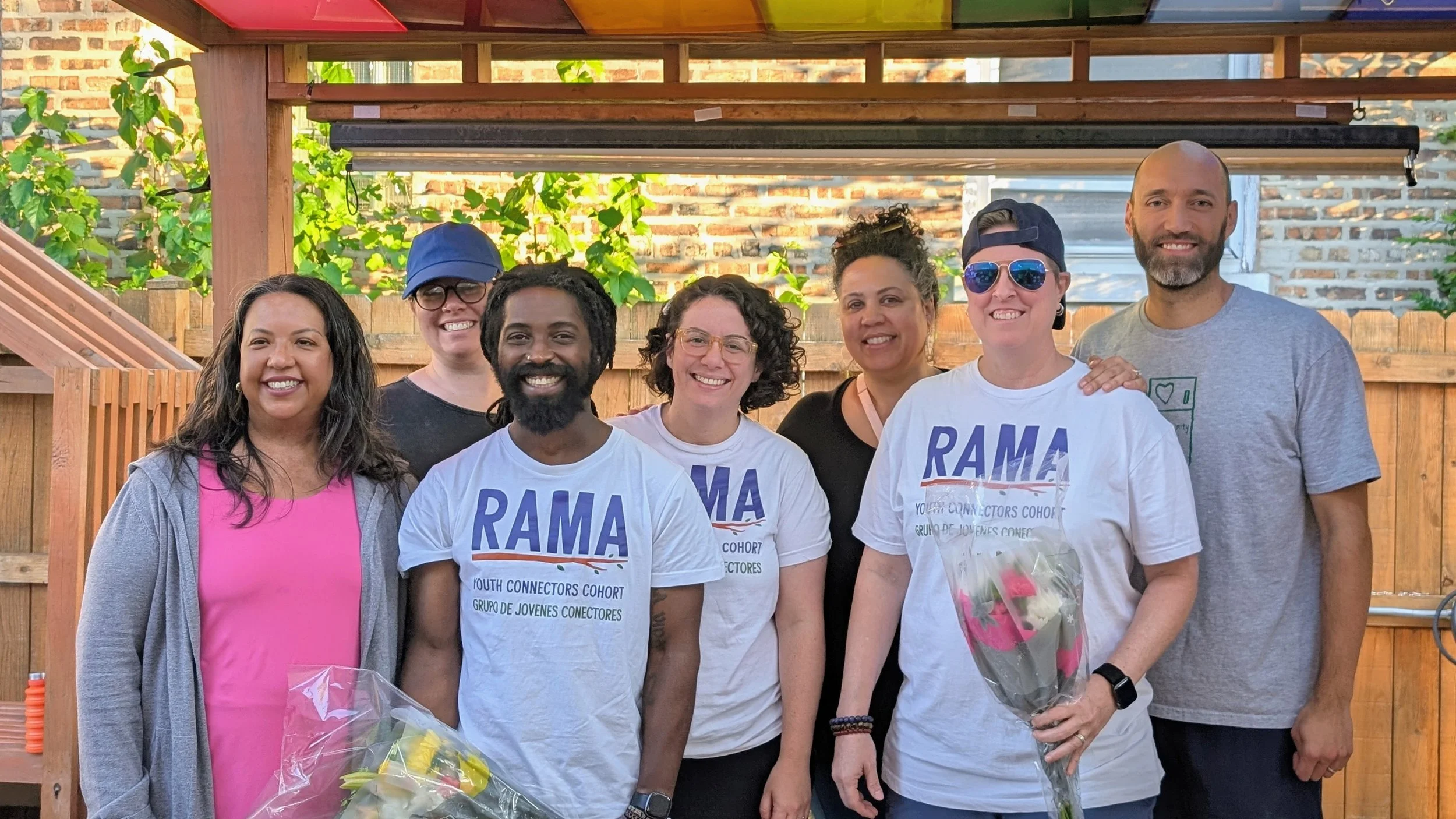
Roosevelt-Austin Mutual Aid Youth Connector Cohort Leaders (PC Nate Tubbs)
Hey, do you know so-and-so?
Another introduction. Another adult who becomes familiar. Another person added to a young person's map of the neighborhood.
“The lessons,” he reflects, “are the little moments that you couldn't have planned.”
Enough of those moments can begin to shape how a young person understands their own place in a community: they begin to see themselves as someone with gifts to contribute, the people around them as people to know, and ultimately, many develop a shared sense of responsibility for what happens in their neighborhood:
That problem is our problem. This shared joy is for all of us.
Hearing people talk about the problems facing young people, Nate has a different diagnosis:
“We don't have a youth problem; we have a village problem.”
Build the village, he argues, and you not only help the young – you help older people and everyone in between.
Giving other people's ideas somewhere to go
Young people aren't the only ones being invited to see themselves as consequential to the place.
The Island Civic Association, where Nate has been highly involved, isn't meant to be the body that decides what everyone in the neighborhood should do. Nate describes its ideal role as a supporting body.
It reflects something he also valued in the Welcome Committee: people don't need more content about connection, he says. They need permission, practice and someone alongside them.
Someone wants to clean up their block. Someone else wants to organize a gathering. A neighbor sees a problem that needs attention. The ICA’s role is to ask, “How can we help?”
That's the ideal, Nate acknowledges. It doesn't always work that way. Across 12 blocks, care can be uneven. Some blocks are closely tended; others, or the far ends of them, get less attention. Homeowners and renters don't always see the neighborhood the same way, and it's easy to decide that the trash or challenges over there are someone else's problem.
Has the cleanup changed that? Yes and no, Nate says. It has become a tradition. The harder work of cultivating care for the next block over or shared community spaces is still underway. The trash three blocks away may not be on your block, but it's still in your neighborhood. Nate extends the same logic to people: "What happens to people there affects me too."

Earth Day colaboration with GR Clark Elementary, 29th Ward, and Streets and Sanitation (PC Nate Tubbs)

Parish Collective’s Grounded Faith cohort neighborhood walk in The Island community (PC Nate Tubbs)
What ten years in a place can look like
Ten years after choosing The Island, Nate doesn't romanticize what it’s been like to embrace that expanded idea of a parish.
"It's been really rewarding. It's been really hard, but really, really rewarding."
His experience is a lesson in how civic investment compounds over time.
As a professional, he’s an entrepreneur and also provides strategic marketing and communications for nonprofits and mission-driven organizations.
In The Island, his roles are harder to count. At home, he's a husband and father. With young people, he's a leader and mentor. On the block, he tends a garden and organizes mutual aid. Across the neighborhood, he convenes, and connects people across generations and differences. Most often, though, he calls himself a neighbor.
All of those roles have accumulated in the same small geography where Nate once decided to plant himself. And running through them is another role perhaps more important than the rest: Nate helps other people become characters, too.
The young person is given something real to contribute. A resident with an idea finds people willing to help. Neighbors who might have remained unfamiliar become known to one another. Someone else's block begins to feel less like someone else's problem.
Nate's version of that role is exceptionally expansive. Ours needn't be.
A neighborhood story has room for the person who knows whom to introduce, the one who notices what's happening a few blocks away, the neighbor who keeps showing up, the person who brings an idea, and the person who helps someone else's idea along.
Each is a way of becoming part of the story.
Ten years ago, Nate chose somewhere to be deeply invested. Thousands of ordinary decisions followed.
Now, imagine choosing to invest in your neighborhood.
What kind of character will you become?
