
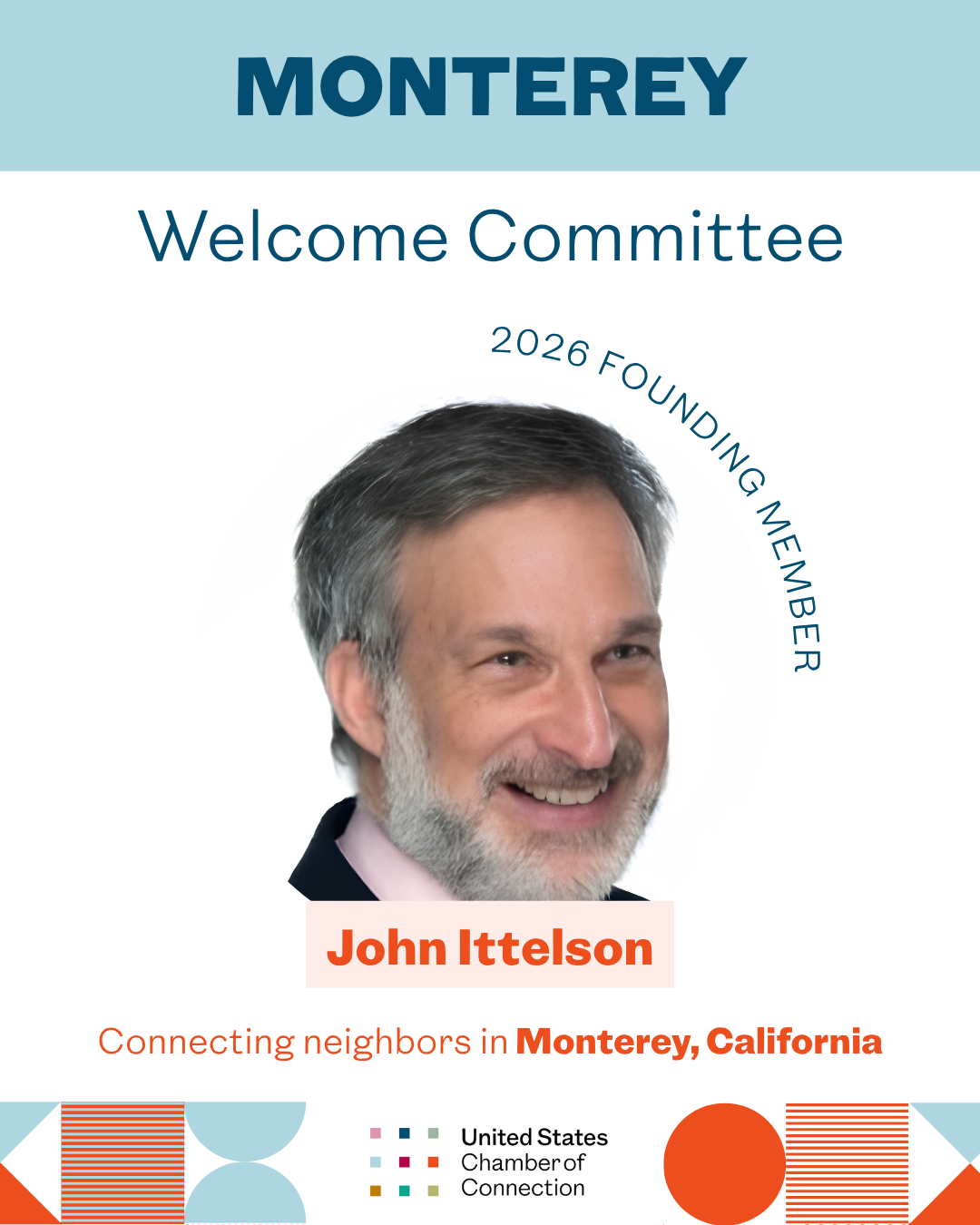
John Ittelson
He spent his career thinking about how environments shape what people do. Needing a carton of cream got him asking how we design neighborhoods where relying on one another feels normal again.
John Ittelson may be failing retirement.
The evidence: He consults with a company developing tools to make virtual gatherings more participatory, works with California State Parks programs that use technology to bring interpreters into classrooms, and volunteers with multiple organizations around Monterey, California. Lately, he has also been working on a plan to get the people in his own neighborhood spending time together again.
John was Zoom’s third client in 2012. Technology, and what it can enable people to do together, has occupied him for a long time.
For more than three decades he taught in the California State University system and was a founding faculty member at California State University, Monterey Bay, where he is now Professor Emeritus. Trained in educational psychology and instructional design, he’s built a career around the question of how to create the best environments for people to learn.
And one thing John is certain of is that the best learning environments include other people.
“Learning is a community activity,” he said.
He sometimes demonstrated this to students by giving them instructions for a magic trick with an error buried in the instructions. A student working alone could get stuck there.
A group could puzzle over the problem, compare what each person saw, and find its way through.
John has also studied communities of practice: people getting better at something by doing it together. These days, he has been wondering whether being neighbors works much the same way.
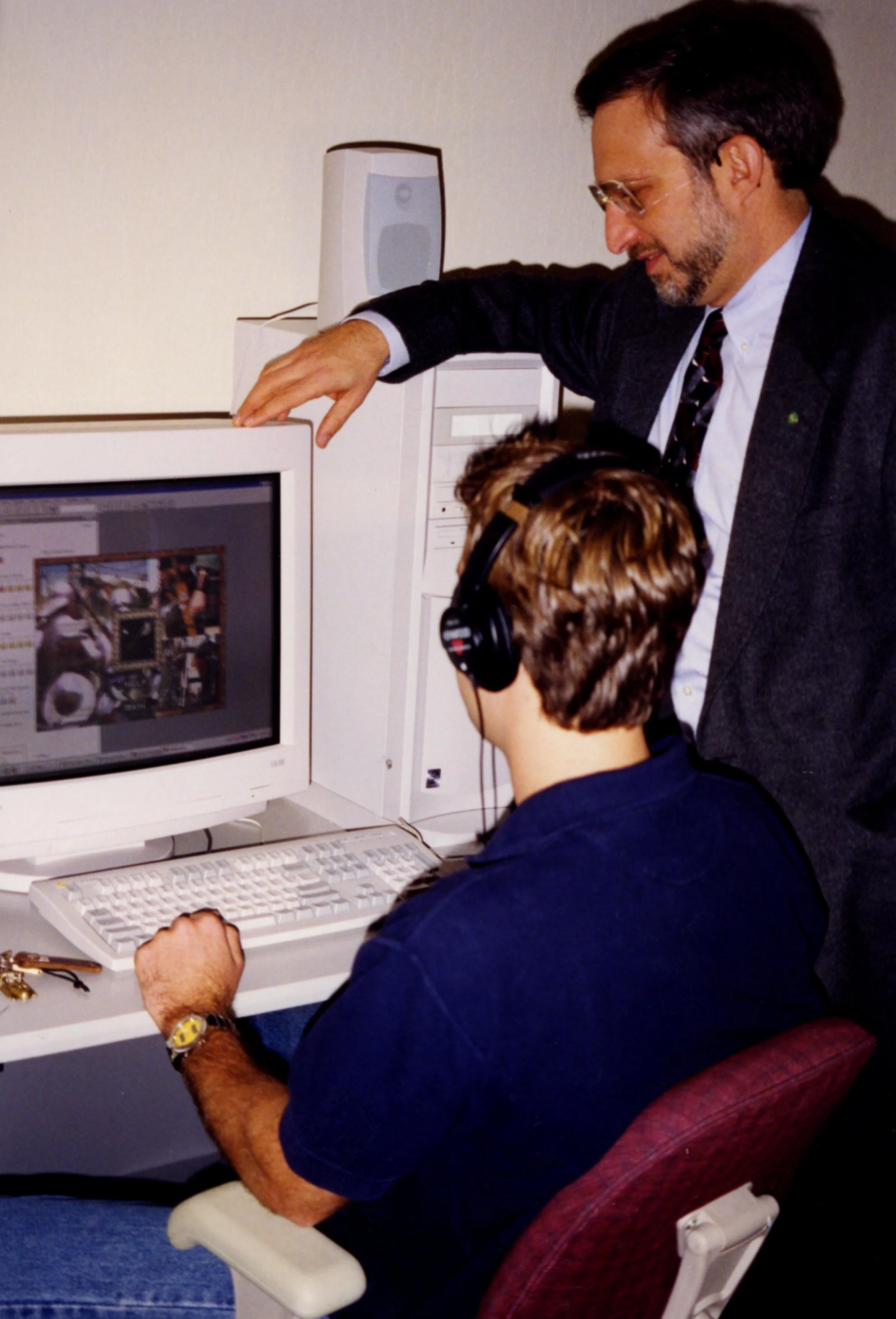
John Ittelson Working With Student" (1999)
The cream for dessert problem
Not long ago, John’s wife was throwing a party at their home when she realized she had run out of cream. The solution required almost no thought. Just go to the store. But John thought about it. There are 103 homes in their neighborhood.
“It’s gotta be somewhere within the 103 houses in our neighborhood that we could go ask somebody for cream”, he said.
Instead, they went to the store. Most of us would do the same. That’s the interesting part.
John grew up in Dayton, Ohio, where just going to the store would be the last thing someone would choose. He remembers kids moving among one another’s houses. Whichever house they landed in, some parent was around. It didn’t much matter whose. The adults kept an eye on whichever children happened to be roaming through their lives.
Then Americans became more mobile. John did, too. Chicago. Military service in the Philippines and off the coast of Vietnam. Graduate school. A move to California…
Like John, our families have dispersed. Social worlds expanded beyond the block. Work, churches, hobbies and friendships increasingly organized our lives around people who might live miles away rather than three doors down. At the same time, everyday life has become very good at eliminating reasons to bother the person next door. You don’t need the neighbor with the cream when the store is convenient. Now you may not need the store.
Once we’ve built a world in which we don’t need one another, how do we deliberately build interdependence back in?
Designing interdependence
John’s career has taught him to look first at the environment, and he’s wary of solutions that depend on telling people to behave differently:
Just say hello. Knock on the door. Invite someone over. All worthwhile. None answers the more important question:
What is it that often makes those behaviors so strangely difficult?
John has spent too much of his career thinking about learning environments to assume that telling people what to do is the same as creating the conditions in which they’ll do it.

John Ittelson as guest lecturer at the Institute of Learning Sciences & Technologies, Taiwan
That helps explain what interested him about the Welcome Committee. John calls it a “grand experiment.” He also recognizes something from his academic life: a community of practice. People try things where they live, see what happens, learn from one another, and try again. His own experiment is beginning close to home.
His neighborhood once had an Easter parade, bridge clubs, dinners and gatherings in a common play area. Much of that has faded. What remains are some decidedly less convivial reasons to gather. The neighborhood has a greenbelt that needs fire-prevention work, for instance, and residents may have to pay a special assessment to maintain it.
John would rather not wait until people need something from one another to introduce them. So he is thinking about bringing people back to the neighborhood park. Start with a small group. Ask them to reach out to others. Let the network spread.
For someone whose life has been steeped in technology, John is neither particularly dazzled by it nor interested in blaming it. He still experiments with tools that might make online gatherings more participatory. The question, for him, is what technology can do in service of the people doing the decidedly analog work of meeting, inviting, helping and eventually relying on one another.
He isn’t trying to reconstruct the Dayton neighborhood of his childhood. He is looking at the world we have designed instead and asking what kinds of behavior it makes easy. What it makes awkward. What it has made unnecessary.
And what we might design differently.
Because somewhere among those 103 houses, there was almost certainly some cream.
The harder problem is creating a neighborhood in which asking for it feels like the obvious thing to do.
