
David Soo
Before we meet someone, how much do we think we know about them?
For more than a decade, David Soo lived in downtown Washington, DC, in a row house literally touching his neighbors, with dozens of people on his block. About a year ago, David, his husband, and their eight-year-old twins moved nearly an hour away to a 50-acre farm in Stevensville, Maryland.
They have sunflowers, watermelons, cantaloupes, tomatoes, peppers, okra, soybeans and a tractor. While his husband farms, David works primarily from home. The family has thrown “lots and lots of parties” since moving there, but the guests tended to be people they already knew, traveling out from DC.
The people down the road were another matter. And David had already been thinking about what it means that so many of us have become disconnected from the people around us.
“We’ve been bowling alone for a generation,” he said. “And now we have a chance to say we’re going to do something about it instead of just handwringing.”
David initially hoped to become involved through a local US Chamber of Connection chapter. There wasn’t one that fit his geography, but the Welcome Committee offered another way in. And eventually, an enormous societal problem became a remarkably concrete assignment: knock on ten doors.
As part of his experience with the program, David decided to invite ten neighbors he didn’t know to a July 5 potluck. He made a flyer and started walking down the road.
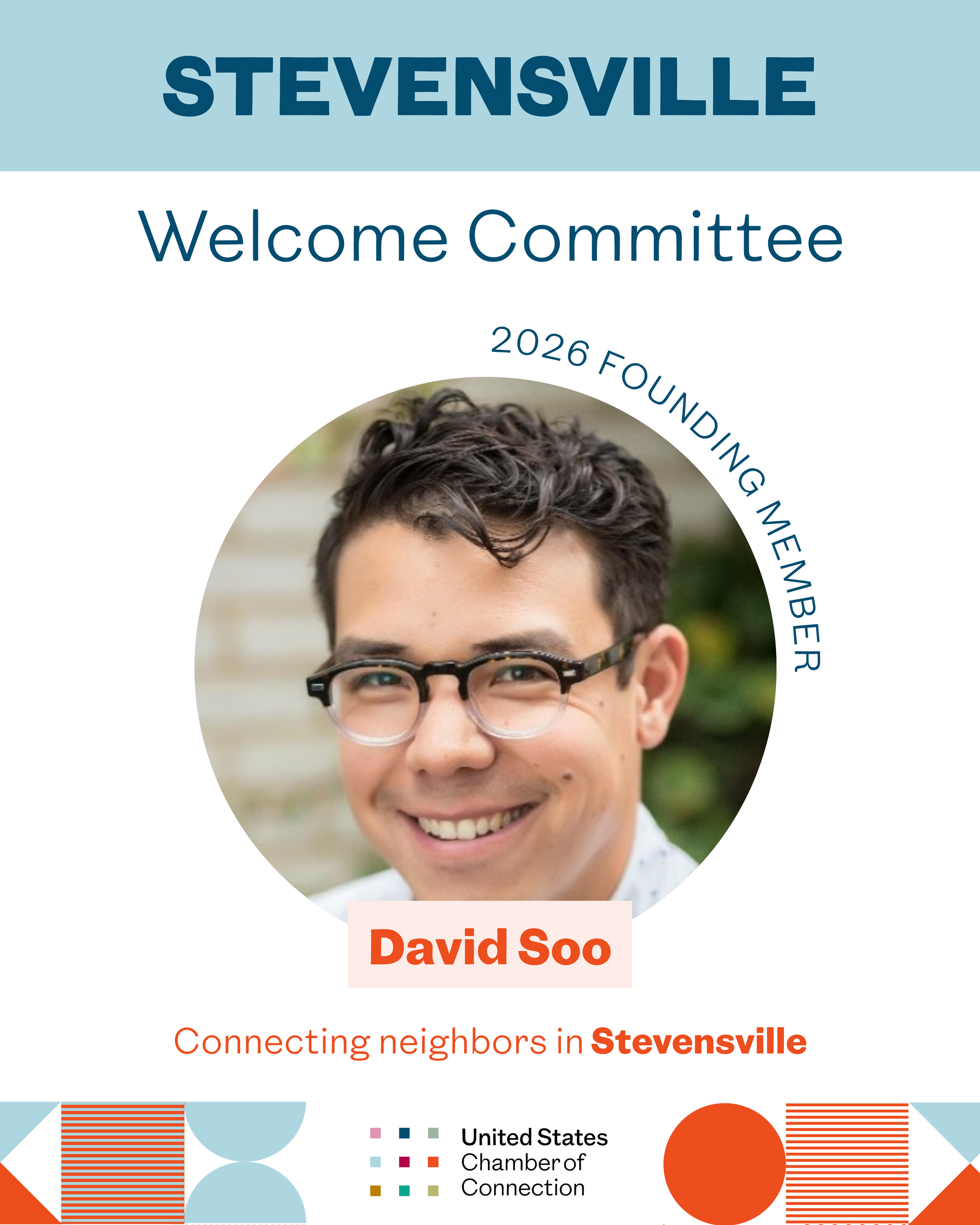
At each door, David introduced himself as a neighbor and invited whoever answered to the potluck. The conversations were friendly. He kept going, working his way down the row of houses he had decided to visit.
Then he came to one with a lot of pickup trucks outside.
“I made a judgment in my head about who might be in this house,” David said.
For the first time, he felt a pang of hesitation. Did he really want to knock on this door?
But he had given himself an assignment: go down the row. So he knocked.
“They were super nice,” David recalled. “It was a wonderful conversation.”
Before that door opened, the people inside existed for David largely as an imagined category. A few external signals suggested who they might be, and perhaps how different they might be from him. Once the door opened, they became particular human beings.
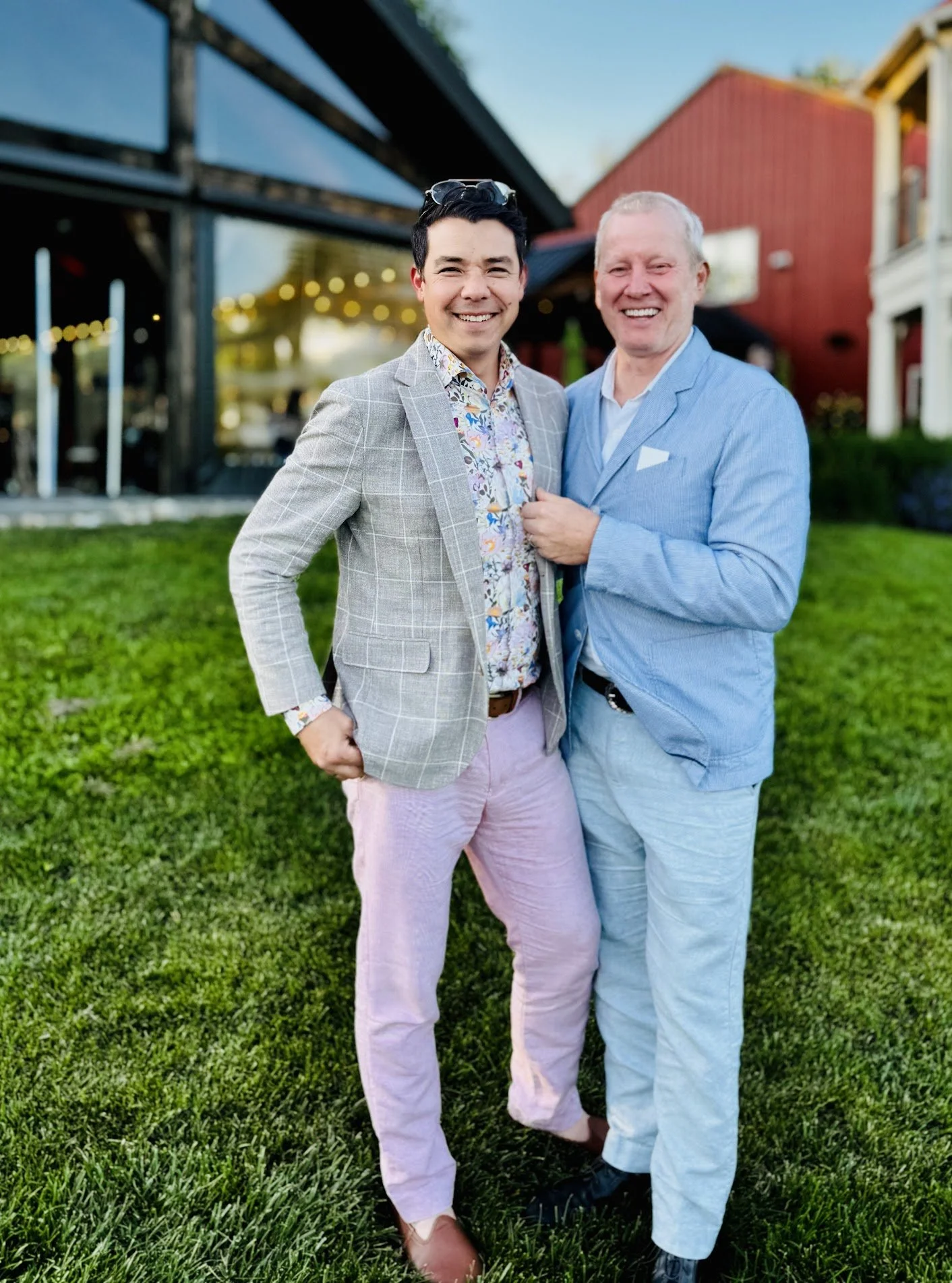
David and his husband.
Increasingly, we encounter one another this way: identity before relationship.
David thinks about this especially in the context of political polarization. In Washington, DC, he says, political similarity could largely be presumed. Where he lives now, it can’t.
Yet David isn’t describing greater interpersonal conflict. He knows some of the people he has met hold political views different from his own, but politics rarely comes first.
“We come together as people first,” he said. “We’ve come to it with a real relationship first, and then we can get into politics.”
What changes when we reverse the sequence? What becomes possible when relationship precedes identity?
Much of contemporary life, David worries, pushes us in the opposite direction. On social media, we can encounter someone’s “red hot emotions” and political identity before we know anything else about them. We can begin villainizing one another before we have ever met.
A doorstep works differently.
In fact, nearly everyone whose door David knocked on initially greeted him with the same skeptical look: Who is this guy? Why is he here? What is he selling?
Then he explained: “I’m your neighbor. I’m here to invite you to a party.”
“And then this smile goes over their face,” he said. “They’re so excited.”
Some conversations lasted several minutes. People told him how long they had lived there and talked about others nearby. About a third to half of those he invited came to the party, and David encountered no hostility or outright rejection.
What David experienced is a feeling familiar to most of us. The person knocking is slightly apprehensive about knocking. The person answering is slightly apprehensive about answering. Then both are apparently pleased that the interaction happened.
Nobody necessarily wants the distance, but everybody has learned behaviors that preserve it.
We’ve become accustomed to treating the boundary around another person’s private life as something we need a reason to cross. David’s Welcome Committee assignment gave him one.
“I had given myself the assignment to go down the row,” he said. “And so I did.”
In the moment, David couldn’t know what would come from pushing past that hesitation. That’s part of what makes crossing a social boundary difficult: the discomfort is immediate; whatever might come from it is still hypothetical.
Yet the effects extended beyond David. Among the people he met were neighbors living only two or three doors apart who did not know one another. Some were older and more isolated. David began making introductions.
The human beings were already there. The geographic proximity was already there. The desire for connection, apparently, was there too.
What was missing was a mechanism, and someone willing to make the first move, that could turn proximity into relationship.
David now has phone numbers for people who were previously strangers. Some of those neighbors now have one another. There is more follow-up to do, he acknowledges, but two days of knocking on doors and one party altered at least a small part of the network around him.
He has spent years watching the country become more distrustful and politically polarized and wondering what can actually be done about it. For David, that is part of the appeal of the Welcome Committee: something he could actually do about problems that otherwise feel impossibly large.
What happened on his road raises questions that extend well beyond one town in Maryland.
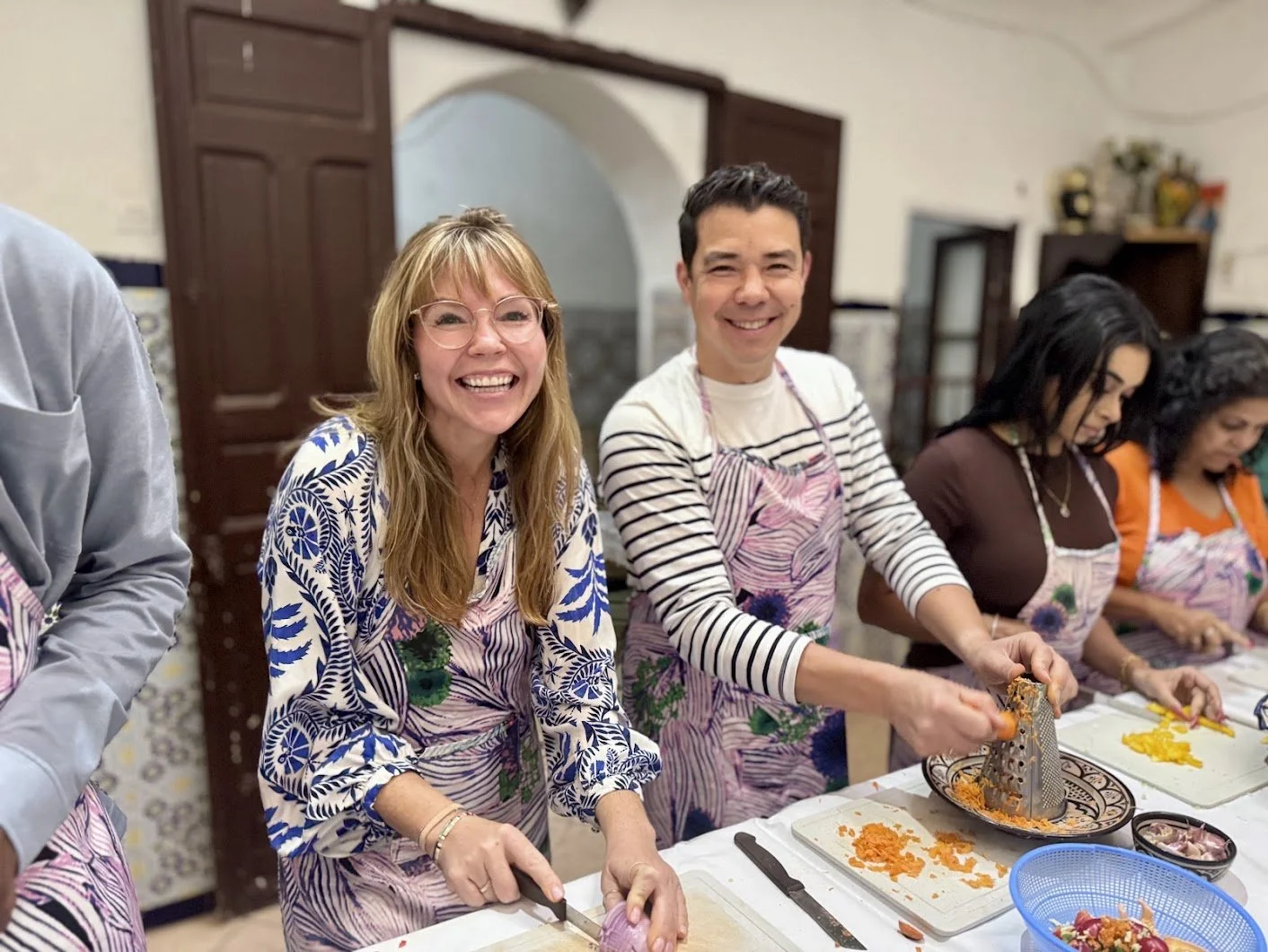
Why can two people both be receptive to connection while neither initiates it? What happens when we encounter people first through signals of identity rather than through relationship? And what kinds of structures give us permission to cross boundaries that we may not actually want there in the first place?
David doesn’t pretend knocking on doors answers those questions. But he has seen what can happen when we create the conditions to encounter one another as people first.
We can't know in advance what meeting someone will change. But we also can't know who someone actually is without meeting them.
David isn't arguing that relationships erase differences. Quite the opposite: the differences remain. The question is what changes when we encounter them after we have encountered the person.
