
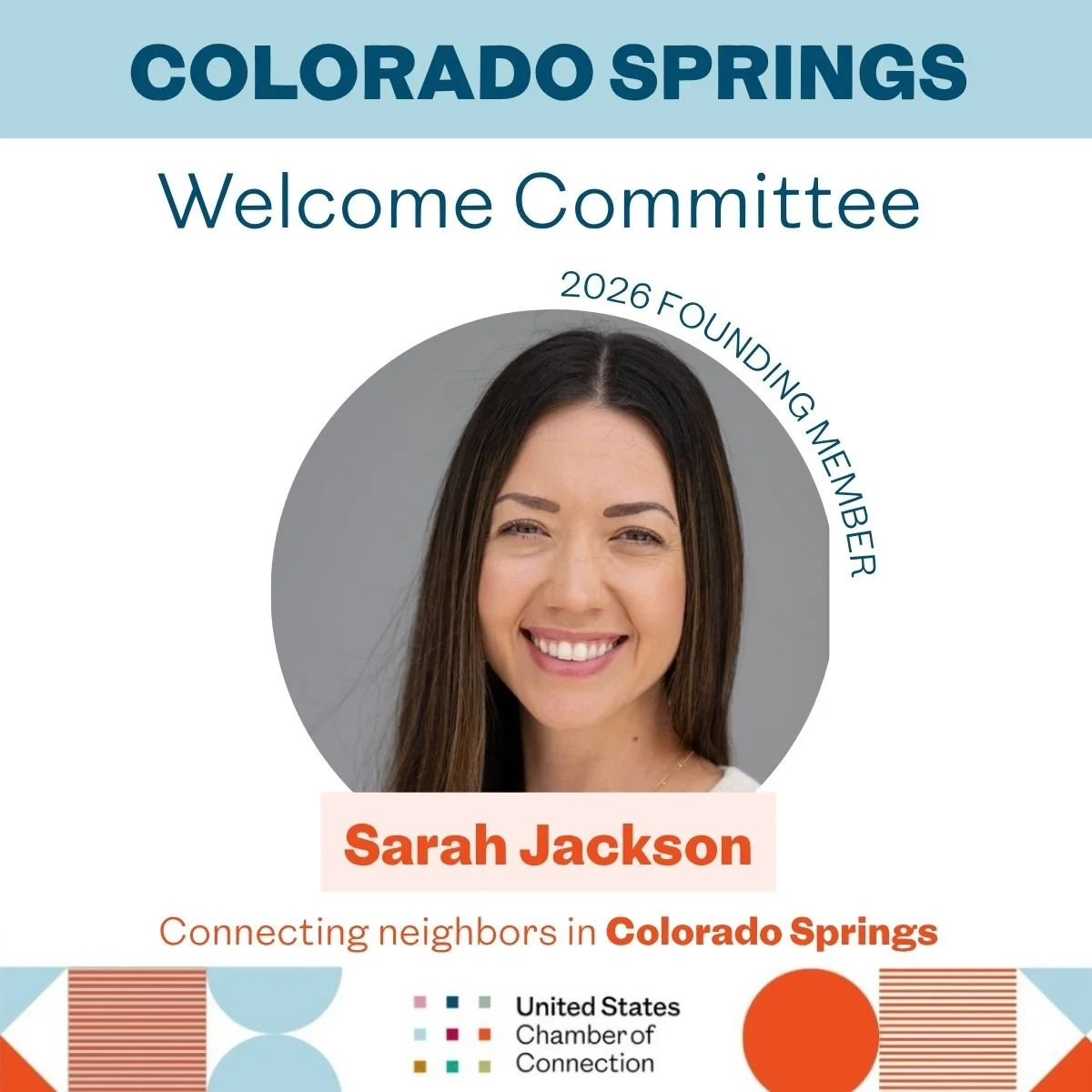
Sarah Jackson
When coming home means being in a place we don’t have to be “on” anymore, what happens to our neighborhood?
At some point, for many of us, the idea of a neighborhood stopped being a relationship network and became primarily a residential location.
We find communities organized around profession, faith, parenthood, politics, exercise, hobbies, volunteering, identity, and almost any other form of affinity. Then we return home to people we did not select and, quite often, do not know.
Sarah Jackson's story makes it harder to explain this simply as another symptom of social disconnection.
Sarah is unusually practiced at creating community.
At the global nonprofit where she works, she and a colleague noticed that younger employees wanted meaningful connection and development opportunities, but there was no structure through which those relationships could form. Years later, the affinity group they created is on its fourth generation of leadership.
She hosts a monthly mom’s picnic, co-founded a women's giving circle in Colorado Springs and completed Leadership Pikes Peak specifically because she wanted to understand her city and become more useful within it. Her instinct to create human infrastructure is strong: “I see a felt need that other people have, and I feel like I can do something about it.”
There was, however, an obvious gap in her highly intentional social life.
Sarah barely knew her neighbors.
“I had not really honestly considered my local neighborhood as a space to invest in,” she said. Her family delivered homemade cookies each Christmas, but otherwise the neighborhood was “pretty dead.” People waved but rarely talked.
How we think about neighborhood is not always how we act in it.
If someone who is shy, overextended, or inexperienced at hosting doesn't initiate with neighbors, we understand. None of that describes Sarah. She had already spent years turning groups of unrelated people into functioning communities.
So why were the people next door outside that instinct?
The most interesting explanation was embedded in something she said almost in passing.
“Sometimes coming home is just my space where I don't have to be on anymore.”
Most communities we build now are entered deliberately and can be exited just as deliberately. Neighbors are different. We rarely choose one another. We can’t easily leave if an overture becomes awkward. Turning physical proximity into social proximity means relaxing a boundary contemporary life has taught us to value: the right to come home and be left alone.
We have become very good at finding people who are like us while becoming less certain what to do with the people who are simply near us.
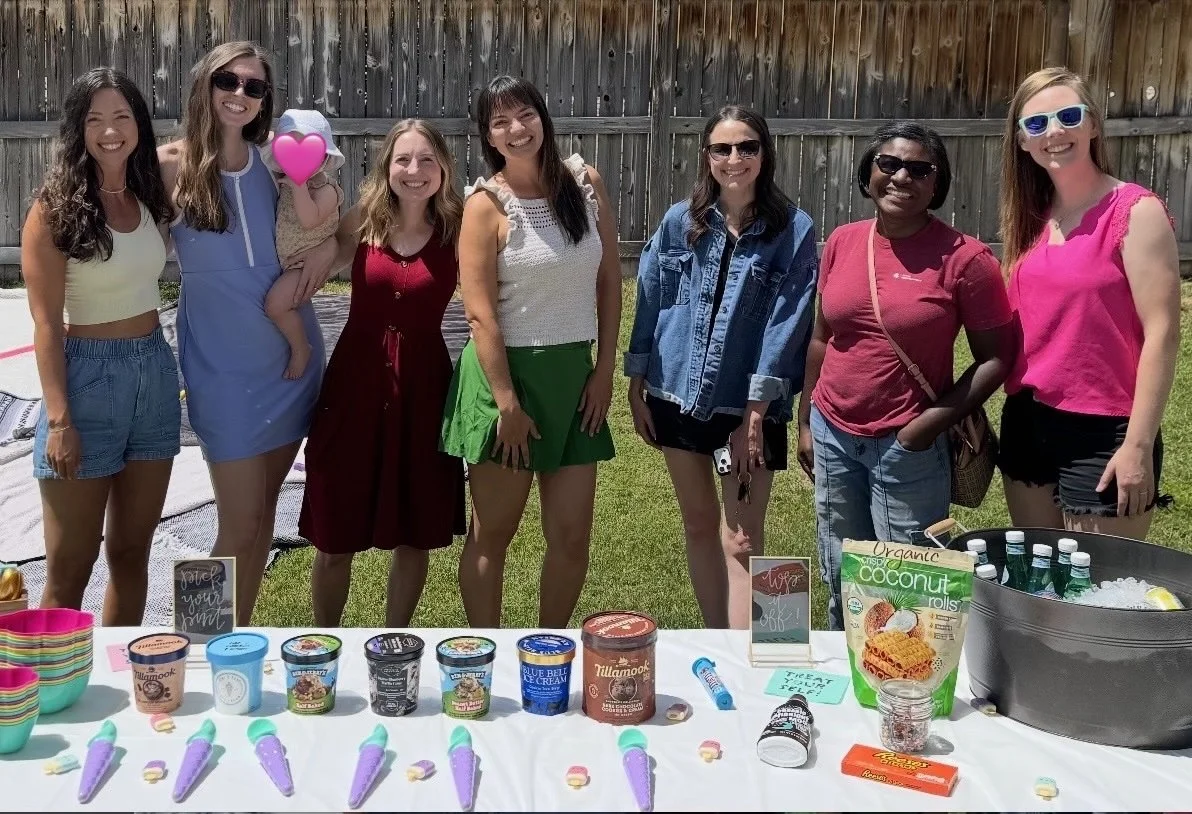
Photos courtesy of Sarah Jackson, here doing ice cream social with friends.
Who teaches us what a neighbor is?
Sarah grew up watching her mother treat generosity less as a special virtue than as ordinary behavior. Her mother worked as an occupational therapist, served on the PTA, gave time and money to nonprofits, drove her children everywhere, and remained emotionally available to them. When someone had nowhere to go on Thanksgiving, she invited them to the family table.
There is an important distinction between values and norms.
Many of us value generosity like Sarah’s mother but aren’t sure what that means. Do we introduce ourselves? Knock? Invite the person who would otherwise be alone? Is it intrusive to check on someone, or would it be strange not to?
Sarah grew up seeing some of those answers enacted.
Social norms are learned that way. We watch what other people do, discover that a behavior is allowed, and acquire a script we may not have had before. We can value neighborliness while having remarkably little agreement about who should initiate or whether the person next door would welcome an invitation at all.
The Welcome Committee gave Sarah a concrete prompt to act.
With no idea whether they would come, she bought coffee and donuts and invited her neighbors into the driveway. Twenty people from eight households did.
Afterward, she asked how often they might want to gather. Sarah expected quarterly, perhaps twice a year.
Essentially everyone who responded chose bimonthly, the most frequent option she offered.
“I was like, wow, that's a lot.”
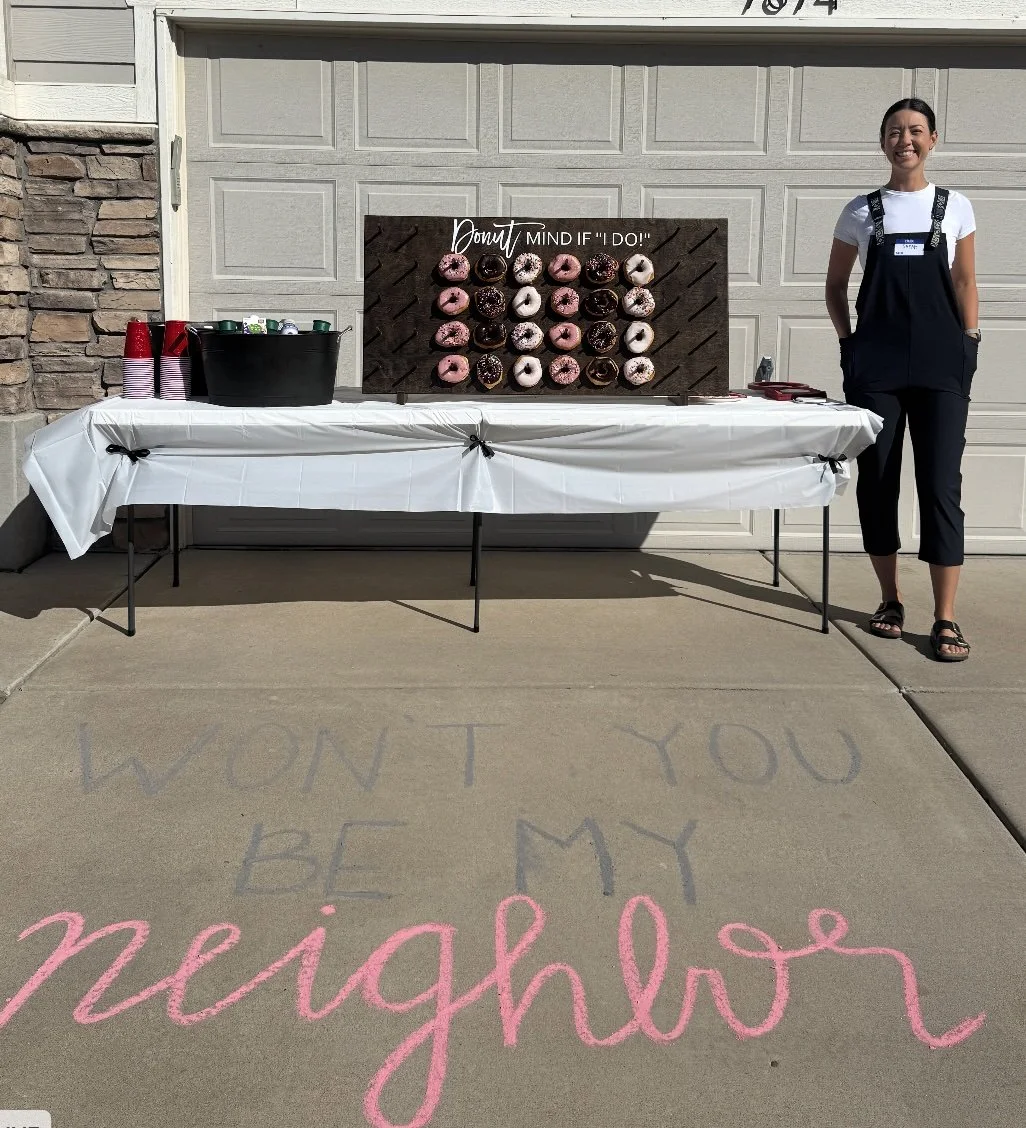
Permission to create neighborhood
Even Sarah Jackson had underestimated her neighbors' appetite for being neighbors.
One driveway gathering can’t establish a general rule about American neighborhoods. But it leaves us with a more nuanced problem than that people are lonely.
We can live beside one another wanting more contact while treating the absence of contact as evidence that nobody else wants it. Privacy may be mistaken for preference. Non-initiation can look like rejection. Without a shared idea of who should make the first move, we can all reasonably wait for someone else to do it.
Sarah's gathering didn’t persuade her neighbors to value connection. It’s likely they already did.
What it gave was permission.
Sarah now walks with a woman and her dog and texts with her. She had coffee with an older neighbor and learned part of her life story. She and her husband invited a couple up the street to dinner; the couple invited them back.
None of this is remarkable by historical standards.
That may be precisely what is remarkable about it now.
The prospective relationships were already arranged around Sarah's house. The physical infrastructure had done its part. What was missing was the social expectation that proximity was enough of a reason to begin.
The people may already be there.
And though we may have lost the expectation that being neighbors means something, Sarah shows us it can take surprisingly little to make it mean something again.
