
On Hansen Hunt’s block in Mission Beach, San Diego, the houses face each other across a shared walkway; front doors opening onto front doors. The court was designed for connection. And yet when Hansen started paying attention, he realized he didn’t really know who the locals were. Eight in ten of the people around him were vacationers, there this week and gone the next. Every few days, the faces change. Nobody was welcoming new neighbors, because nobody could tell who the neighbors were.
Hansen knew something about bringing people together. He’d spent two decades doing it through his work building user groups for marketing programs, planning the parties, sending the invitations. He took a marketing users group in San Diego from ten people in a room to a thousand-person conference. He was, by every visible measure, the connector.
He was also lonely. All that gathering had been built for other people’s causes, other people’s communities. He was the host who never quite got to be a guest. Getting sober, seven years ago now, forced the question into the open: he had spent a career connecting strangers to each other and somehow skipped himself.

Co-Founder of San Diego Chamber of Connection Hansen Hunt (far left), with Nancy (green hat) and other neighbors.
What changed his life wasn’t a program. It was a series of small, personal invitations. The things not listed on a resume. A coworker asked him to join the San Diego Track Club and offered to train for a marathon alongside him. A mentor told him plainly that he needed a support group, whatever it ended up being called. Another man noticed him, called him, and invited him into a men’s group. Each time, someone saw him and said: come with me.
So when Hansen looked at his ever-changing block, he didn’t propose an association or an app. He and a few neighbors started putting out coffee and bagels one Saturday morning a month, walking the nearby streets, and handing out invitations to whoever actually lived there. They call it the Mission Beach Neighbor Hang. Twenty to thirty neighbors show up and, over and over, meet each other for the first time.
That’s how everyone met Nancy. She’s 88, and the regulars now call her the matriarch of Mission Beach. It turns out she and her late husband collected every tool a garage could hold, and she is honored — his word — to lend them out. Now nobody on the block needs to own every tool, because one Saturday, someone handed Nancy a bagel.
Borrowed tools are the smallest version of the return. The bigger one came through the men’s group he’d been invited into: when Hansen had foot surgery and had to move houses at the same time, the help arrived without a signup sheet. “I had eight guys show up and move my entire house out … if I rewind the clock even just five years, I had no one, I had zero people to call for that type of thing,” he says.
Hear Hansen’s full story on How We Connected.
Hansen’s story is not unusual. The block that doesn’t know itself is now the American default.
The Street Nobody Stays On
For most of our history, welcoming new neighbors was a script everyone knew: the knock on the door, the casserole, the names exchanged over a fence. The script assumed something we’ve lost — that both households would still be there in five years, so the effort would pay off. Americans now move more often, work from anywhere, and treat home as a place to recover from life rather than live it. No one decided to stop knowing their neighbors. The street drifted apart on its own.
And the moments when a neighbor’s welcome matters most are exactly the moments the drift hits hardest. A move to a new city, a first baby, a retirement out of the workplace that supplied your daily conversation — these life transitions strip away the built-in communities of school and work right when a person most needs someone nearby. And the neighbor is the only connection that comes with the address.
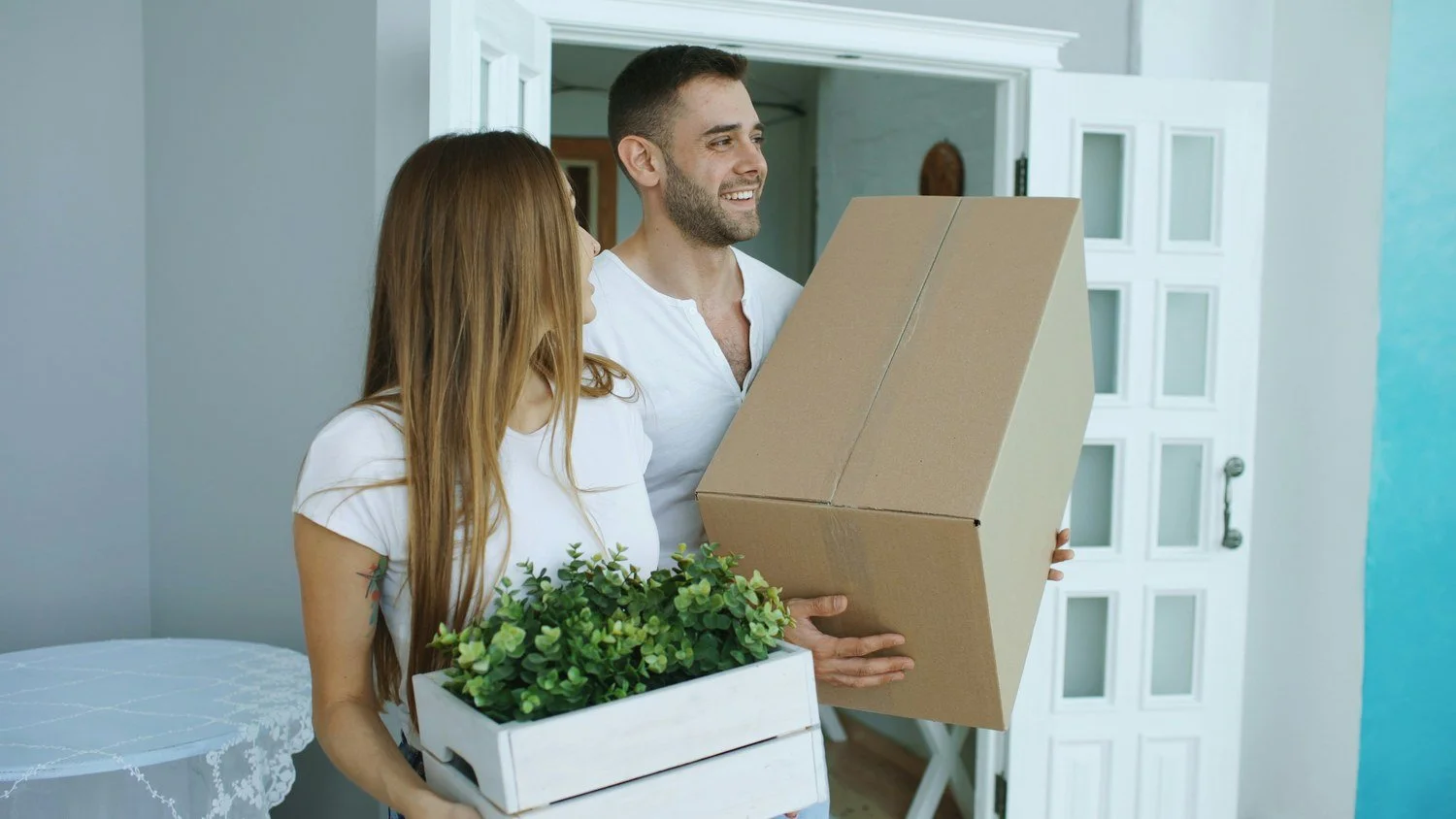
Photo: Vitaly Gariev / Unsplash
We can measure the drift. In our 2026 State of Connection in America report, we found that only 42% of U.S. adults have a neighbor they could count on in an emergency. Having a Neighborhood Contact is one of the Six Points of Connection, the six everyday practices our research links to a fully connected life. It is the point closest to your front door, and most Americans don’t have it.
The sociologist Eric Klinenberg has argued in his book Palaces for the People that connection depends on social infrastructure — the libraries, parks, sidewalks, and shared spaces that make gathering possible. Hansen’s block is proof of both the power and the limit of that idea. His court was built as social infrastructure, walkway and all. It still produced strangers.
The walkway was never the problem. The missing piece was a person willing to make the first invitation.
How to Welcome New Neighbors Without a Program
Welcoming new neighbors works best when it is small, repeatable, and personal. No need for a huge block party with a budget. A monthly coffee, a knocked-on door, a name remembered gets the ball rolling. The goal is not instant friendship. It is making sure the new household knows one face, one name, and one place where they are expected.
That bar is lower than it sounds. And our data shows the people not connecting to their neighbors mostly aren’t declining out of disinterest. In the same 2026 report, 52% of U.S. adults land in the at-risk or vulnerable range for social connection. When we asked what stands in the way, the biggest barriers weren’t cost or distance. They were feelings — being nervous to put yourself out there, being uncomfortable showing up alone, not knowing where to start. The person three doors down likely wants to know you. They just don’t want to go first.

Photo: Apartment Life / Unsplash
Eric Leslie has built his whole model on this insight. His Boston nonprofit, Union Capital, rewards people for showing up to civic and community life the way stores reward loyal shoppers, and it has grown past 5,000 members. But he’s blunt about what actually makes anyone walk through a door: “… we could plaster QR codes everywhere to sign up. But it won’t work, and it doesn’t stick unless it comes through an invitation, through a relationship …”
Hear Eric’s full story on How We Connected.
Broadcast reaches everyone and moves no one. An invitation moves one person at a time, and that person stays. Hansen’s bagels work for the same reason Eric’s network does: someone specific asked someone specific to come.
The Neighbors You Didn’t Choose
There’s something else that makes the block worth the effort, something a curated friend group can’t replicate. You choose your book club. You don’t choose your neighbors.
That sounds like a drawback. It may be the point. Neighborhoods are one of the few places in American life where we regularly encounter people of different ages, interests, politics, and histories. Where a relationship can form anyway, because proximity keeps offering another chance. The conversation that goes badly at Thanksgiving can go fine over a fence, because the fence will still be there next week. Sociologists call this bridging, and it is the kind of connection our civic trust is starving for. Our research offers a hopeful surprise here: 60% of Americans say they’re open to connecting even with people quite different from themselves. The appetite for the bridge exists. The neighborhood is the bridge that’s already built.

Photo: Josh Collesano / Unsplash
Ethan Bryan found this out with a baseball glove. Encouraged by his daughters, he played catch every single day of 2018 — with old friends, with strangers, with anyone willing to throw — and wrote a book about the year. What started as a game became a practice of meeting whoever showed up. His ask of everyone listening is about as complicated as a welcome needs to be: “I just want us to remember what it means to be human. You know, go play catch with your neighbor.”
Hear Ethan’s full story on How We Connected.
An 88-year-old with a garage full of tools. A stranger with a spare glove. The block doesn’t need everyone to be alike. It needs them to be introduced.
The Part You Can’t Automate
We won’t pretend this is free. The welcome is labor, and the labor refuses to be delegated.
Hansen, who spent a career in marketing automation, keeps relearning this the hard way. When his team needed to fill a 110-person dinner for community leaders in San Diego, no clever campaign was going to do it. “All those invitations were made by phone calls from a group of five of us, and people wouldn’t have shown up if I just automated an email …” he says.
Five people, hundreds of calls, for one dinner. A monthly bagel table, every month, indefinitely. Streets walked, invitations handed over one at a time. There is no version of welcoming new neighbors that somebody else can do for you at scale, and the people who take it on give real time they are rarely thanked for. That is the honest cost of a connected block, and it doesn’t go away.
Back on the island court, the coffee still goes out one Saturday a month. The faces still change — that’s Mission Beach. But now there’s a table the new faces can walk up to, and a Nancy to meet when they do.
You probably have a Nancy on your street. Somebody three doors down has the tools, or the stories, or the time, and no one has asked. The next time a moving truck pulls in, you don’t need a committee or a casserole recipe. You need thirty seconds of going first. Knock, say your name, and let the street start learning itself.
Where to start this week
Learn one name. Introduce yourself to a neighbor you’ve seen but never met — the mail moment or the driveway pause is enough. “I’m [name], I’m in the blue house” is a complete welcome.
Put a small thing on the calendar. Coffee on a folding table, one Saturday morning, three houses invited by note or knock. Repetition matters more than turnout, so pick a date you can repeat.
Ask to borrow something. It sounds backwards, but a small request (a ladder, a lemon, an extra chair, etc.) tells a neighbor they’re useful to you. Being needed is its own welcome.
Ready to make welcoming where you live official? Join the Welcome Committee — neighbors who welcome newcomers, host gatherings, and help rebuild connection one relationship at a time. And if you’re in Hansen’s corner of the country, the San Diego Chamber of Connection chapter would love to meet you.