
The Art of Inviting: How to Host a Party People Come Back To
For years, Yao Huang was the quiet kid in the back of the class. Her career ran through healthcare, tech, finance, and climate, built on the kind of eighteen-hour days that leave no room for anything unscripted. Then, somewhere along the way, she signed up for standup comedy classes. Not improv. Standup: written jokes, memorized sets, delivered so well the room believes they were invented on the spot.
The classes pulled something loose. The goofy, funny person who came out on stage had never once appeared at the office. At work she had been playing a different character, the serious professional she believed she was supposed to be.
Around the same time, about twenty years ago in New York, she started a dinner series that was just her friends. Four women at a table, talking the way close friends talk. No agenda, no name tags. Friends invited more friends. The dinners moved into homes, then into other cities.
Today that dinner series is called Wonder Women, and by Yao’s count it spans 30 cities and roughly 20,000 women leaders on three continents. It has never been marketed. Every table is curated, every seat is a personal invitation, and in some cities a thousand people wait for one of 200 seats a year. She calls it a whisper network.
“It was never marketed … it was fun and it felt like hanging out with your best friends,” Yao told us on our podcast, How We Connected.
Four friends at a table became twenty thousand. Not because of a budget or a brand. Because someone kept inviting.
Yao never set out to teach anyone how to host a party. She set a table for people she loved, and then she refused to stop setting it. That is the whole lesson.
Why Knowing How to Host a Party Is a Civic Skill
Most of us are waiting for an invitation that is not coming. We treat knowing how to host a party as a personality trait, something extroverts are born with, rather than what Yao’s twenty years suggest it is: a skill, learnable and repeatable, that changes the lives of everyone within reach of the table.
We hear versions of this in every city we work in. People want dinner parties to exist. They want to be the kind of person who gets invited to them. What almost nobody volunteers for is the role that makes the whole thing possible, because hosting a party can feel like a performance with an audience of your closest critics.
The waiting has consequences. In our 2026 State of Connection in America report, we found that 52% of U.S. adults fall in the at-risk or vulnerable range for social connection, and only 28% get together with friends or relatives at least twice a week. An invitation deficit at that scale stops being a personal problem.
This is why hosting, while not explicitly named, sits at the center of the Six Points of Connection, the framework we created at the U.S. Chamber of Connection to describe what a fully connected life looks like. Wonder Women is a textbook Community of Identity, a group bound by shared experience, and its dinners feed the One-on-One Relationships that most adults say they want more of. None of the six points activate on its own.
Someone has to set the table.
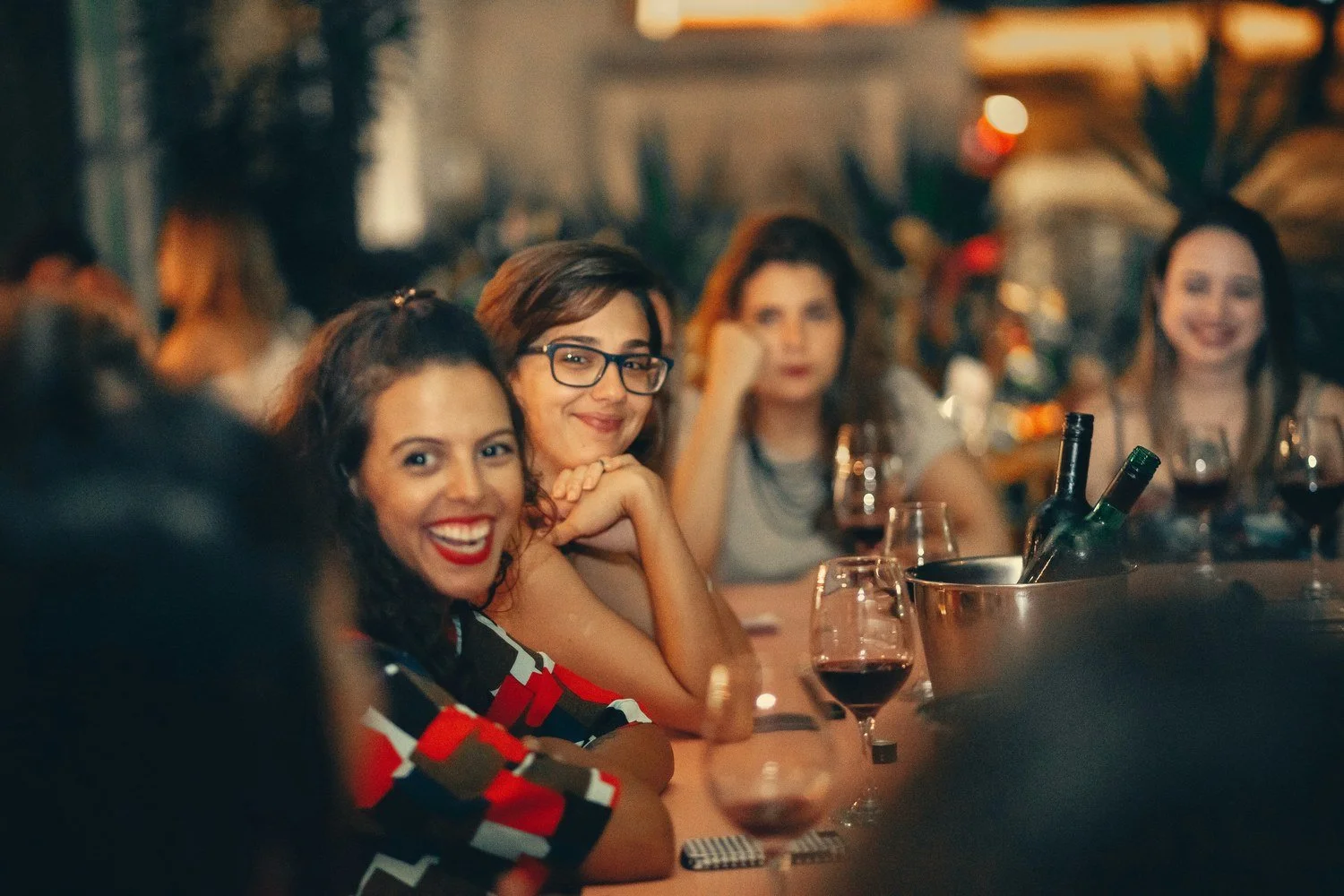
Photo: Helena Lopes / Unsplash
The Real Barriers Live in Our Heads
Compare Yao’s story with our national data and one pattern jumps out. When we asked Americans what keeps them from connecting, the top answers were not money or distance. They were feelings: 32% say they are uncomfortable going to social events alone, and 30% say they are scared or nervous to put themselves out there.
Psychologists have measured how unfounded that fear usually is. In a series of studies published in Psychological Science, researchers Erica Boothby and Gus Cooney found what they call the liking gap: after conversations, people consistently underestimate how much the other person liked them. We walk out of the party replaying our awkward moments. The other guests walked out having enjoyed us. The fear that keeps so many of us from gathering is real, but it is not accurate.
A direct, personal invitation is the antidote to both findings at once. It answers the fear of showing up alone, because the host is expecting you. And it closes the liking gap before the evening starts, because being invited is proof you are wanted in the room.
That is the power of learning how to host a party.
How to Host a Party People Actually Come Back To
Ask Yao how to host a party people return to for twenty years, and her answer starts long before anyone arrives. A party people come back to is designed, not improvised. She is blunt that the warmth guests feel is engineered: a curated guest list, a plan for the energy in the room, and a host who works the whole evening to make strangers laugh. The magic is the craft.
Start with who is in the room. Yao curates every table across multiple dimensions, mixing regulars with newcomers so the culture teaches itself. She has even found her own ratio for the mix of personalities.
“You need seven extroverts in a room for it to be a good party,” she says.
When guests arrive, Yao greets them at the door with a hug and asks them to introduce themselves through funny stories rather than job titles. It is a deliberate reversal of every networking event her guests have ever survived.
“I lead with humor because what you do all day is very forgettable, but who you are is not,” she says.
The introductions are not small talk. Guests tell funny stories about themselves, the less professional the better, and within a couple of minutes Yao can read the room: who is shy, who can carry a table, who needs drawing out. The stories do double duty. They make the room laugh, and they show everyone who they are actually having dinner with.
This is the same discipline Priya Parker describes in The Art of Gathering: gatherings work when a host takes generous authority over them, deciding on a purpose and protecting it, instead of leaving guests to fend for themselves over drinks. Yao would say it less formally. As the host, she told us, you are the room’s energy curator. Guests can leave a dinner drained or leave it lit up, and which one happens is a choice the host makes on their behalf.
The same instinct shapes how the dinners spread. Yao does not recruit hosts. People who have felt the thing want to make the thing, so they come to her and ask, and because they are already friends, she knows who can carry a room. Wonder Women runs on pull, not push, and she believes the energy of every dinner is better for it.
And then, the part almost everyone skips: do it again. Yao is emphatic that one great dinner is not a community, the way one date is not a marriage. The dinner is the doorway. The friendships, the job leads, the poker nights, the group that helped a member land her dream job within thirty days, all of it grew from tables that kept getting set, ten times a year, city after city.
The party is not the point. The pattern is.

Photo: OurWhisky Foundation / Unsplash
The Cost Nobody Sees
There is a harder truth inside this story, and Yao does not hide it. The dinners cost her money, and they have for twenty years. What looks effortless from a guest’s chair is held together by one person’s sustained, unpaid attention.
“I’m the holder of all these things and the reason why it’s lasted 20 years is because I give a lot of my time to make this happen. It doesn’t happen on its own,” she says.
Anyone who has tried to host a party more than twice knows some version of this. The group chat that goes quiet when you stop writing in it. The dinner that stops happening the year you got too busy. Communities feel like weather, but they are labor, and the labor is mostly invisible until the person doing it stops.
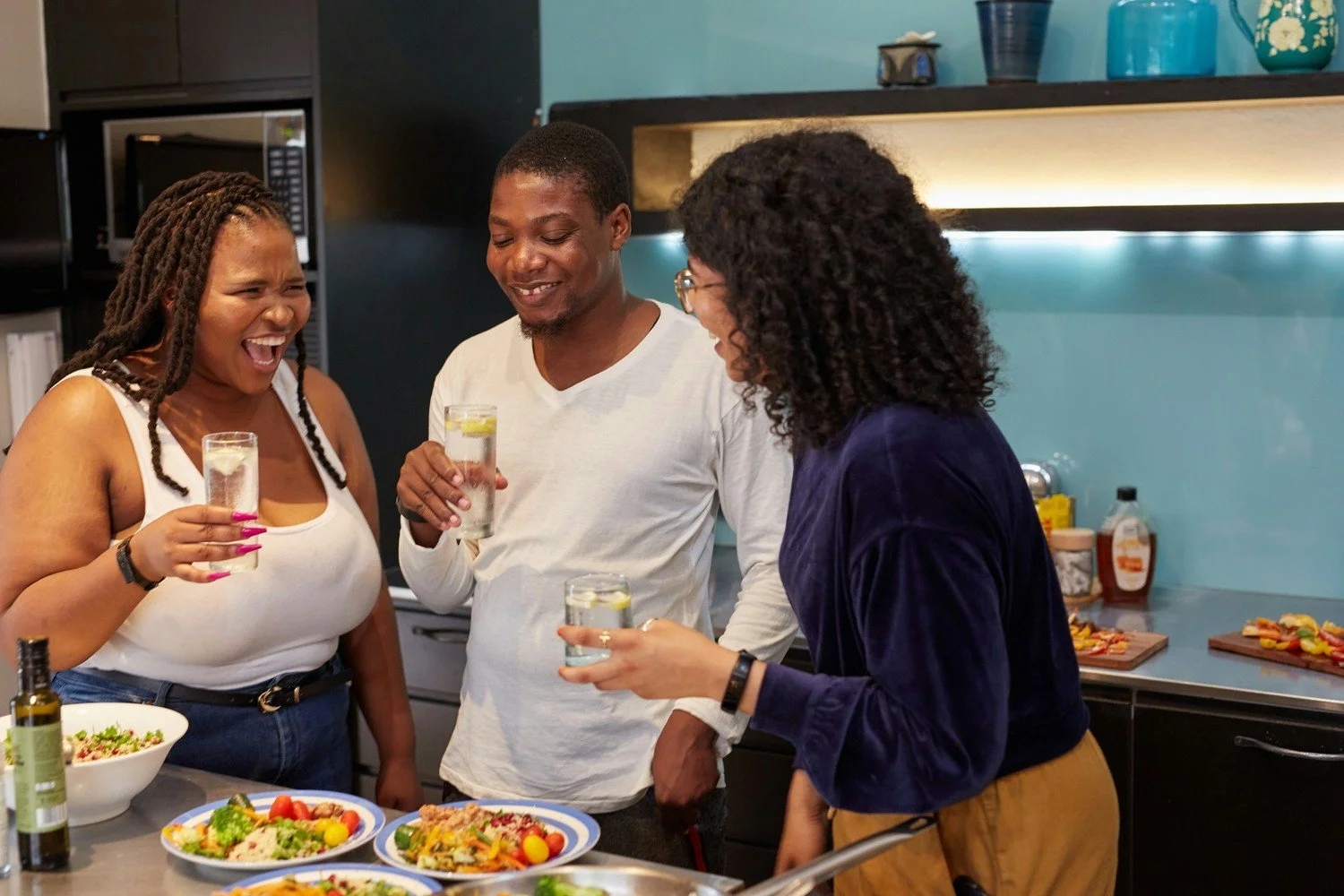
Photo: Sweet Life / Unsplash
Yao, for her part, has run the math and shrugged. When life turns, she told us, what catches you is not the money you saved by skipping the dinner party. It is the people who will show up for you. By that accounting, she may be one of the wealthiest people we have ever interviewed.
She was in Houston the day we spoke, and there was a dinner that night. There are about thirty of them somewhere in the world every month now, most happening without her in the room. Somewhere tonight, a woman will walk into a stranger’s home nervous, get a hug at the door, laugh for an hour, and leave with the feeling Yao built the whole thing to produce: that was fun, and I belonged there.
Twenty years ago it was four friends and a table. If you want more invitations in your life, the evidence points one direction. Send one. And if a first invitation feels easier with company, Welcome Week is the week each year when hosts across the country open their tables to neighbors and newcomers at the same time. Your table can be one of them.
Where to Start This Week
Send one invitation. Text two or three people you keep meaning to see and name a date, a time, and your kitchen table. A direct invitation does the connecting for you.
Lower the production values. Takeout containers on a real tablecloth beat a dinner party you keep postponing until you have time to do it right. The point is the people.
Open with stories, not job titles. Steal Yao’s move: ask everyone for a funny story about themselves instead of what they do. Who people are is more memorable than what they do all day.
Put the second one on the calendar before the first one ends. While everyone is still at the table, pick the next date. Repetition is where the friendships actually form.
Join the People Rebuilding Connection
If hosting one table felt good, imagine doing it with neighbors at your side. Become a Welcome Committee volunteer and join people in your community who welcome newcomers, host gatherings, and rebuild connection where they live — one invitation at a time.