
Media Kit
Press Release
FOR IMMEDIATE RELEASE
January 26, 2026
One-in-Two Americans Are at Risk of Social Disconnection, New National Survey Finds
Report introduces Social Connection Index, a shared benchmark that communities can use to measure, compare, and strengthen social connection.
Seattle, WA — The US Chamber of Connection today released The Six Points of Connection 2026 report based on a national survey finding that 52 percent of Americans fall into the report’s ‘at risk’ or ‘vulnerable’ categories for social connection. It offers a snapshot of the state of social connection, behaviors that shape connection and how we can rebuild connection in America.
The report builds on prior warnings, including the former Surgeon General’s 2023 call to action on chronic loneliness and isolation, while bringing together national data on both the scale of the problem and how we can build the social and civic infrastructure needed to address it.
Our lack of connection impacts everything, from our ability to access social support to public health and trust. According to the survey, only 45 percent of Americans say they trust one another and less than one-in-three have access to reliable social support. As a result, only half of Americans report feeling satisfied with the quality of their lives and describe themselves as "thriving."
The findings highlight clear differences in social connection by income, reflecting uneven access to the spaces and opportunities that support connection. Data shows that income levels are a strong predictor of social connection with higher-income individuals (those earning over $100,000) roughly twice as likely to fall into healthy or thriving levels of social connection compared to lower-income Americans.
The report introduces the Social Connection Index (SCI), a new, action-based way to understand how social connection shows up in daily life. It measures six core, everyday behaviors, known as the Six Points of Connection, that play a critical role in building and sustaining social connection. The index provides a shared benchmark for leaders and communities to track connection over time and guide practical investments.
“We found that 60% of Americans are open to connecting even across our differences, according to the survey. But they are running into barriers that make this difficult. Our research shows that addressing these barriers through the points of connection is key to overcoming them,” said Aaron Hurst, Founder and CEO of the US Chamber of Connection.
The report also identifies key barriers to connection based on the survey, including not knowing where to begin. We can address these barriers by expanding access to shared spaces outside home and work, and by creating opportunities for play that make it easier for people to connect by pursuing shared interests.
The report reveals that key transition moments in life including moving to a new city, health changes and taking on a new job can be powerful motivators when we seek social connection, and communities can use these crucial moments to rebuild connection.
In 2025, the US Chamber of Connection launched a pilot project in Seattle to test these ideas in partnership with civic leaders, nonprofits, and employers. The initiative developed a citywide onboarding model for newcomers, including “Welcome Nights” designed to help residents build connection during key life transitions.
“We worked with the City of Seattle and a Welcome Committee of 45 leaders across sectors and communities in Seattle to create the first new resident onboarding program for a city. And we discovered that when you intentionally create opportunities for everyday connection, you see increases in trust, belonging, and civic participation, along with the broader societal benefits that follow,” said Charlotte Massey, Executive Director of the US Chamber of Connection’s Seattle chapter.
Following the success of the initiative in Seattle, Hurst has launched a national effort to spark social connection across America. The US Chamber of Connection now serves as the national backbone for the social connection movement, elevating connection as a civic priority, creating shared standards, aligning partners across sectors, and launching and supporting Chambers of Connection in cities across the country.
In 2026, the Chamber plans to release a series of Playbooks with data insights, research summaries, and case studies to support communities building local connection infrastructure.
“A clear takeaway is that social connection is not just an individual responsibility. Cities can strengthen the social and civic resources that help people move from awareness of this issue to taking action,” said Hurst.
“The work that the US Chamber of Connection has launched in Seattle offers a valuable example of how communities can come together, drawing on resources from a range of local organizations to address the growing loneliness crisis across America.” - Dr. Vivek Murthy, 19th & 21st U.S. Surgeon General
Full report: https://www.chamberofconnection.org/the-six-points-of-connection-2026
For Press inquiries: puja@chamberofconnection.org
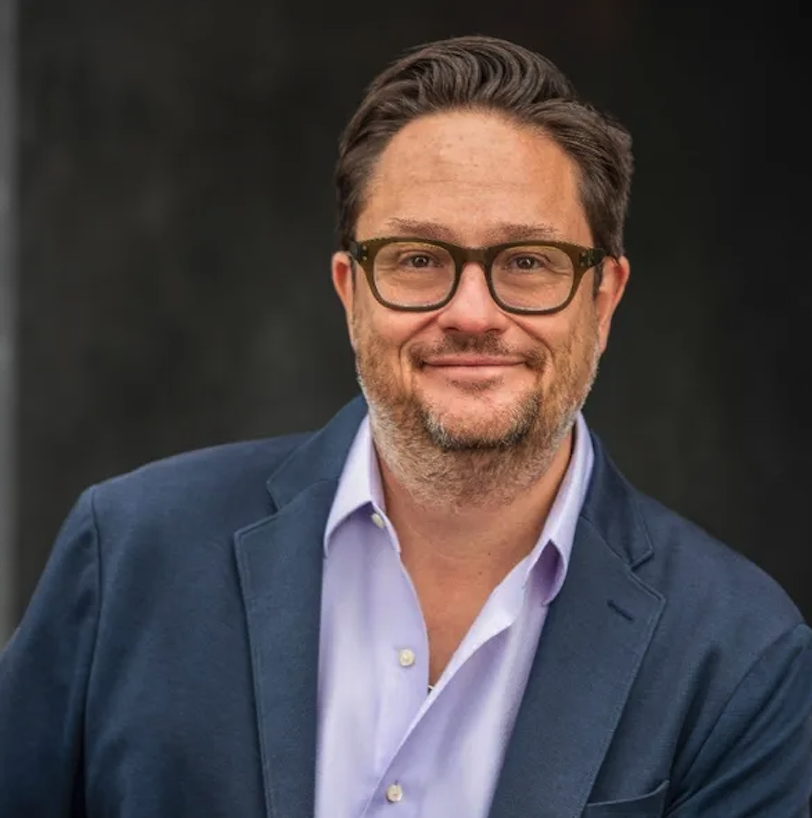
A Conversation with Aaron Hurst
What led you to the founding of the US Chamber of Connection?
I have been helping people connect across differences since I started a program teaching creative writing in prisons outside Detroit as a college student at the University of Michigan. This has been a core value of mine – the belief that we can only truly move forward if we find shared purpose and common humanity in each other.
As I was about to turn 50, I was struck by how in my own life I had under-invested in relationships outside of my work and family. I had moved 12 times and had no real roots. So, when I moved to Seattle, I started inviting groups of 8-10 strangers over for dinner and conversations about connection every two weeks for the better part of a year.
It was very clear in talking to people at these dinner conversations that the number one challenge facing us today is the decline in social connection and trust. From AI to polarization to mental health and inequality - social connection is the only path forward.
Why did you decide to call the nonprofit organization, the US Chamber of Connection?
There are amazing campaigns and programs working to address loneliness, friendship, belonging, trust, and community. The challenge is that we lack a shared framework and common measures that allow efforts to align and scale.
In 1912, President Taft worked to found the U.S. Chamber of Commerce to unite the business community to optimize our nation for commerce, in response to the threat of communism. It has been wildly successful. Our economy has grown from under $100 billion to $30 trillion.
Today, our greatest threat is the decline in connection and trust. Over the next 100 years, we need to come together to become what I would refer to as a “relationship-first” society. We need a bold organization that can bring us together, just as the Chamber of Commerce did over 100 years ago.
How do you define social connection?
Social connection is having people, places, and communities in your life that you can count on—and that count on you. It isn’t just about personal health, longevity and happiness; it’s also about community health, longevity, and happiness. This comes from the recognition that we are connected to our community. Connection happens in relationships with others.
How is disconnection different from loneliness?
Loneliness is a subjective emotional experience, for example, when we say, “I feel lonely.” We can experience loneliness even at times when we are connected. It is largely based on internal emotions that may have little to do with human interaction that day.
Disconnection is the absence or breakdown of the relationships, communities, and shared spaces that support people in everyday life. People who are connected are less likely to be lonely, or they experience shorter periods of loneliness.
We focus on disconnection because it’s structural and fixable. It’s shaped by systems, transitions, design, and access—not just individual psychology.
What is the underlying research that you draw on to understand the importance of social connection in our lives and communities?
With his book, Bowling Alone, Robert Putnam really put this issue on the map. He was the first to connect the dots about the decline in shared activities, like group sports, to a weakening of our democracy. It was an alarm that was heard by many 25 years ago, but as a society we’ve failed to address the issue.
Since then, there has been more research that expands on the need for social connection. For example, Julianne Holt-Lunstad has helped develop measures for social connection and shows us how social connection drives everything from longevity to trust.
Our report on The State of Connection draws on this research from a range of related fields including psychology, sociology, economics and aging to urban planning and architecture.
How does this report add to previous research?
The Six Points of Connection report helps us go from awareness to action. It’s designed to equip city leaders, CEOs, and philanthropists, and community organizations with a shared framework and benchmark for understanding, measuring, and strengthening social connection in practical, actionable ways.
The questions we were looking to address were: what do I need to know if I am the mayor of a city like Seattle? What do I need to know as a CEO of a company who wants to make an impact on the issue? How does a philanthropist who cares about the issue invest?
The report offers a research based index for measuring social connection. It shows leaders and cities how they can help build by thoughtfully designing social and civic infrastructure.
How does the report measure social connection?
We identified six ordinary, place-based behaviors of connection that reflect how connection shows up in daily life, not just how connected people feel. We then correlated them with the sentiment-based outcomes that academic researchers use in the field. The six behaviors are positively correlated. And when you combine them into a single index, a roll-up measure of their adoption, it is a greater predictor of outcomes than any single behavior. Taking away any one behavior decreased the correlation. They each contribute something unique.
What are the key takeaways contained in The Six Points of Connection 2026: The State of Connection in America Report?
First, we found that social connection can be effectively measured as an index of six behaviors.
Second, lower-income households have the least social connection infrastructure but at least a third of all groups are at risk or vulnerable. This is a common issue.
Third, we need to invest in social infrastructure to help people adopt these six behaviors. Our focus should be on helping people get started and to not get started alone. In this regard the most critical behavior is giving people opportunities to participate in shared activities and join activity-based communities, from hiking clubs to book clubs and sports leagues. Children are naturally encouraged to participate in group activities. But somehow we forget to continue doing this as adults.
Finally, it is just as important for adults to engage in group activities. But we are running into barriers, which helps explain why one in two Americans say they lack reliable social connection and support. Our research shows that we should build infrastructure around key life transitions when people are open to change and where institutions (like hospitals, companies, public libraries, museums, cafes, etc.) can provide the resources to connect people.
Could you describe your pilot launch in Seattle? And key takeaways from that experience?
Based on what I learned from the body of research in the field, my own experiences, and the dinners at my home, we designed a pilot in Seattle to test the hypothesis that this research later confirmed.
We worked with the City of Seattle and a Welcome Committee of 45 leaders across sectors and communities in Seattle to create the first new resident onboarding program for a city. Over 150,000 people move to the area each year and they represent a powerful way to unite the city to focus on connection and helping people find friends and community. We hosted six events for newcomers where we helped them meet each other and design the life they want in their new home rooted in our Six Points of Connection.
As we found in the study, helping people get started, and not alone, during a key life transition is powerful. Helping newcomers, we found, was uniquely effective as it is a population that represents every demographic and that leaders want to engage (as voters, customers, donors, etc). And it is a positive message about city pride not about another problem in society.
In addition, we began a support group for community builders, people leading social and activity clubs that the research later suggested are amongst the most important infrastructure. Through monthly meetings we have begun to identify the barriers these leaders face and look at how we can engage business and the city to help them.
Could you describe your early wins and the impact so far?
We were able to get 45 leaders from business, philanthropy, sports, nonprofits and the arts along with City Hall to rally around connection as a cause. This was a breakthrough moment for us. With their support, we designed the first onboarding program in Seattle including Welcome Days for newcomers.
Data from Welcome Days showed that 74% left with clarity about the connection they want and desire to act, and 81% left having met someone new that they planned to engage on the journey.
There was a lot of media attention around the launch of the Seattle pilot as well because the simple message of welcoming has rallied people. And we have had leaders in 100 cities reach out to start chapters already in our first year.
What made you decide to scale this effort into a national movement?
I have always worked to build not only national but global movements - from pro bono service to purpose at work. It’s my intention with this work as well. It needs to be rooted locally, but to have the ability to truly change society it has to be everywhere. This way we can have the kind of impact the Chamber of Commerce has had. Being local is critical, but not enough.
What cities will you be focusing on next?
We are in conversations with leaders in places from NYC to Littleton, CO. The city is less important to us than the leadership who want to invest in building connection. This model can work anywhere as long as there is motivated, talented and resourced leadership.
That said, we plan to award five founding chapter licenses this year and want to make them as diverse as possible. Red state and blue states. Large and small. Booming and struggling.
What do you see as your key challenge (or set of challenges) in getting people to see that we need to focus on improving how we connect with each other?
Everyone sees the need. We see isolation in our families and communities every day. We feel it ourselves. The continued rise of tech and AI chatbots is forcing us to look at this issue.
So, the challenge isn’t to see the problem but to know what to do about it. The great news is that unlike any other challenge, everyone can be part of the solution. I believe politicians and leaders who focus on this issue can truly connect with all Americans. Working on connection together is how we can overcome our division.
Is your organization a nonprofit? How are you funded?
As an early-stage nonprofit, we are supported by generous donations from foundations, companies and individuals who believe that addressing the decline in connection and trust is critical not just for us to thrive but to even survive.
We are non-partisan, and we believe this is the one issue we can all agree on. Our supporters include donors from a wide range of political affiliations.
Important Findings
Social connection is affecting our ability to trust (45% don’t trust others), connect with those who are different (54% say they are not interested in connecting across difference), access social support (27% lack reliable social support), and our health (only 48% say they are healthy or thriving). In other words, these social challenges are interconnected.
Those who say they are thriving consistently access Six Points of Connection, which are place-based behaviors.
The barriers to connection revealed in the report are structural, not personal. They are about what people have access to rather than who they are. This means we can build social and civic infrastructure to address them, such as greater access to third places, community service, opportunities to cultivate communities of play.
Lasting connection requires individual participation and community action.
Timing matters: we can get the most out of investing in social infrastructure by designing them around life transitions. This is when people are primed for connection, such as moving to a new city, health changes and a new job.
Social connection is linked to income: nearly 70% of those making under $50,000 lack social connection whereas the same percentage of higher income households, making over $100,000 say they are thriving.
Openness to connection depends on the type of difference: nearly 76% of people are open to connecting with people of a different race followed by income and religious belief.
The Social Connection Index, based on the Six Points of Connection, provides a way that leaders and cities can measure and track social connection.
Quotes
“More than half of the country feels stuck. Even small, simple pathways can help people move toward connection.”
— Aaron Hurst, Founder and CEO, US Chamber of Connection
“The work that the U.S. Chamber of Connection has launched in Seattle offers a valuable example of how communities can come together, drawing on resources from a range of local organizations to address the growing loneliness crisis across America.”
— Dr. Vivek Murthy, 19th & 21st U.S. Surgeon General
"We increasingly see connection as the foundation for thriving. The U.S. Chamber of Connection is building the critical infrastructure to support connection in cities and towns across the country."
— Chip Conley, Founder and Executive Chairman, Modern Elder Academy
FAQ
What is the Social Connection Index?
The SCI reflects the frequency of six everyday connection behaviors and the conditions that support or hinder them.
What does the report reveal?
The key finding is that 52 percent of Americans are at-risk or vulnerable on the SCI, and most people who want to connect struggle with unclear starting points or supportive systems.
What are the Six Points of Connection?
Neighborhood Contact, Community of Identity, One-to-One Interactions, Third Places, Community of Play, and Community Service.
Why does this matter for cities and institutions?
The SCI helps leaders identify gaps, align across sectors, and strengthen the systems that support belonging and engagement in their communities.
What is the Chamber’s role?
The Chamber is the national backbone for the social connection movement. We elevate connection as a civic priority, create shared standards, align cross-sector partners, and support the launch of Chambers of Connection in cities across the country. We envision a thriving society where connection shapes how we live, grow, and care for one another.
What will the Chamber release next?
Six Playbooks with deeper data, research, case studies, and practical guidance for communities. More cities will also adopt the Chamber model in 2026.
Does the Chamber offer training?
Yes. The Connection Builder Certification is an existing national standard for developing people who strengthen connection in communities.
What was the sample size?
1,997 adults, weighted to reflect national demographics.
How often will the State of Connection report be published?
Annually.
Where can I find visuals or additional data?
Contact the press team.
Select Media Coverage
The Seattle Times: Businesses Onboard New Hires. Maybe Seattle Should Try it.
NPR: The Chamber of Connection is Trying to Thaw the Seattle Freeze
Big Think: How Leaders can Deliver Social Connection Most of us Crave
KOMO News: Neighborhood Clubhouses Hosted in 7 Neighborhoods to Help Build Connections across City
Geek Wire: Chamber of Connection Launches in Seattle to Help Tech Transplants and Others Adjust to a New City

The US Chamber of Connection is the national backbone institution for the social connection movement. We elevate connection as a shared civic priority, create common standards, align cross-sector partners around action, and launch and support Chambers of Connection across the country. We envision a thriving society where connection shapes how we live, grow, and care for one another.
The US Chamber of Connection:
Elevates connection as a shared civic priority
Creates common standards and shared frameworks
Aligns cross-sector partners around action
Launches and supports Chambers of Connection in cities across the country
What leaders can do with this report
Identify where people are getting stuck
Map local gaps in the Six Points of Connection
Design policies, programs, and systems that make connection more accessible
Coordinate action across sectors using a shared framework