
Haley Ingersoll grew up in a town without a single traffic light. It gets traffic once a year, when the town hosts a rodeo. She moved to Pittsburgh in July 2020, in the middle of the pandemic, when finding clubs for adults, or any way to meet people, was hard.
She had just finished a master’s in social work at the University of Wisconsin-Madison and was looking for a job. She moved to be with her boyfriend, now her husband, who was in a program with a built-in cohort. That cohort became their bubble, a ready-made circle to play board games with, and Haley calls it protective. But that circle talked about DNA repair, and Haley did not. She figured she would need to find her own people.
So she started walking dogs. It was exercise, and it was a way to learn the neighborhoods. It also turned out to be a loophole. People, she found, like to talk to you when you are walking a dog.
Over time she noticed how many other transplants in Pittsburgh were looking for the same thing she was, and how hard it seemed to find resources for them.
Haley remembers when it added up: “And it took a long time and a lot of walking. But I ultimately sort of built this case for myself of like, man, there are a lot of us here and it doesn’t seem like there’s really great resources for us…”
She asked the leaders of a women’s group she had been attending whether she could post a meetup for fellow transplants to their email list. About 14 people came. That small meetup became Pittsburgh Social Health, and in time Haley was filling a South Side warehouse with tables for a club fair for adults, the kind of thing many of us last saw on a college quad. Before the second one, more than 80 organizations, from the Carnegie Library of Pittsburgh to the Girl Scouts, had expressed interest in a table, and she had tallied roughly 400 RSVPs, maybes included.
Today Haley is the founder of our Pittsburgh Chamber of Connection chapter.
Hear Haley’s full story on How We Connected.
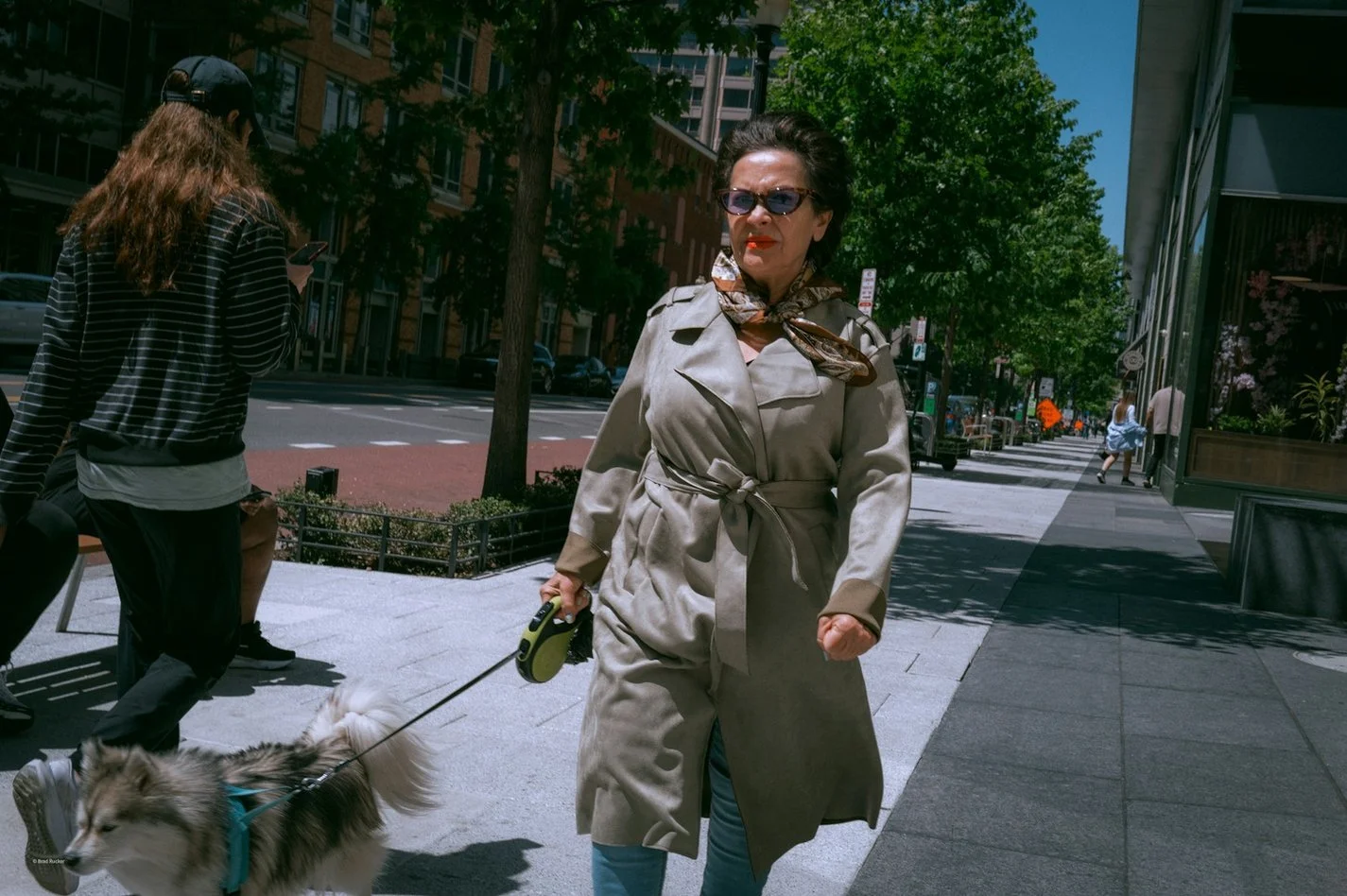
Photo: Brad Rucker / Unsplash
Why Clubs for Adults Are So Hard to Find
Many cities have dozens of run clubs, book clubs, volunteer crews, and hobby groups. They live in group chats, listservs, and Instagram accounts that are hard to find unless you already know someone inside. A newcomer can live in a city full of clubs for adults and never see one.
Haley was far from the only one.
For many of us, school came with a built-in sorting system. It sorted us into teams, bands, and clubs, and college, for those who went, handed us a fair on the quad where groups were recruiting. Then the structure ended, and nobody handed us a directory of clubs for adults. Charlotte Massey, our co-founder, said on the episode that when she moved from a small town to Seattle, she expected to find some kind of club fair like the ones she knew from college.
We see the same gap in our national data. In our State of Connection in America 2026 report, only 30 percent of adults belong to a Community of Play, a group that regularly does an activity together. Among the barriers people named, 28 percent said they do not know where to start, and 20 percent said they do not know how to join the right communities.
Those numbers are people who would join clubs for adults if someone pointed the way.
How a Club Fair for Adults Lowers the Stakes
A club fair for adults works because it reverses the usual burden. Instead of a newcomer working up the nerve to show up alone at a group of strangers, dozens of clubs for adults show up in one room, already hoping to meet new people. You can browse, ask questions, and leave with a plan, all before committing to a single meeting.
Haley’s Connection Expo fills a cavernous South Side warehouse that brews beer and kombucha and has a climbing gym on its upper level. For the second one, her team planned to greet people at the entrance with floor maps, a directory, and a bag for the paper materials and swag they collect. The plan also included live demos from the clubs, so you might learn a few square dance steps or try shadowboxing with a local boxing club. At the first expo, aerial artists from a local circus arts group hung from the warehouse ceiling.
Some people arrive with a list of the clubs they want to meet. Others wander in by accident. As Haley describes the climbers who drifted down from upstairs: “I don’t know, I just walked down to the tap room to see what’s happening every weekend. So I had no idea what I was getting into.”
For the people who come on purpose, Haley says the event’s name does some of the work. She describes the mindset they bring through the door: “I know there are things to do for me here, and I’m coming with that open-mindedness that I, I might sign up for something today.”
One exhibitor felt the difference. Allegheny CleanWays, a group that cleans up illegal dump sites around the region, came away impressed, Haley recalls, by how many people showed up ready to sign up. Recruiting volunteers, as she puts it, can feel like pulling teeth. At the expo, many people had come ready to say yes.

Photo: Compagnons / Unsplash
Why the Doorway Matters More Than the Room
The sociologist Mark Granovetter called it the strength of weak ties. Our close friends tend to know the same people and hear about the same opportunities we do. It is the looser acquaintances, the people we only half know, who are more likely to connect us to new circles and new jobs.
A club fair is a weak-tie machine. In one afternoon, a newcomer can collect dozens of light introductions to clubs for adults, any one of which can turn into a standing Tuesday night. If you have already met someone from one of those clubs, your first visit to their group feels much less like walking into a stranger’s party. You have already met someone at the door.
Our research shows what tends to come with walking through that door. In our study of more than 2,000 U.S. adults, people who regularly take part in an activity-based community, one of our Six Points of Connection, were 28 percentage points more likely to report strong social support than those who do not. Belonging to a Community of Play is also associated with higher adoption of the other Six Points.
That is why we think of clubs for adults as the entry point to the rest.
The Club Fair Is Spreading
Pittsburgh is not the only city gathering clubs for adults in one room. Our Seattle chapter hosted its first Club Fair at the National Nordic Museum, bringing together more than 30 local clubs and organizations, and followed it with an Arts and Culture Club Fair for the city’s creative scene. You can see what is coming next on the Seattle event calendar. Our Baltimore chapter now lists activity club fairs as part of how it welcomes new residents.
Haley does not want her group at the center of everything. She would like to see more of a hub-and-spoke model, with her group helping connect people to the many clubs for adults already out there. If her events are not the right fit for someone, she would rather help them find the group that is. She wants more connective tissue between all of them.
Someone Still Has to Open the Doors
Each of those clubs depends on someone who keeps showing up for it. Lionel Brodie has lived it. He started the Original Propaganda Athletic Club, a Philadelphia running crew, in 2012 with five people. The club now runs what Lionel calls three of the biggest running events in Philadelphia, has a leadership team of about 10, and has worked with national sponsors. Lionel has OPAC tattoos. The early years looked different.
He remembers them this way: “we had nights where it was just me, you know, or if I didn’t show up, nobody showed up.”
Hear Lionel’s full story on How We Connected.
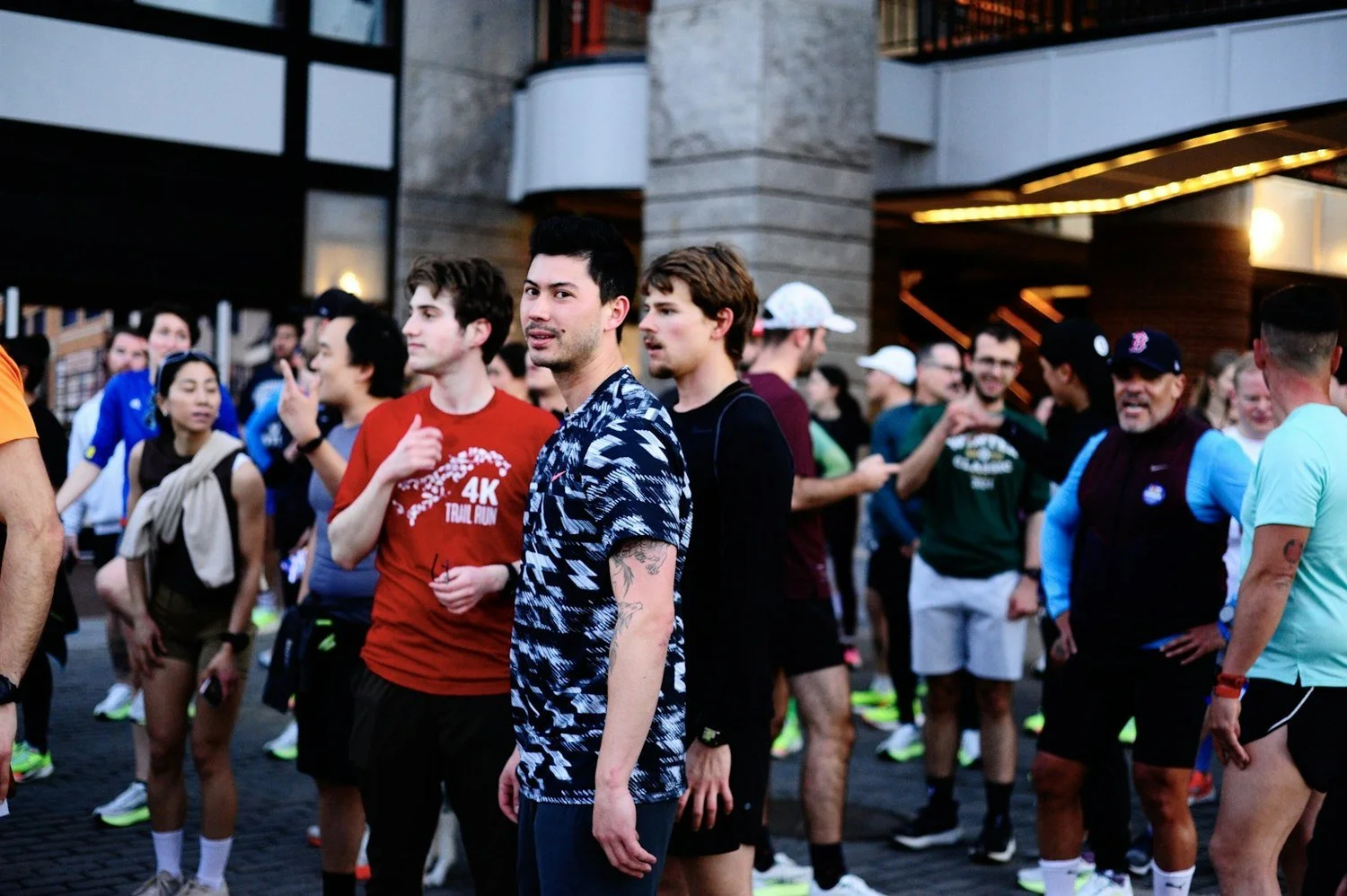
Photo: Chloë Forbes-Kindlen / Unsplash
Few people see that work. Lionel describes leaders arriving early, staying late, checking people in instead of enjoying the event, and calling the coffee shop ahead so the crowd gets served on time. Haley knows organizers who spend eight to ten hours a week volunteering on programming. Some people she has asked to help drive the work have told her they are just happy she is doing it. Many of the clubs a newcomer finds at a fair run on a few people’s spare evenings, and someone has to staff the fair’s tables too.
The Door You Can Open Today
Haley still describes herself as more introverted than not. She set out to find her own people, and her dog walks showed her how many others were looking too.
You do not need to fill a warehouse to find clubs for adults. Somewhere near you, a group is setting up a table or waiting at a trailhead to see who comes. If you want more connection, the first step is small: walk up to one of those tables, say you are new, and let someone who has been hoping to meet you show you the way in.
Where to Start This Week
Look for a club fair near you. Check your city’s library, community center, or local chapter calendar for a club fair, volunteer fair, or welcome night where clubs for adults recruit in one place. Our chapters in Pittsburgh and Seattle have hosted them, and Baltimore is building its own.
Ask one person what they do on weeknights. Coworkers, neighbors, and the person next to you at the gym are walking directories of clubs for adults. Most people are glad to tell you about theirs.
Go back a second time. Your first visit to a club is about getting through the door. On the second, people start to recognize you.
Say you are new. It takes three words. Many groups have a regular who likes welcoming new people, and saying it out loud gives them an opening.
Offer to help with one small thing. Setting out chairs or checking people in can help you feel less like a guest and more like a member, and it gives the person holding the club together a little room to breathe.
Help Build the Doorways in Your City
The Chamber’s Welcome Committee invites neighbors to welcome newcomers, host gatherings, and help rebuild connection where they live. If you are in Pittsburgh, our local chapter is looking for volunteers and partners. If your city does not have a chapter yet, you can bring the Chamber of Connection to your city, or contact us to start the conversation.