
What Is Social Health? The Part of Wellbeing Most of Us Skip
Health and wellness had always been a priority for James Tan. He exercised a lot. He ate clean. He fasted with yerba mate, the South American tea he had built a company around. He wasn’t tracking his social health.
He had been a shy kid, a self-described lone wolf. The one community he remembered feeling close to was his high school choir, where a mix of popular kids and nerdy kids learned to build harmony together. College filled the gap for a while. You come home and the same faces are there, and if you skip something, people wonder where you went.
Then school ended, and so did the scaffolding. James and his best friend had started a beverage company in college, and after graduation they spent long days working in isolation. Everyone was exhausted, James included, and plans to hang out dissolved into nights in. He wasn’t sharing his highs and lows with anyone, and he didn’t have people he saw regularly.
He later described the feeling to us as a simple test. If he never reached out to anyone and disappeared for ten days, who would know?
In time the company got an office at WeWork Labs in downtown Seattle. The community managers there ran small, goofy programming for the entrepreneurs in the building: cereal and cartoons, trivia, a happy hour. James started showing up. He kept seeing the same people and hearing about the journeys other founders were on. It seemed like simple fun. Looking back, James calls that stretch “one of the big turning points in realizing how important connection and community were to my health.”
Hear James’s full story on How We Connected.
The lesson stuck. James built his company’s mission around bringing people together, and the company started a free, donation-based weekly class called Yoga in the Park at Gas Works Park, on the old refinery grounds on Lake Union. It started small. Then it reached a hundred people, then two hundred, then five hundred. By the time he sat down with us for the first episode of our podcast, close to a thousand people were showing up every week.
The self-described lone wolf was now the one on the mic, asking a field full of strangers whether they had said hi to their neighbor.
What Is Social Health?
Social health is the part of your overall health that comes from your relationships and communities: how connected you feel, how often you see people who know you, and whether someone would notice if you disappeared. It sits next to physical and mental health, and like them, you build it through regular practice.
The idea is older than it sounds. When the World Health Organization wrote its constitution after World War II, it defined health as complete physical, mental and “social well-being,” not just the absence of disease. Most of us kept the first two parts and dropped the third.
Kasley Killam, a Harvard-trained social scientist, has spent years trying to put it back. In The Art and Science of Connection, she describes social health as the dimension of wellbeing that comes from connection and community, and she treats it as a pillar of health in its own right. James had his physical health covered. His social health was the missing pillar, and he could feel the wobble before he could name it.
At the U.S. Chamber of Connection, we describe strong day-to-day social health with the Six Points of Connection, six everyday behaviors that research links to people who thrive:
Neighborhood Contact. A neighbor you could count on in an emergency.
Community of Identity. A group that shares your values or experiences.
One-on-One Relationships. Seeing friends or relatives at least twice a week.
Third Place. A regular spot outside home and work where people gather.
Community of Play. A group that does an activity together.
Community Service. Giving your time or skills to a cause or a neighbor.
Think of it as a checkup for social health. You wouldn’t judge your physical health on one number, and you shouldn’t judge your social health on whether you have a best friend.
Why Social Health Matters as Much as Diet and Exercise
If social health were a niche concern, most people would score fine on that checkup. They don’t.
When we measured these six behaviors across the country for our State of Connection in America 2026 report, 52 percent of U.S. adults landed in the at-risk or vulnerable range. More than half of the country is running low on the kind of health that doesn’t show up at a physical.
That gap is linked to outcomes researchers can measure. Psychologist Julianne Holt-Lunstad and her colleagues pooled 148 studies on relationships and mortality and found that people with adequate social relationships had a 50 percent greater likelihood of survival than people with poor ones. The effect held across age, sex, and health status. That effect rivals well-known risks like smoking, so social health belongs in the same conversation as sleep, food, and movement.
You can see the effect on a smaller scale in groups that never set out to be health programs. Jennifer Yonda started Skate Hunnies in Los Angeles to meet more people who skated. Within a few months, her Thursday night skate grew from ten regulars to dozens. Members started telling her what it meant to them.
“I look forward to this every week,” one skater told her.
Others said a therapist had suggested they join, so they could widen their social circle, feel some joy, and take care of their bodies. A weekly skate had become part of how they looked after their social health.
Hear Jennifer’s full story on How We Connected.
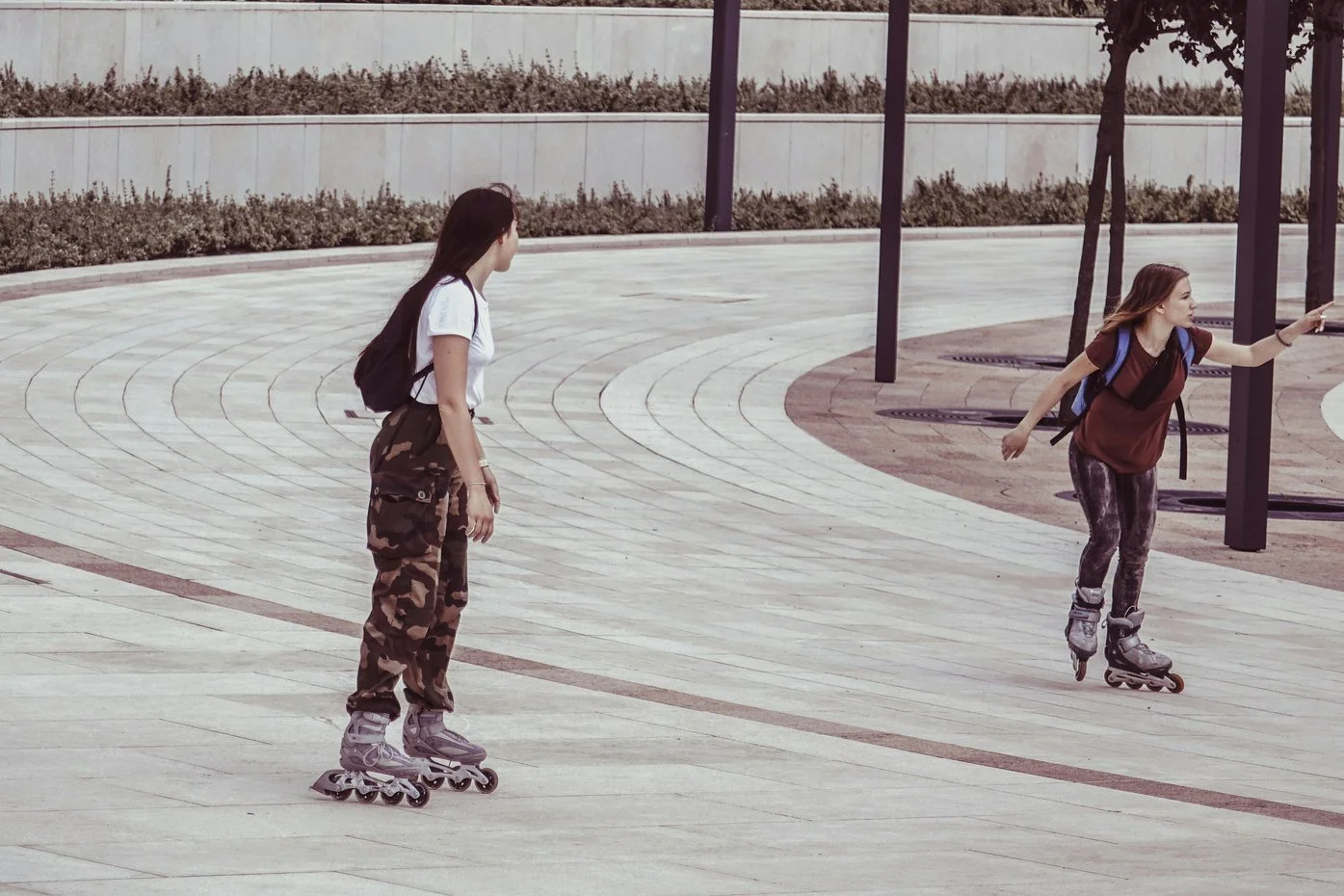
Photo: River Fx / Unsplash
Social Health Is Something You Practice
Social health responds to practice the way fitness does. You can be shy and still build it, as long as you keep showing up.
Hansen Hunt learned this in San Diego. Before he helped launch our San Diego chapter, he co-created a men’s group that met every week, and he watched what happened to guys who arrived with little practice at connection.
“That men’s group consistently meeting every single week builds the practice of those connection skills … most of these guys actually have none to start with,” he told us.
Hear Hansen’s full story on How We Connected.
After a couple of years, he said, those same men had real connection skills, facilitation included, and a tribe of people they could count on. They built their social health the way the runners on Hansen’s B-Side Racing Team build endurance: on a schedule. We have written before about how Hansen’s network showed up for him on moving day. That help grew out of years of ordinary weekly meetings.
That’s why we point so many people toward a Community of Play first. A shared activity gives you a reason to come back that has nothing to do with being good at small talk. A skate night, a run, a yoga class, or a choir puts you next to the same people again and again, and familiarity does the rest. People who belong to an activity community also tend to practice more of the other points, which makes play a natural on-ramp for building social health from scratch.
James stumbled into the same mechanism at WeWork Labs. The cereal and cartoons gave him a reason to show up, and he kept seeing the same faces every week.

Photo: Joshua Tsu / Unsplash
What Changes When Social Health Becomes Public Health
Global health leaders are starting to treat connection as part of their job.
In 2025, the World Health Assembly adopted its first-ever resolution on social connection, and the WHO Commission on Social Connection followed with a global report on how countries can strengthen it. A health body that once wrote “social well-being” into its founding definition is now asking governments to act on it.
Policy can only reach so far, though. The infrastructure of social health is local: the yoga class that happens in the same park every week, the neighbor who knows your name, the volunteer who welcomes someone new to town. Our Welcome Committee volunteers and local chapters exist to build more of those touchpoints, city by city.
When a city invests in its residents’ social health, the benefits spread past any one person. Neighbors who know each other can check on each other. Newcomers can find their footing faster. And people who share an activity can end up crossing lines of age, income, and background they wouldn’t cross anywhere else.
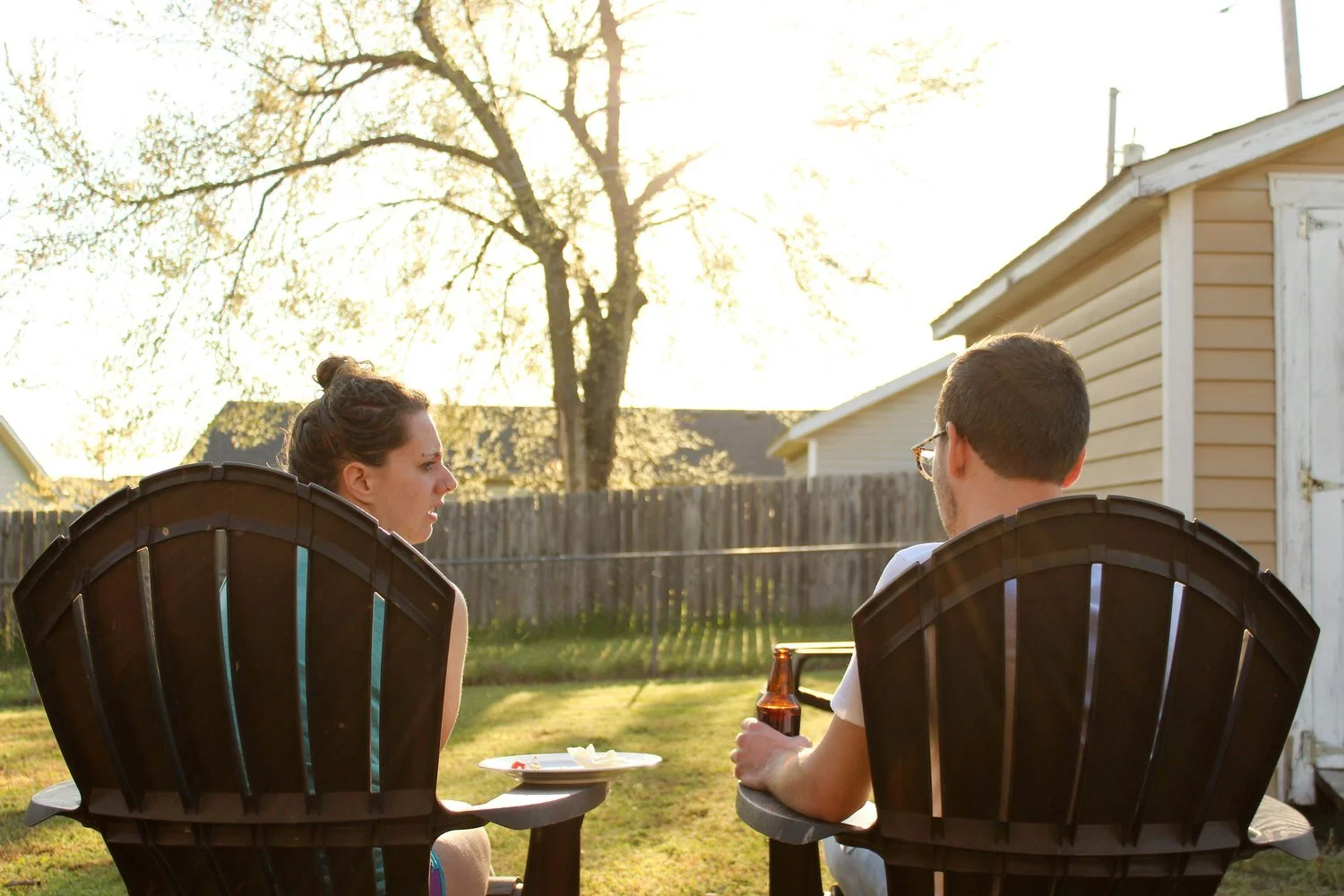
Photo: KaLisa Veer / Unsplash
Connection Is Not a Cure
Social health matters, but a dinner party or a weekly skate is not treatment, and the people who host them are not clinicians.
Yao Huang, who has hosted dinners for her Wonder Women community for two decades, describes herself as a goofball, not a therapist. Her guests often arrive after long days and leave lighter. She is careful about what she promises them.
“I’m not saying, Hey, come here because you’re depressed and I am the solution to depression. That is not what I’m saying,” she told us.
Hear Yao’s full story on How We Connected.
Holding that line is hard. When a therapist sends a client toward a skate night or a dinner table, the volunteer host on the other end may meet someone carrying more than a gathering can hold. If you’re struggling, a licensed professional should be part of your support, alongside the people you see every week. The hosts, for their part, are still figuring out where their role ends.
Who Would Notice?
James asked himself a hard question when he was alone in a startup, and it’s a fair question for anyone. If you went quiet for ten days, who would know?
If the answer is nobody, that tells you something about your social health, not your worth. It also points to a first step much smaller than a thousand people in a park: a few people who expect to see you, and a place where they can.
Start with one standing plan this week and keep it. Give it a month, and see who starts to notice when you are missing.
Where to Start This Week
Take your own checkup. Read through the Six Points of Connection and note which ones you already have. Start from your strongest one.
Pick one thing that repeats. Choose a class, a run, a game night, or a volunteer shift that meets on the same day each week. Repetition matters more than the activity.
Ask your ten-day question. Write down the names of people who would notice if you went quiet. Then text one of them today, with no agenda.
Say yes to the second invitation. The first time you show up, you’re a stranger. The second time, people begin to remember you.
Talk to a professional when you need more. If loneliness feels heavy or persistent, bring it up with your doctor or a licensed counselor. Connection can support care, but it doesn’t replace it. If you’re in crisis, call or text 988 to reach the 988 Suicide & Crisis Lifeline.
Join the People Making Connection Part of Everyday Health
Social health grows fastest where someone has made it easy to show up. Our Welcome Committee trains neighbors to welcome newcomers, host gatherings, and help people find their footing in their own cities. If you’d like to be one of those people, we’d love to have you. If you want to bring this work to your community, start here.