
The Block Party Doesn’t Need a Bouncy House
Vanessa Elias was nine years old and living in St. Louis when her street threw a block party. She remembers it as a day of chalk and running and mixed-age play, the kind of afternoon where kids roam between yards and parents stand around talking with people they usually only wave to. She also remembers, a while later, a wood-paneled station wagon pulling into the driveway.
Her parents were in it. They had gone to the hospital to have her baby brother, Justin. He was born with half a heart, and he died at three days old. Vanessa watched her mother and father get out of the car, red-eyed and moving like zombies, and she did the only thing that made sense to a nine-year-old. She ran.
She ran to Mrs. Gilliam’s house, a neighbor she knew because of that block party. Mrs. Gilliam held her on her lap, rocked her, and told her about angels.
That is the memory Vanessa keeps coming back to when she explains what she does now. By her own count she moved 28 times before landing in Connecticut, across four countries and eight states. She knows loneliness well, and she knows what it takes to throw yourself into a new place. When she went looking for block party ideas as an adult, it was not for the burgers. It was for the other adult a kid can run to.
Today she runs Block Party USA, a national effort to put a simple neighborhood gathering on every block in the country. On our podcast, she put the whole case in one breath.
“We say … to raise a kid takes a village, but we don’t have a village, so block parties, knowing your neighbors, enable you to build that village.”
Most of Us Don’t Know the People Next Door
Vanessa came to block parties sideways. She was running a nonprofit in her Connecticut town focused on kids’ mental health, watching children who were overscheduled, anxious, and short on free play. At the same time, a state legislator told her about the vitriol the legislator was getting online from people who were pleasant in person. Face-to-face connection, free play, block parties. She says that is when it all came together.
The problem she saw in her town is the national picture. Pew Research Center’s 2018 study of American communities found that only about three in ten adults know all or most of their neighbors, and that among people who know at least some of them, 58% never have a party or get-together with them at all. We live beside each other. We do not gather.
Our own research at the U.S. Chamber of Connection tells the same story from a different angle. In the State of Connection in America 2026 report, only 42% of adults said they have a neighbor they can count on in an emergency. We call that behavior Neighborhood Contact, and it is one of the Six Points of Connection, the six everyday, place-based habits research links to a thriving life. It should be the easiest of the six, since the people are already there.
Most of us would rather not admit why we haven’t walked over. When we asked people what gets in the way of connecting, the barriers that predicted lower connection were social and psychological, not money or skills. About 30% said they are scared or nervous to put themselves out there, and 28% said they simply don’t know where to start.
Vanessa hears both of those every week. Her answer is a set of block party ideas designed to take the fear out of the first move.
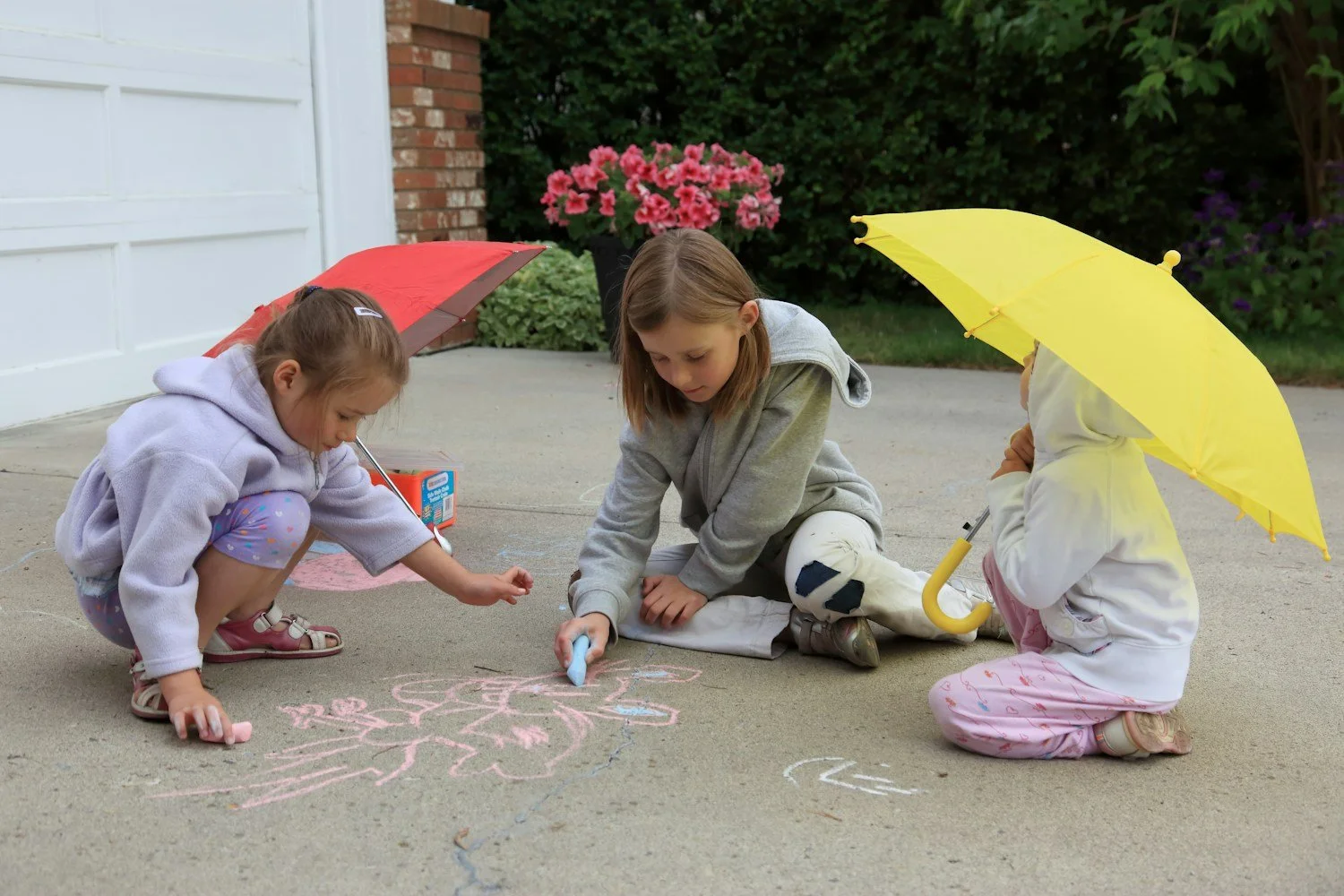
Photo: Anna Khromova / Unsplash
Block Party Ideas That Work: Start Smaller Than You Think
The first thing Vanessa does is redefine the word. When she says block party, she means a micro-local neighborhood gathering. Not a closed street with a stage. Not a bouncy house. A driveway, an alley between two buildings, a front yard, a garage with coffee and donuts in it. Twenty-ish households, and if twenty feels like too many, ten.
Her block party ideas are simple. Chalk, bubbles, hula hoops, jump ropes, a beanbag toss. Some food to share, potluck style, so everyone contributes something and nobody is the caterer. Name tags, which she insists on, because they let you re-meet someone whose name you forgot, and they double as an icebreaker if you add how long you’ve lived on the street. Add a sign-in sheet so the block has a text thread by the end of the night. And one element of play that works for adults and kids alike. On her street it is an egg toss, and it has become a treasured tradition.
The play is what makes the gathering work. A shared activity is what we call a Community of Play, another of the Six Points, and it is the point most strongly associated with picking up the others. You don’t have to arrive ready to connect with your neighbors. You arrive ready to toss an egg.
Then there is the question of who is supposed to do all this. Vanessa is emphatic that there is no right person for the job, that it is not limited to extroverts or party planners, and that anyone who lives on the block, renter or owner, apartment or house, is qualified. She also draws a line most first-timers miss.
“It’s not about hosting, it’s about organizing, right? You’re putting the invite out there.”
That distinction changes what you are signing up for. You are not promising to feed forty people. You are promising to pick a date, knock on a few doors or drop a flyer, and show up with name tags. Everyone else brings something, and Vanessa insists that is not a shortcut but a feature. People who contribute a box of store-bought cookies feel like part of the thing in a way that guests never do. The invitation is the work. The rest is shared.
Hear Vanessa’s full conversation on How We Connected.
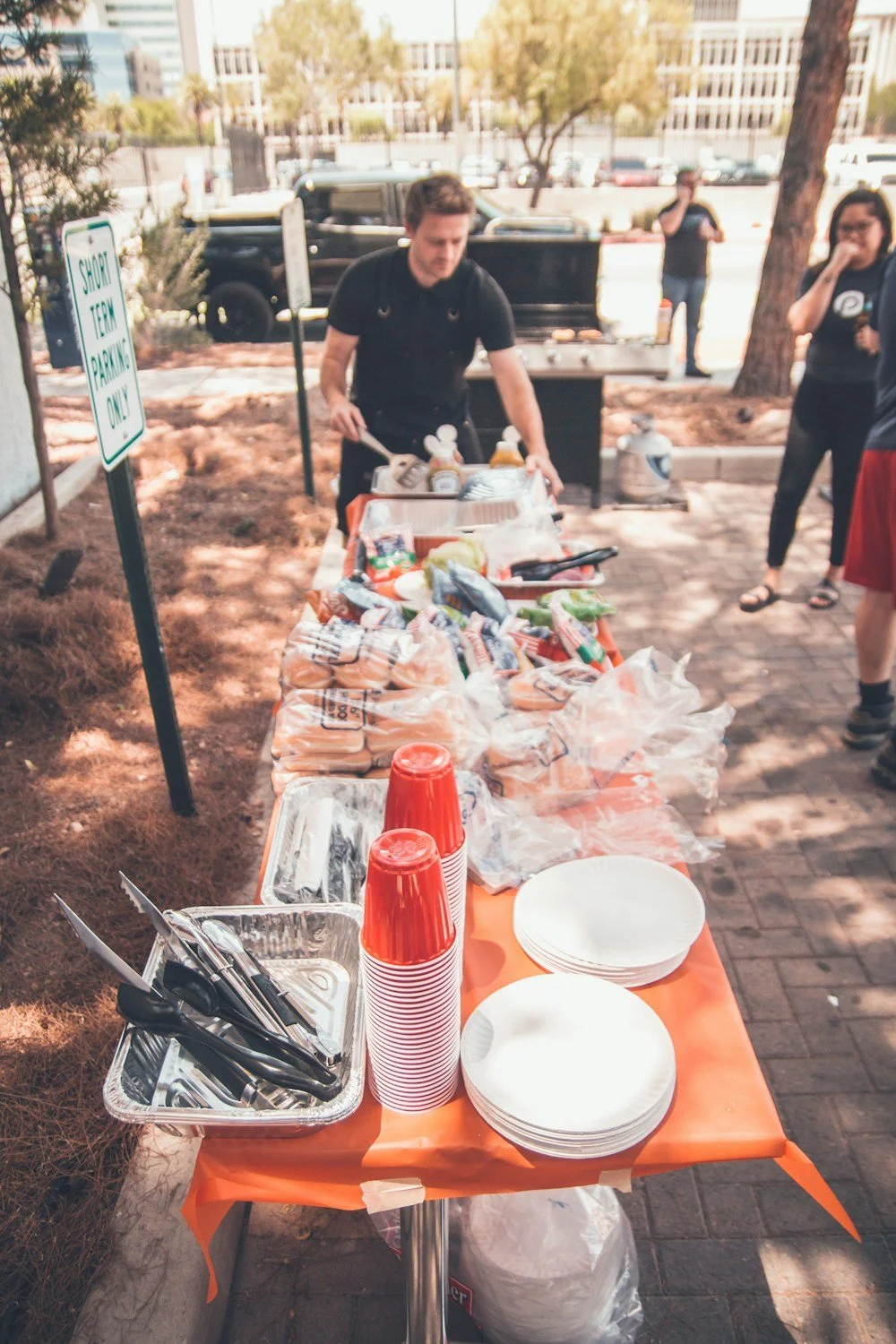
Photo: Quilia / Unsplash
Why Neighbors Matter More Than We Think
Vanessa likes to point out that with weather events hitting every corner of the country, your neighbors are, in practice, your first responders. Disaster researchers Daniel Aldrich and Michelle Meyer, in their 2015 review of social capital and community resilience, found that informal ties, particularly neighbors, regularly serve as the actual first responders in a crisis. After the 1995 Kobe earthquake, most people pulled from collapsed homes were rescued by neighbors, not by firefighters or rescue workers.
You do not need an earthquake to feel the effect. Vanessa’s neighborhood group text, born from a block party sign-in sheet, is where someone asks whether anyone else’s power is out, or reports a missing dog, or finds a babysitter. Small favors, repeated, are how a street becomes a village. The block party is the day the phone numbers get exchanged.
There is a quieter benefit for kids. Vanessa’s original concern was children’s mental health, and she is clear that a child’s resilience rests on having trusted adults nearby beyond their parents. A block party gives a nine-year-old a Mrs. Gilliam. It also gives teenagers their first lawn-mowing customer and their first babysitting job, and it lets them watch the adults in their life model what it looks like to walk up to a stranger and say hello.
Bridging matters too. Pew’s data shows Americans mostly do not think their neighbors share their politics; only about one in five say all or most do. A block is one of the few places left where people who vote differently stand in the same driveway eating the same potato salad, and where the argument that felt so urgent online turns out to be attached to a person with a dog and a bad knee.
The One-Upping Problem
The podcast conversation did not stop there. Our founder Aaron Hurst asked Vanessa to do a little block party therapy on him, live.
“I don’t really wanna do one, and I’m gonna have you, like, talk me through it.”
His reasons will sound familiar. His family would roll their eyes. The neighbor two doors down already runs everything and he hasn’t been to her events. He travels constantly. The kids on the street are the wrong ages. And there was the founder’s version of the fear: people know he runs a connection nonprofit, so his block party had better be spectacular.
Vanessa’s answer was simple: bigger is not better. When someone throws the over-the-top block party, everyone has a great time once, and then nobody else on the street ever organizes again.
“It’s not a sustainable event because the next person doesn’t wanna do anything because, God, they can never compete with that.”
Keeping it small is a favor to the next organizer. It is also hard. The person who does this work is taking a real social risk, often with a spouse dragging their feet and a calendar that fights back, and there is no budget line and no applause. Vanessa’s own husband resists every year, smokes the ribs anyway, and is glad every time. She compares it to going to the gym. Nobody wants to. You are always glad you did. She calls it a social muscle.
Photo: Vladislav Klapin / Unsplash
Be the One
Vanessa says neighbors are waiting for someone, so be the one. She means it practically. Whether you rent or own, whether your street is a cul-de-sac or half a mile of houses with no cross street, whether the last block party anyone remembers happened in 1987, the block is yours.
Not everyone needs to organize a block party. But most of us could walk to the end of the driveway with a folding chair and a bag of chalk, and text two households a date.
Vanessa built a national movement out of a memory of being held by a neighbor on the worst day of her childhood. She did not set out to fix a country. She set out to make sure some other kid would have somewhere to run.
Where to Start This Week
Learn one name. Pick the neighbor you nod to most and have never met. Ask their name the next time you see them, and say yours. That is the whole task.
Text two households. Send two neighbors you already know the same message: “Thinking about a small get-together on our block sometime this fall. Want to help pick a date?” You now have co-organizers and a reason to follow up.
Choose the smallest venue you have. A driveway, a stoop, a shared courtyard, the sidewalk in front of your building. If the idea of closing a street feels like too much, that is your signal to shrink it, not skip it.
Show up to someone else’s thing. If a neighbor already runs the block’s events, go to the next one and bring something.
Keep It Going After the Party
One block party can turn into a habit. If you want to keep that momentum going, apply to join your local Welcome Committee. You’ll team up with neighbors who make welcoming people a year-round practice and help rebuild connection where you live, one relationship at a time.