
You Don’t Need New Friends in Your 50s. You Need New Conversations.
On the first night at the Modern Elder Academy, Chip Conley lets people do the thing they came ready to do. Small talk. What do you do, where do you live, how long have you been there, are you married. A room of a couple dozen strangers, average age about 54, trading the facts of their lives the way you would at a cocktail party.
Then he tells them that was the last of it. For the rest of the week, that kind of talk is off the table.
It is a strange rule for a place people pay to attend. Chip spent 24 years running a boutique hotel company and then served as the in-house “modern elder” to the millennial founders of Airbnb. He knows how to make a guest comfortable. But comfort is not what he is designing for at MEA, the retreat he co-founded on a beach in Baja and a four-square-mile horse ranch outside Santa Fe. He is designing for something most people in their 50s have quietly stopped expecting.
Most arrive because a transition is underway. A career ending or pivoting. Kids leaving. A parent declining. A body that has started to negotiate. They come, in Chip’s words, for tools and content to get through something painful. They do not come because they are lonely, and they would not say so if they were.
By the second or third day, something else has happened. People who were strangers on Monday are speaking to one another in a way they have not spoken to anyone in years. And the realization that follows is not “I need to come back here.” It is closer to grief. Why can’t I talk like this with the people I already love?
Chip has heard a version of that sentence many times. Alumni tell him they need “a whole new collection of friends because my friends couldn’t talk this way.” His answer is the one we keep coming back to at the U.S. Chamber of Connection.
“You don’t need new friends, you just need new conversations with the same friends.”
Hear Chip’s full story on How We Connected.
Why Friends in Your 50s Get Harder to Keep
Chip’s rooms are unusual. The people in them are not.
Ask almost anyone in their 50s how their friendships are doing and you will hear a version of the same story. The friends are still there, technically. The group text is still alive. But the last real conversation was a long time ago, and nobody can quite say when the drift started.
Chip has a theory about when. People get busy in their twenties, busier in their thirties, and busier still in their forties. Kids arrive. Parents start needing care. Careers hit their most demanding stretch, all at once, for the same person. “What happens is people end up atrophying some of their friendship muscles, especially men, and they feel a little bit alone.”
That word, atrophy, is the right one. Friendship in your 50s rarely ends with a falling-out. It ends with disuse.
Cornelia Wrzus and colleagues found the same pattern when they pooled decades of studies on how social networks change over a lifetime. Personal networks expand through young adulthood and then contract from the 30s onward, and the losses cluster around the life events that fill a midlife calendar: a move, a new job, a child, a divorce.
The Survey Center on American Life measured where that drift has taken the country. In 1990, three quarters of Americans said they had a best friend. Today, 59 percent do. A 16-point drop in a single generation.
The same shows up in our own data. In the State of Connection in America 2026, only 28 percent of adults get together with friends or relatives at least twice a week, the behavior we call One-on-One Relationships in the Six Points of Connection. Fewer than one in three. And when we asked what stands in the way, the top answers were not cost or distance. They were too tired or busy, feeling nervous about putting yourself out there, and not knowing where to start.
Those are the problems of a full calendar, not an empty life.
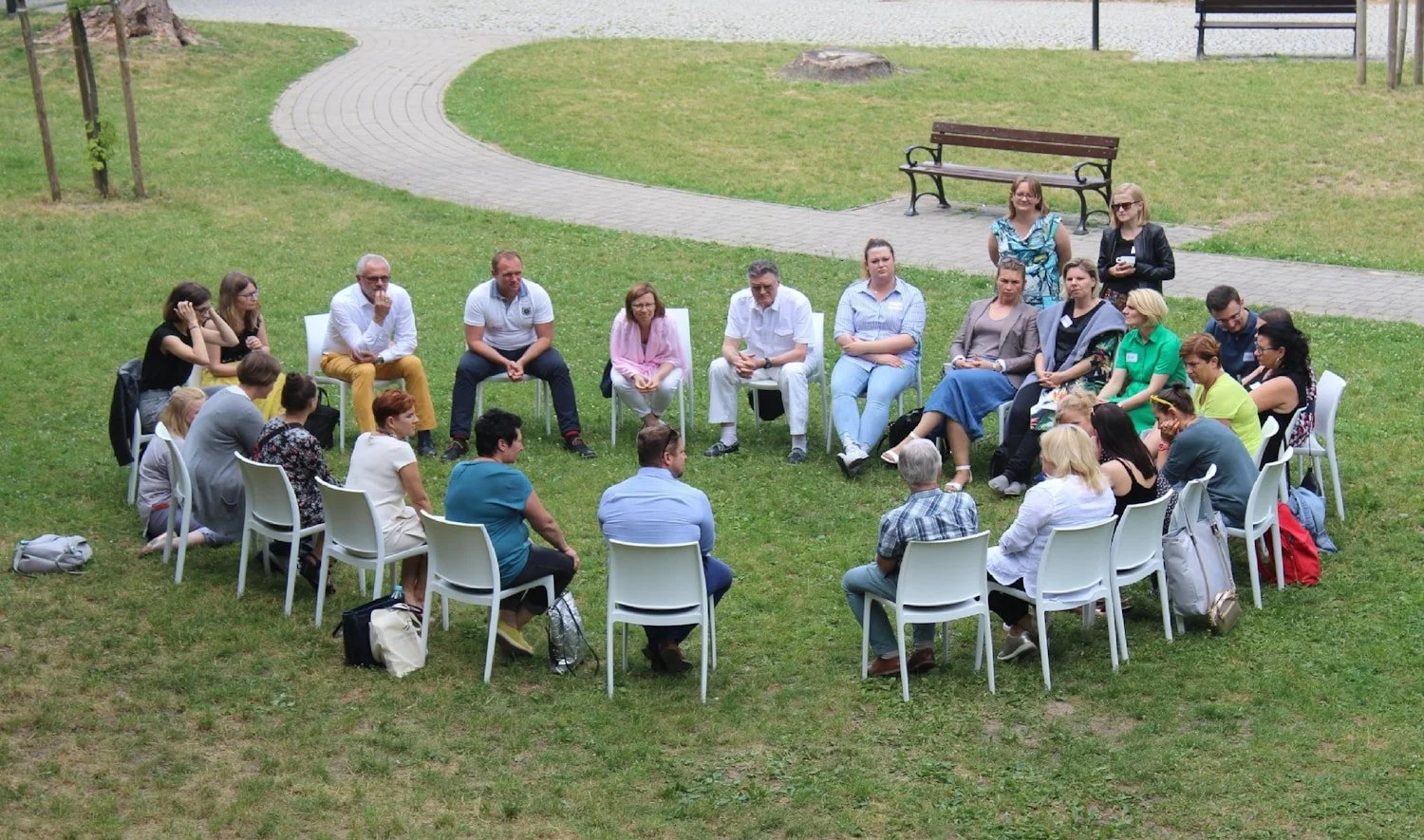
Photo: Dorota Trzaska / Unsplash
Content Is the Door. Connection Is the Room.
So why does it work at MEA, when it does not work at home?
Chip’s answer is that nobody at MEA thinks they are there for friendship. “People come to MEA not because they necessarily want the connection, they want the content … the thing they really needed was the connection.”
Charlotte Massey, our co-founder, put her finger on why in the same conversation: it is far easier to admit you are looking for content than to admit you are lonely. The workshop theme gives people permission to show up. The connection arrives once they are already in the room.
We see the same mechanism in the communities of play we study. The activity is the excuse. Few people join a run club to make friends, and many leave with them. For friends in your 50s, the principle is identical. The door has to be about something other than friendship, because friendship is the thing people are least willing to ask for out loud.
Once people are inside, MEA does something specific with the conversation itself. Chip credits it to Aaron Taylor, a former Green Bay Packers lineman who wrecked his knee at 28, spun out, rebuilt his life, and eventually joined the MEA faculty. Taylor describes three “vaults” of communication. The first sits in the head: the facts of your life, the cocktail-party material. The second sits in the heart: your stories, which are richer than facts but can also trap you, because you learn to perform them. The third sits in the gut. It is instinctual, unfiltered, and unplanned: whatever needs to be said right now.
Small talk lives in the first vault. Most friendships in your 50s, if we are honest, live in the first or second. MEA spends the week teaching people to speak from the third, in a circle, with no time to prepare what they will say.
Chip calls the effect Roto-Rooter for the soul. When a group of people does it together, he says, they build a connection within a day or two that can feel as deep as the one they have with a spouse or a best friend. The strangers are no better than the friends at home. The conversation is different.
That is the insight hiding inside a luxury retreat. The scarce ingredient in friendship after 50 is a new kind of talk.

Photo: Christelle Sison / Unsplash
What a Transition Does to Friendship
One in two Americans navigated a major life transition in the past year, and the ones that stack up in your 50s are among the most socially destabilizing there are.
A career change removes the colleagues who supplied most of your daily contact. Retirement removes the structure that made seeing people automatic. A health crisis, which Chip is living through now with a stage-three cancer diagnosis, changes who you have the energy to see and how. Each one removes a place where friendship used to happen without effort.
Psychologists call the other side of this the fresh start effect: a transition also makes people unusually open to new habits, new relationships, and a new sense of who they are. That is the window MEA is built to catch. People arrive because a chapter is closing, and they are more willing than usual to try something they would have found awkward a year earlier. Surfing. Riding a horse. Speaking from the third vault. Chip’s phrase for it is becoming a beginner again.
MEA’s circles also do something our cities rarely manage. The week we spoke, they put clergy from different faiths in the same room. Twenty-six of them, from seven religions, all burned out, all in midlife, all asking what it means to lead a congregation in a polarized country. In our 2026 data, six in ten Americans say they are open to connecting across difference. What most of them lack is a room where it can happen. A midlife transition, handled well, can build that room.
Chip told us MEA has now hosted more than 9,000 people from 60 countries, and alumni have organized 56 regional chapters so the conversations continue at home. Our founder Aaron Hurst led the Seattle chapter for two years. Its centerpiece was the same third-vault circle, and its speakers were the members themselves. There was enough wisdom around the table. Nobody needed an outside expert.
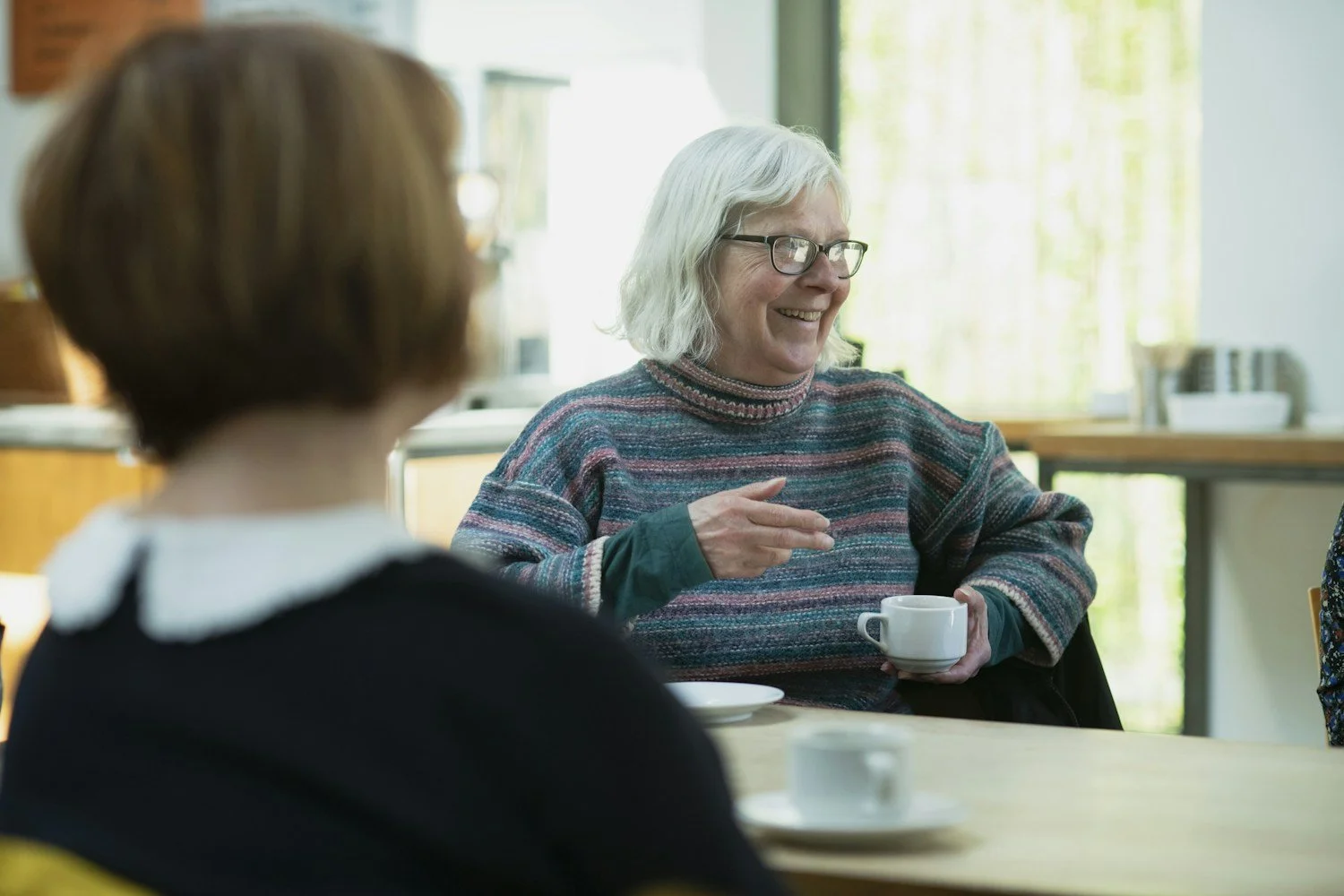
Photo: Age Cymru / Unsplash
New Conversations, Same Friends
Chip was a shy kid. He preferred his imaginary friends to his real ones, until his parents insisted he start socializing and he discovered he was good at it. He spent the next several decades as what he calls a social alchemist: hotels, Airbnb, Burning Man, a wisdom school with thousands of alumni. Now, in his 60s and managing a serious illness, he says he has drifted back toward introversion. He can only handle so much connection these days.
What he has kept is the conversation. He writes a daily blog that, as Aaron put it on the episode, reads like a chapter of a self-help book every morning, and he uses it to say the unpackaged things most people would keep private. Speaking from the third vault, in public, on purpose.
You do not need a ranch in Santa Fe, and you do not need to go looking for new friends in your 50s. You need one friend you have known for twenty years and one question you have never asked them.
Chip’s favorite is this: ten years from now, what will you regret if you don’t learn it or do it now? Ask it on a walk. Ask it over a meal. The friend has been there the whole time. The conversation is the only thing that was missing.
Where to Start This Week
Text one old friend and name the drift. Not a catch-up request. Something closer to the truth: “I miss actually talking to you. Can we get a walk on the calendar?” Naming it out loud is the first vault opening into the second.
Pick a question you have never asked them. Chip’s works well: ten years from now, what will you regret if you don’t learn it or do it now? Ask it, and then answer it yourself first. Going first lowers the stakes for the other person.
Show up somewhere for the content. A class, a lecture, a volunteer shift, a Saturday morning run. Friends in your 50s rarely come from trying to make friends. They come from doing something alongside the same people more than once.
Try answering without preparing. Next time someone asks how you are, skip the packaged version and say what is true in the moment. It is uncomfortable for about four seconds, and it is where the real conversation starts.
Let one transition be an invitation. If you are changing jobs, sending a kid off, or facing a diagnosis, you are more open right now than you will be in a year. Use it. Say yes to the thing you would have found awkward before.
Join the People Rebuilding Connection Where You Live
Rebuilding friendship in midlife is easier with a structure around it. The Chamber’s Welcome Committee trains neighbors to welcome newcomers, host gatherings, and support people through life transitions in their own city. If you are ready to be one of those people, we would love to have you. And if you would like to bring this work to your city, start here.