
Melting the Seattle Freeze, One Sweat at a Time
Last winter on Pier 62, on the Seattle waterfront, there was a cedar sauna with a deck of conversation cards inside. The cards existed for one reason: to build connection and community. One of them read, “do you think the Seattle freeze is real?”
People debated that card while sweating next to strangers, a few steps from Pike Place Market, with sunsets over the Puget Sound on one side and the downtown skyline on the other. Between rounds they dunked in a cold plunge, warmed up by the fire pit, and drifted back into the heat. Most of them came for wellness. The cards were there for what happened next.
The sauna belongs to Hannah Goldstein. The idea came from something missing. A few years ago, on a trip to Norway, her friends insisted they visit a sauna, her first ever. She went in skeptical and came out changed: the heat, the plunge into the cold ocean, and a room full of people talking like old friends. What struck her wasn’t the wellness. It was the atmosphere: casual and convivial, closer to a beer garden than a spa.
Back home, she went looking for that feeling. American sauna culture was growing, but it had taken a different shape: luxury, quiet, self-optimization. An individual experience, sold one membership at a time. The convivial version, the one built around other people, didn’t seem to exist here. She kept looking for it and couldn’t find it.
So she built it. “I said, you know what? I just want to go do this … and I went all in,” Hannah told us on our podcast, How We Connected.
Tuli Lodge opened as a six-month pop-up on Pier 62, in a park owned by the city and managed by the nonprofit Friends of Waterfront Park. Two months in, it had a cohort of 30 to 40 regulars. Some had already visited forty times. People came before work, after work, with old friends and alone. Inside the cedar walls, strangers argued about houseboats versus treehouses, coffee versus beer, and whether the Seattle Freeze was real at all. The Pier 62 residency has since wrapped, and this summer Tuli is popping up on the Lake Union piers.
Hear Hannah’s full story on How We Connected.
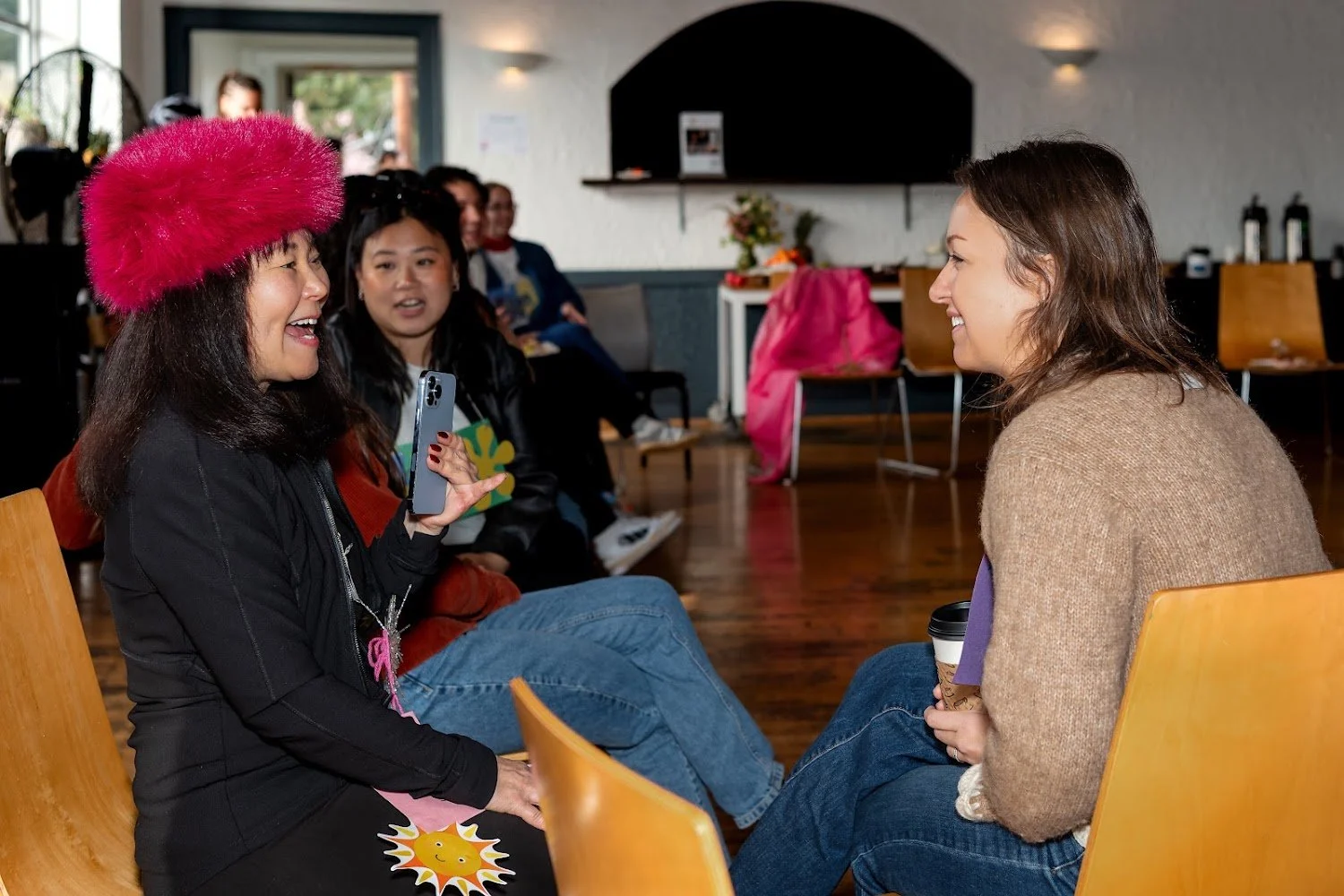
New friends at the Seattle Chamber of Connection’s Best Day Ever event.
Is the Seattle Freeze Real?
Ask around and you’ll get a strong opinion either way, which is why the card works. The Seattle Freeze is the city’s long-standing reputation for polite distance: people who are warm in passing but hard to befriend, a place where “we should hang out sometime” rarely turns into a calendar invite. Transplants blame the locals. Locals blame the transplants. Everyone blames the rain.
Newcomers feel it most. Our co-founder Charlotte Massey remembers arriving in Seattle after years in smaller communities, where belonging found you automatically: “no one was asking me to help with things and I was ready and willing … here I couldn’t find an on-ramp.”
That’s the thing about the freeze. It rarely looks like rejection. It looks like nothing happening: no invitation, no on-ramp, no obvious place to show up.
We wanted to know what stands between people and connection, so we asked. In our 2026 State of Connection in America report, the barriers people named most had little to do with money or social skill. Thirty-two percent said they’re uncomfortable going to social events alone. Thirty percent said they’re scared or nervous to put themselves out there. And when we tested which barriers actually predicted lower connection, the ones that mattered were social and psychological: not cost, not distance, not ability.
That reframes the question. The Seattle Freeze isn’t really a personality trait of one rainy city. It’s what those private hesitations look like at the scale of a metro area — hundreds of thousands of people, each assuming everyone else already has their people, each waiting for someone else to go first.
The Seattle Freeze Is a Third Place Problem
A Third Place is a regular spot outside home and work where people gather and build informal ties: the barbershop, the corner cafe, the climbing gym, the sauna. It’s one of the Six Points of Connection, the framework we built at the U.S. Chamber of Connection to describe the six everyday behaviors research links to a connected life.
In the same report, only 26% of Americans said they have one. Not because the other 74% don’t want one, but because so few spaces are designed to produce one. A quiet spa where you get shushed for chatting is not a third place. Neither is a coffee shop full of laptops and headphones. A room can be full of people and still be frozen.
Hannah understood this down to the architecture. Most saunas are built in stacked rows, everyone facing forward. Efficient for heat, terrible for conversation. So she worked with a custom builder in Montana to design hers differently: sitting inside feels closer to sitting in a circle, facing other people. The building itself makes talking the natural thing to do.
And once a warm room exists, other communities find it. Tuli has co-hosted monthly Sauna Raves with the crew behind Paddle Rave, a floating concert series that grew from a few friends on paddleboards into thousands. There have been guided meditations in the sauna, breath work sessions, Tai Chi on the pier. One space, built with intention, becomes infrastructure for a dozen communities that never had a home.
That’s the real lesson of Tuli, and it travels well beyond saunas. Melting the Seattle Freeze isn’t about convincing a million individuals to be braver. It’s about building rooms where bravery isn’t required.
Why a Sauna Can Melt the Seattle Freeze
There’s a reason conversations inside a sauna go deeper, faster. “When you’re kind of uncomfortable and you’re sweating … you’re already vulnerable,” Hannah says. Everyone is on the same playing field: lightly embarrassed, a little exposed, visibly human. Nobody gets to be impressive in a towel. The usual armor stays in the locker.
The research backs her up. Behavioral scientists Nicholas Epley and Juliana Schroeder asked Chicago commuters to do the thing the freeze forbids: talk to a stranger. People predicted the conversations would be awkward and unwelcome. Instead, the commuters who talked reported enjoying their rides more than those who kept to themselves. We consistently mispredict how much strangers want to talk to us — and the freeze survives on exactly that misprediction.
A sauna removes it. Nobody suspects you of networking in a hot cedar box on a pier. The heat gives everyone a reason to be there, the cards give everyone permission to talk, and the shared absurdity of it all gives everyone an excuse to laugh. This is the same pattern we see in our research on Community of Play: the activity is the door, and connection walks through it.
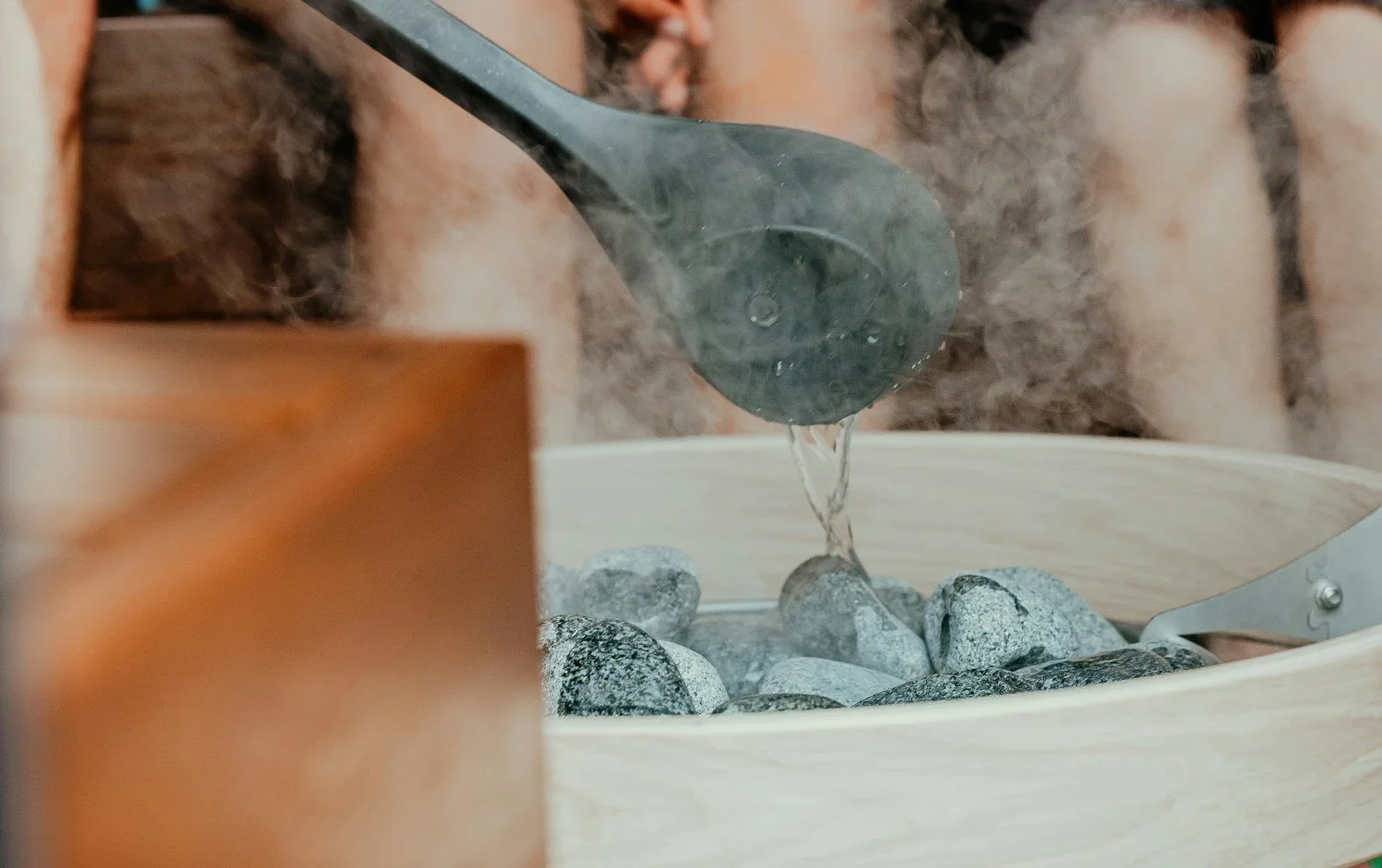
Photo: HUUM / Unsplash
Even the weather becomes an asset. Hannah is adamant that a sauna needs windows. A black box you sweat in is disorienting, but a warm room with a view is a refuge. In a Seattle winter, when it’s gray and raining and nobody wants to be outside but everybody needs the light, an indoor-outdoor room on a pier is exactly the kind of place a frozen city is missing. The season that supposedly causes the freeze turns out to be the best argument for the thaw.
The health benefits are real. Cardiologist Jari Laukkanen’s long-running Finnish studies link regular sauna bathing to lower cardiovascular risk. But at Tuli, the health case is almost a cover story. You come for the heat. You stay for the people.
And then you come back. The regulars who’ve visited forty times in two months aren’t chasing forty times the health benefit. They’re building the only thing repetition can build: familiarity, then recognition, then friendship. A third place works like a slow cooker. The freeze never stood a chance against either appliance.
The Warmth Costs Something
The complication is that warmth has overhead. A sauna on a public pier means hard-won city agreements, a custom build, staffing, insurance, towels, and someone has to carry all of it. “Our experience costs money because it costs money to pull it off, but we’re trying to drive the price point down as low as we possibly can afford with our margins,” Hannah says. Her rule of thumb is that a session should cost less than two cocktails at a bar. It’s a bet that access matters more than exclusivity, made by a founder who could charge spa prices and chooses not to. As she looks at growing beyond the pier, the real estate alone is a daunting equation.
Most of the people building Seattle’s warm rooms are making some version of that bet, usually without much support. People are building the city’s connection infrastructure out of conviction, mostly on their own time and dime.
That’s worth remembering the next time someone tells you Seattle is simply a cold city. Somewhere in a sauna right now, a founder is restocking conversation cards. Across town, hosts are setting out name tags for a room full of strangers.
Hannah didn’t set out to fix Seattle. She missed a feeling she’d had once in Norway, and she built a room where it could happen again — then held the door open. That may be the whole playbook. If the Seattle Freeze has an antidote, it isn’t a better personality. It’s a warmer room, and someone willing to invite you into it.
Where to Start This Week
Pick one spot. A coffee shop, a gym class, a sauna. Go at the same time twice this week. You’re not trying to meet anyone yet. You’re becoming a regular, which is how recognition starts.
Say one unnecessary sentence to a stranger. A question, a compliment, an observation. The research says they’ll enjoy it more than you predict. So will you.
Steal Hannah’s move. Carry a question. “Do you think the Seattle Freeze is real?” keeps a sauna full of strangers talking. Outside Seattle, another card from Hannah’s deck travels anywhere: “Are you more of a houseboat or a treehouse person?” It works at room temperature, too.
Join the People Melting the Freeze
If you’re in Seattle, the Seattle Chamber of Connection hosts Welcome Nights and gatherings designed for exactly this: rooms where showing up alone is normal. And wherever you live, you can join neighbors as a Welcome Committee volunteer and help build the kind of places where the freeze can’t survive.