
The first thing Liz Cahill noticed in the Bay Area was the smell of eucalyptus. She had come out from Philadelphia on a whim for an internship, not knowing a soul, and she fell for the place fast enough to decide she would stay for the rest of her life. Her family had been in Philadelphia for generations. She had said goodbye to all of it.
The second thing she noticed was that strangers talked to her. At her first house parties, people she had never met asked how her day had been. Back home, she says, you could show up to the same events for two years and still get glared at over a cigarette.
In a city where nobody knew her, she joked, something could happen to her and it might be a long time before anyone noticed. If you have ever wondered how to get involved in your community after a move, that is the feeling underneath the question.
So she did what she already knew how to do. She found a room in an Oakland house with two women, Lauren and Deirdre, who were deep in the local art scene. A poetry teacher named Holly got her going to open mics, where she grew comfortable reading in front of a crowd. Then she started throwing the dinners she had thrown as a student back in Philadelphia: a lot of roasted carrots and potatoes, one splurge bottle of wine, and now her poetry after dessert. She jokes that it worked like a timeshare pitch. You get the food, and then you sit through the poems.
Over the years, that hosting grew into a writers group, and then into a weekly open mic. Today the open mic runs inside a 1,700-square-foot studio in San Francisco’s South of Market neighborhood, home to Decentered Arts, the nonprofit Liz co-founded and directs. The studio opened in 2025. The open mic itself has met every week for almost five years, in one room or another, including on New Year’s Eve.
When Liz explains why she kept going, she goes back to the roommates who took in a stranger and brought her into their whole social world.
“I’m here today because of them … So I feel a duty to pay that forward.”
Why the Welcomed Become the Welcomers
People who get involved in a community were usually welcomed into one first. Someone took them in, showed them around, introduced them to people. Later they wanted to give that to someone else. Involvement often starts as a debt of gratitude.
Liz’s path is a familiar one. Across the country, people who once stood at the edge of a room are now the ones setting out chairs.
In New York, Ren Yu helped start the New York Philosophy Club, which began with a few people in his basement and now tries to host about 500 people a week. On a typical night, strangers sit in groups of four or five with a sheet of questions on a single word: suffering, beauty, love, longing. The club runs on a core team of volunteers. Ren describes a wider ring of people who help out too: those who live near that week’s venue show up 30 minutes early, greet the people they see week after week, hand out name tags, and help find the next space.
None of those jobs needs a title, and most take almost no time. They are the small acts of welcome that make the evening work for everyone else, and they are where most people start.
That is the idea behind Community Service, one of our Six Points of Connection. We define it as regularly giving time, skills, or effort to a nonprofit, a school, a neighbor, or a cause. It covers the volunteer who greets newcomers and the poet who keeps a stage open every week.
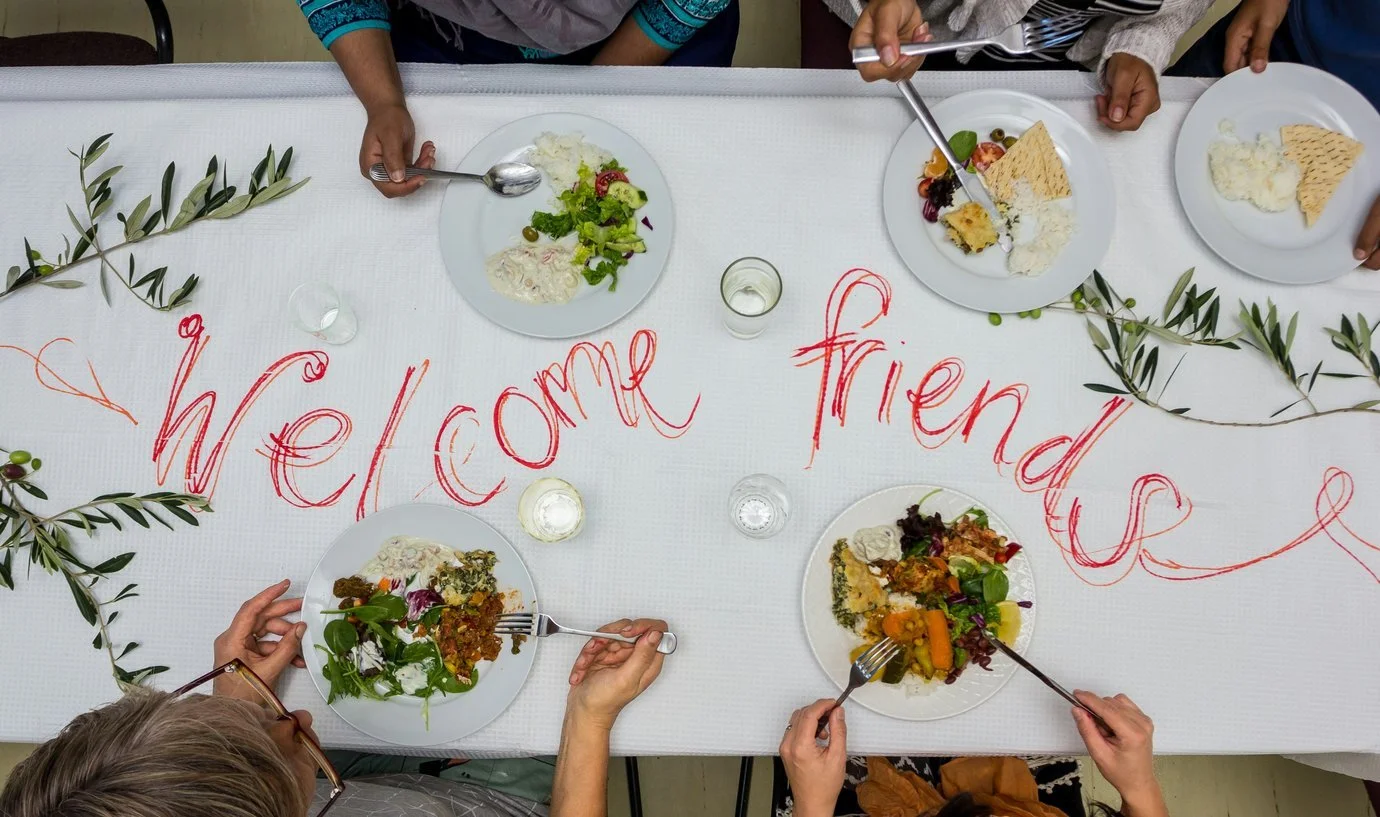
Photo: DJ Paine / Unsplash
What the Research Says About Getting Involved in Your Community
Our own survey data and a long-running study of volunteer work and well-being link regular community service to higher life satisfaction, more trust, and stronger social support. Only about one in four Americans volunteers regularly. The payoff is real, and it runs both ways.
Listen to Ren describe volunteers greeting the same faces week after week and you would think most people do something like it.
In the research behind our State of Connection in America 2026 report, only 26% say they regularly volunteer. Community service is one of the least practiced of the Six Points.
What changes for the people who do it is not small. Regular volunteers are 30 points more likely to report high life satisfaction (73% vs. 43%), 27 points more likely to trust other people (74% vs. 47%), and 24 points more likely to say they have strong social support (91% vs. 67%).
Peggy Thoits and Lyndi Hewitt found the same pattern in a 2001 study of volunteer work and well-being. Following 2,681 Americans across two waves of a national panel, they found that volunteer work went along with gains in happiness, life satisfaction, self-esteem, sense of control, and physical health, and with fewer symptoms of depression. People with greater well-being also put in more volunteer hours.
Giving time tends to make people feel better, and people who feel better give more time. The habit can feed itself once it starts.

Photo: Alexis Brown / Unsplash
How to Get Involved in Your Community Without Starting Something
The easiest way in is to join something that already meets on a schedule and take one small job: greet people at the door, set up chairs, host one night. You don’t have to found anything; you have to come back.
Decentered Arts is built on exactly that. The writers group has met weekly for seven or eight years; it met on Zoom through the pandemic. The open mic has run on New Year’s Eve, and the writers group has met on Christmas Eve. Liz has regulars she has seen almost every week for five years. Someone can travel for a year, come back, and find the same thing still going.
Reliability is what makes a group easy to join. Nobody has to time their arrival.
Decentered also teaches people to lead. The writers group is peer-led, with a different person facilitating each week. The open mic and Poolside Poets, its curated poetry series, rotate hosts. Some of the people who learned to host there have gone on to start their own programs, including a songwriters group and a dance and physical storytelling workshop that now meet in the same studio.
Liz has seen the same arc again and again, starting with people who never planned to take part.
“They’re just here to watch the open mic, but then they see, oh, maybe I can do that … or let me give it a try.”
The audience is the first step. People sit in the room long enough to picture themselves at the front of it.
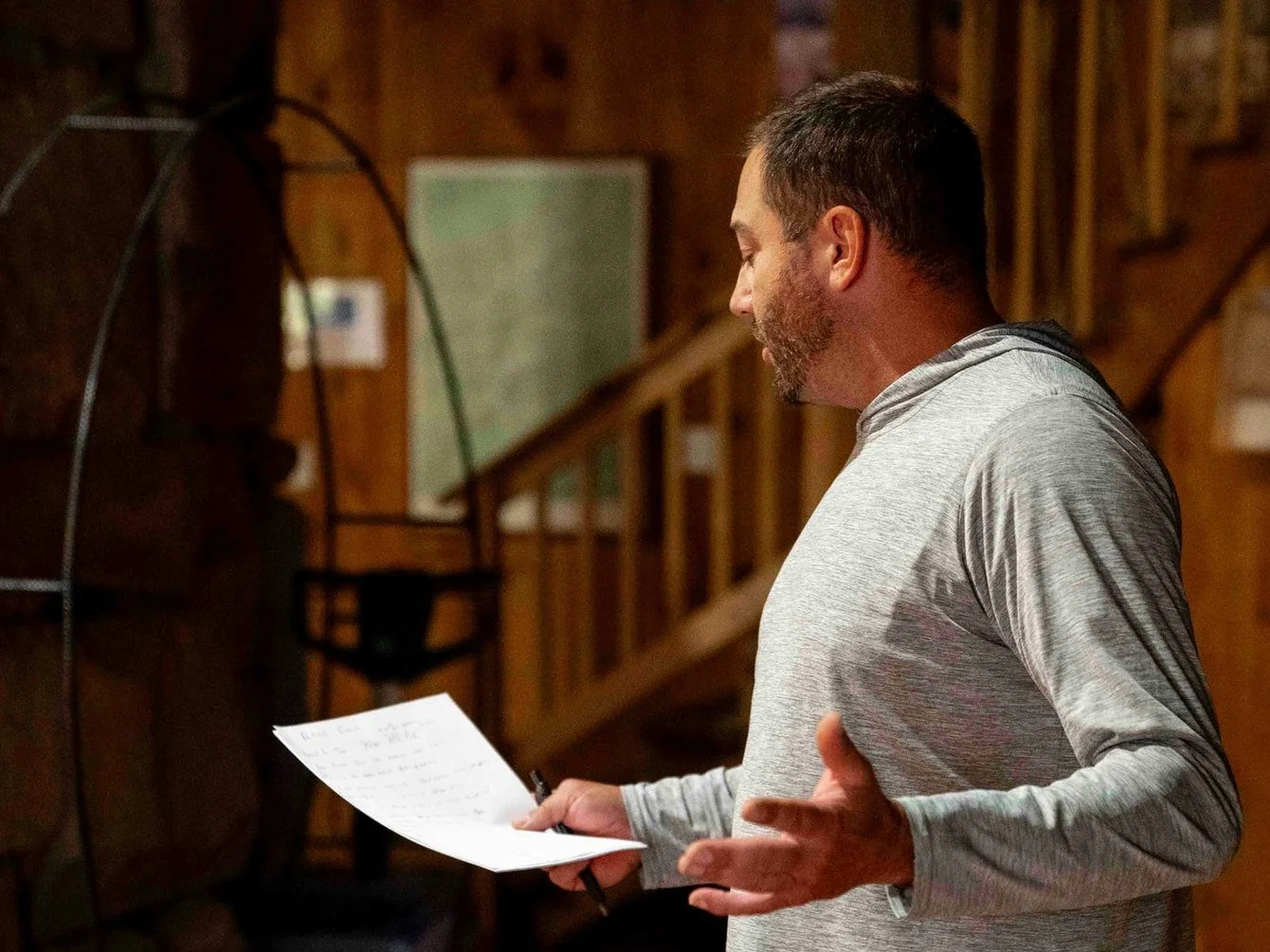
Photo: Frederick Shaw / Unsplash
What Community Involvement Does for a City
The returns don’t stop with the person volunteering. Residents who host, volunteer, and welcome newcomers build the informal networks a city uses to absorb change, connect people across differences, and make room for whoever arrives knowing no one.
When Liz first came to the Bay Area, she began to learn its recent history. There had been a massive amount of displacement, and a lot of people had been forced out. She arrived in the middle of that and was welcomed anyway. The welcome she received was not guaranteed, and that is why she feels the duty to keep it going.
Decentered calls itself a mycelium network. It wants to spread sideways as much as upward: people learn to host, start their own groups, and pop up elsewhere in the city. Liz says she wants to walk outside and see more people on the street and the city teeming with more energy.
Our own data points the same way: people who regularly volunteer are 31 points more interested in connecting across difference (84% vs. 53%).
When the Venue Disappears
This has real costs, and the people who hold spaces open carry most of them. Rent, lost venues, and unpaid hours land on a small group.
In 2025, Decentered Arts lost four venues. They lost The Center SF, the tea house that hosted the open mic. The live-work warehouse where Liz lived and hosted for years was sold.
“So I lost my house and I lost a venue.”
The studio exists because a foundation officer heard what had happened and offered to help with the upfront costs. Liz is quick to say most organizers are not in that position. She and her team spent the summer on construction and opened that September.
Ren describes the same arrangement in New York. Everyone on his volunteer team holds another job, and the club takes up a large share of his week, which he says he’s happy about.
“None of us make any money off of this.”
Hear Ren’s full conversation on How We Connected.
Every packed open mic and full philosophy night depends on people like Liz and Ren giving hours they never get back, and the people in the chairs rarely see the bill.
Think of Who Welcomed You
Somewhere in your history is a Lauren or a Deirdre. Maybe a coworker invited you to lunch in your first week, or a neighbor walked over with a plate of food. Someone made a place feel less foreign, and it probably cost them less than an hour.
Liz set out to repay two roommates. The studio, the open mic, and the writers who now run their own groups all grew from that one decision.
If you have been wondering how to get involved in your community, you may not need a plan or a perfect cause. Think about who once welcomed you, and give someone else the same thing.
Hear Liz’s full story on How We Connected, and her return visit to talk about the Decentered studio.
Where to Start This Week
Involvement can start smaller than a volunteer application. Pick one of these and try it in the next seven days.
Go back to something twice. Choose one recurring event near you, such as an open mic, a running group, or a library talk, and attend it two weeks in a row. The second visit is often when people start to recognize you.
Arrive 15 minutes early. Early arrivals often get asked to help with chairs, name tags, or the sign-in table. It is one of the lowest-stakes ways to move from guest to helper.
Say yes to one small job. When an organizer asks for a hand, take the smallest task offered. Helping gives you a reason to talk to people without having to make small talk from nothing.
Welcome one newcomer. If you’ve lived somewhere longer than a few months, someone around you just arrived. Invite them to the thing you already go to. That is how most newcomers to a city get in: through someone who already goes.
Host something small. When you’re ready, put a date on the calendar and invite a few people. Dinner counts. So does a reading after dessert. Our notes on hosting a gathering people come back to can help.
Become the Welcome Someone Gave You
Our Welcome Committee is one of the simplest ways to get involved in your community. It is a national volunteer program for people who want to do for others what Lauren and Deirdre did for Liz: welcome newcomers, host gatherings, and help rebuild connection where they live. If you’re in the Bay Area, connect with our SF Bay Area chapter.